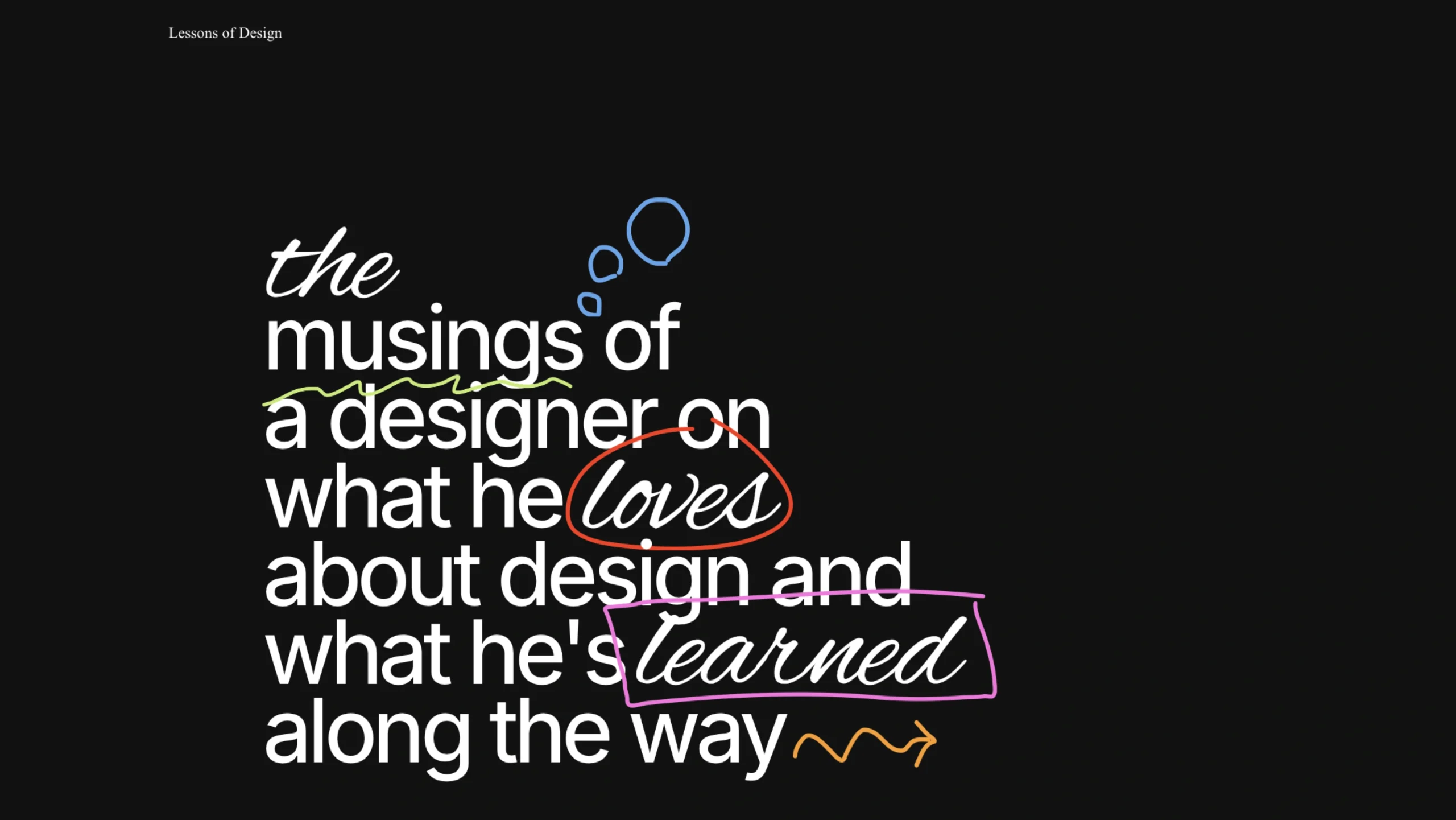
Lessons of Design is less a step-by-step manual and more a reflective guide on mindset, craft, and values in design. It blends practical design insights with human perspectives—how you think, how you work, and how you relate to others as a creator.
🎨 Lessons of Design — Chapter-by-Chapter Overview
1) Find Your Conceptual Models
This lesson encourages you to identify the mental frameworks you use to understand people and systems. A strong conceptual model helps you predict how users will behave and guides better design decisions. It’s about seeking clarity in how you think about problems, not just how you solve them—anchoring your work to principles rather than habits.
2) Simplicity Is Saying No
Simplicity isn’t just about minimal visuals or fewer elements—it’s about intentional restraint. Saying “no” to ideas, features, and compromises that dilute your product preserves focus and value. This chapter reminds designers that simplicity requires discipline—cutting away the unnecessary to let the essential shine.
3) Framing Is Magic
Framing shapes how people understand choices, interactions, and experiences. How you frame a question, screen, or interaction can dramatically influence perception and behavior. In design, context is part of the experience—with the right frame, even subtle details gain meaning and power.
4) Consistency Compounds
Consistency isn’t just aesthetic—it builds trust, reduces cognitive load, and anchors user expectations. Over time, consistent design patterns compound into coherence and reliability across products and teams. It’s the silent force that makes complex systems feel intuitive.
5) Chaos Is Rarely a Bad Thing
Chaos—unexpected outcomes, messy constraints, and unpredictable user behaviors—can be a source of learning and innovation. Rather than fighting it, designers can embrace chaos to reveal insights that rigid planning might miss. Creative solutions often emerge from navigating disorder, not avoiding it.
6) Change Is the Only Way
This lesson positions change as inevitable. Design isn’t static; products evolve, teams restructure, users shift. Instead of resisting change, align your mindset, tools, and processes so change becomes a catalyst for improvement. Adapting quickly is not just survival—it’s growth.
7) Joy Is the Real Legacy
More than just making things that work, design is a human endeavor. This final chapter emphasizes joy—joy in collaboration, in learning, in making things that matter, and in empowering others. The most lasting impact you create isn’t a feature or product—it’s the positive influence you leave on people and teams around you.