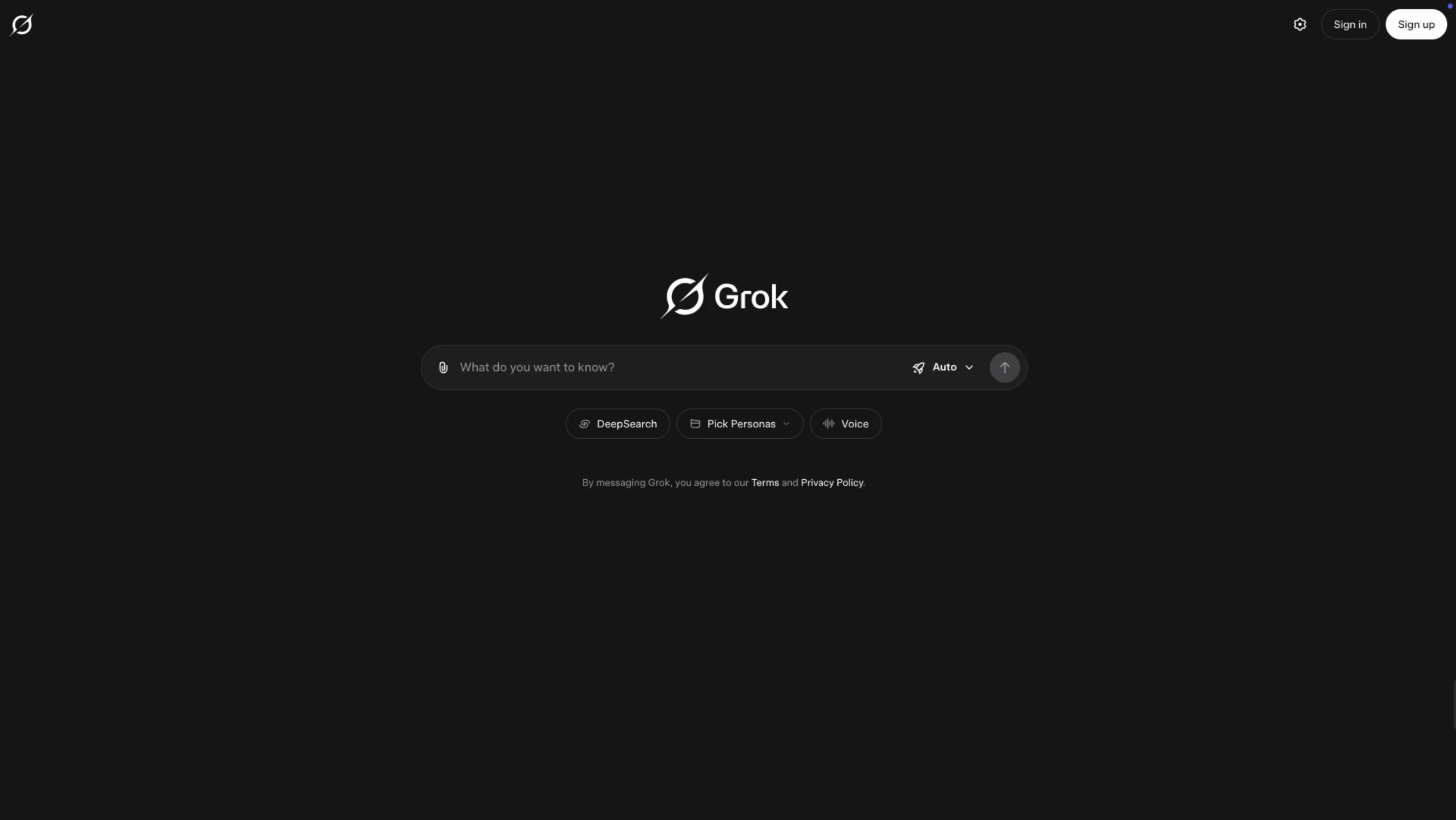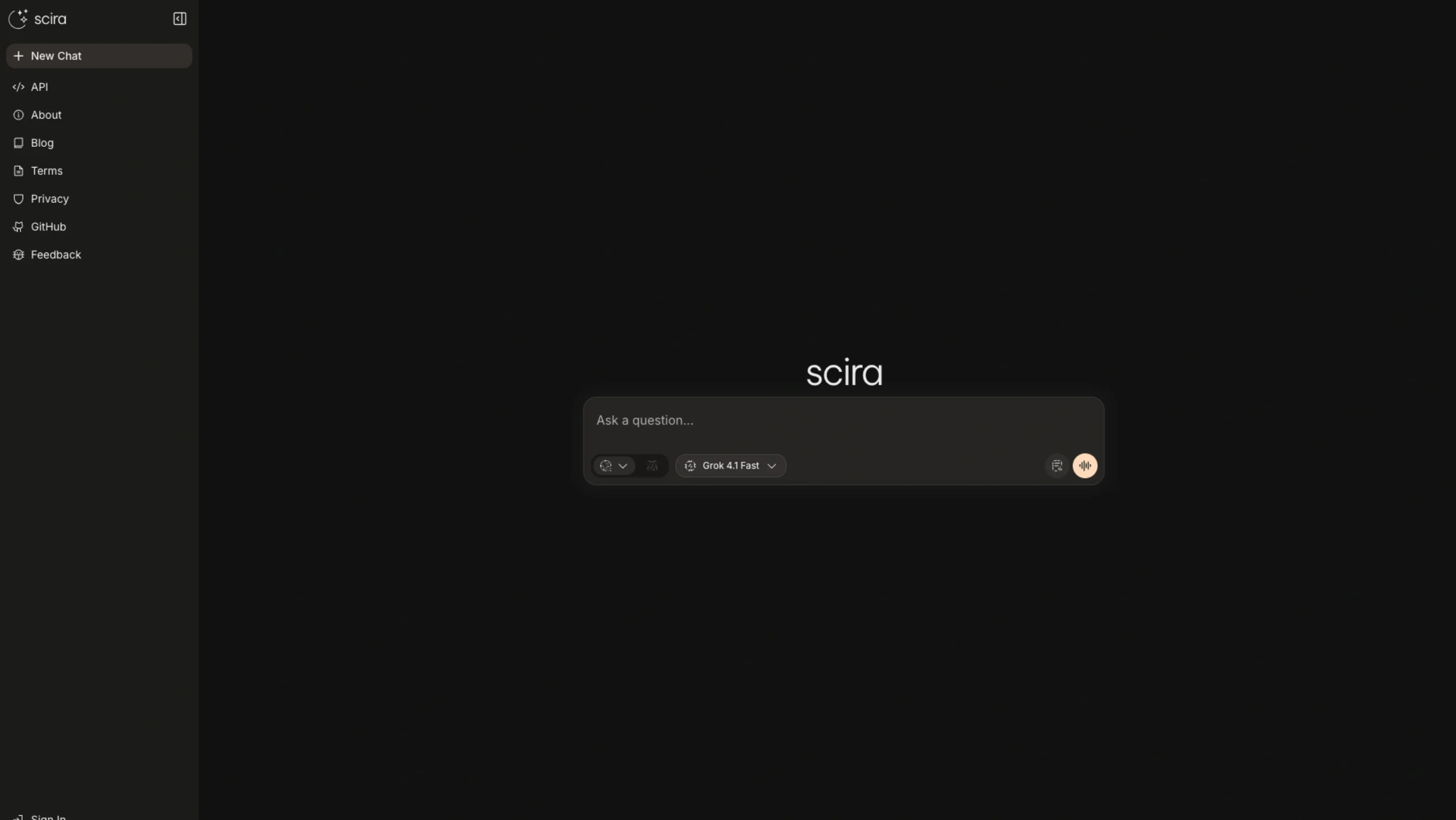
Scira is an open‑source, AI‑powered search engine designed to give you fast, citation‑backed answers from the live web.
It combines retrieval‑augmented generation (RAG), real‑time web crawling and summarisation, and support for many modern LLMs (like xAI’s Grok, Claude, Qwen, etc.), so you can search across websites, papers, social media, code, and more — all in one place.
Scira: The AI Research Assistant That Actually Thinks With You
There’s a big difference between searching and understanding. Most tools today help you find information. Very few actually help you make sense of it, connect the dots, and take action.
That’s where Scira quietly stands out.
Instead of behaving like just another AI chatbot, Scira positions itself as a full-fledged research partner—one that doesn’t just answer your questions, but actively works through them with you.
It Starts With a Simple Question
Using Scira feels surprisingly natural.
You type a question.
Or upload a PDF.
Or paste a link.
That’s it.
Behind the scenes, something more interesting begins to happen.
Rather than generating a quick response, Scira breaks your query into smaller tasks, figures out what needs to be researched, pulls information from live sources, and cross-checks everything before giving you a response.
It’s not just answering.
It’s thinking through the problem.
From Question to Insight — How It Really Works
Scira’s workflow is built around clarity and trust. It follows a simple but powerful process:
1. You Ask
Anything—from a quick query to a deep research topic.
2. It Plans
The system intelligently decomposes your question into steps, selects tools, and gathers data from relevant sources.
3. You Get Verified Answers
Instead of vague responses, you receive answers backed with citations, so you can verify every claim yourself.
This last part is what makes Scira feel different.
In a world full of AI hallucinations, having clickable sources and grounded answers builds immediate confidence.
Built for the Way You Actually Think
What makes Scira compelling is how closely it aligns with real human workflows.
You don’t just “search” for something—you:
- Explore a topic
- Dive deeper
- Compare perspectives
- Cross-check facts
- Take action
Scira is designed around exactly that behavior.
Agentic Planning
Instead of requiring multiple prompts, Scira can take one complex question and turn it into a multi-step research workflow.
It’s like having an assistant who already knows:
- What to search
- Where to search
- And in what order
Multi-Step Reasoning
Most AI tools stop at surface-level answers.
Scira goes deeper by:
- Connecting information across sources
- Identifying patterns
- Structuring responses like mini research reports
You’re not just getting answers—you’re getting structured thinking.
Grounded Retrieval
Every answer is backed by real data.
No guessing.
No blind trust required.
You can:
- Click sources
- Verify facts
- Dive deeper anytime
This makes Scira particularly powerful for:
- Researchers
- Designers doing competitive analysis
- Founders validating ideas
- Students working on assignments
One Interface, Multiple Worlds
Another thing that makes Scira interesting is that it unifies different types of research into a single interface.
Instead of jumping between platforms, you can explore:
- Web insights
- Academic research
- Reddit discussions
- GitHub repositories
- Financial data
- YouTube content
All from a single search box.
It feels less like a tool—and more like a research control center.
Beyond Research: Taking Action
Most AI tools stop at giving you information.
Scira goes one step further.
It connects with 100+ apps, allowing you to actually do something with your research.
Think about this:
- Find insights → Send them to Notion
- Analyze trends → Share with your team on Slack
- Discover code → Push to GitHub
This shift—from passive research to active execution—is where Scira becomes really valuable.
A System That Keeps Watching for You
One of the most underrated features is Lookouts.
Instead of repeatedly checking for updates, you can set up Scira to:
- Monitor specific topics
- Track changes over time
- Send updates automatically
It’s like having a research assistant that never stops working in the background.
Open, Flexible, and Customizable
For advanced users, Scira isn’t a closed system.
It’s built to be:
- Extensible
- Customizable
- Self-hostable
You can:
- Bring your own models
- Connect custom tools
- Tailor workflows to your needs
This makes it especially appealing for developers and teams who want control over their AI stack.
Why Scira Feels Different
After using tools like ChatGPT, Perplexity, or Gemini, Scira feels like a natural next step.
Not because it replaces them—but because it orchestrates everything together.
It’s less about:
“Give me an answer”
And more about:
“Help me figure this out properly”
That mindset shift is subtle—but powerful.
Final Thoughts
Scira isn’t trying to be just another AI assistant.
It’s aiming to become something more meaningful:
A system that helps you:
- Think clearly
- Research deeply
- Act confidently
And in a world where information is everywhere—but clarity is rare—that’s exactly what makes it worth exploring.