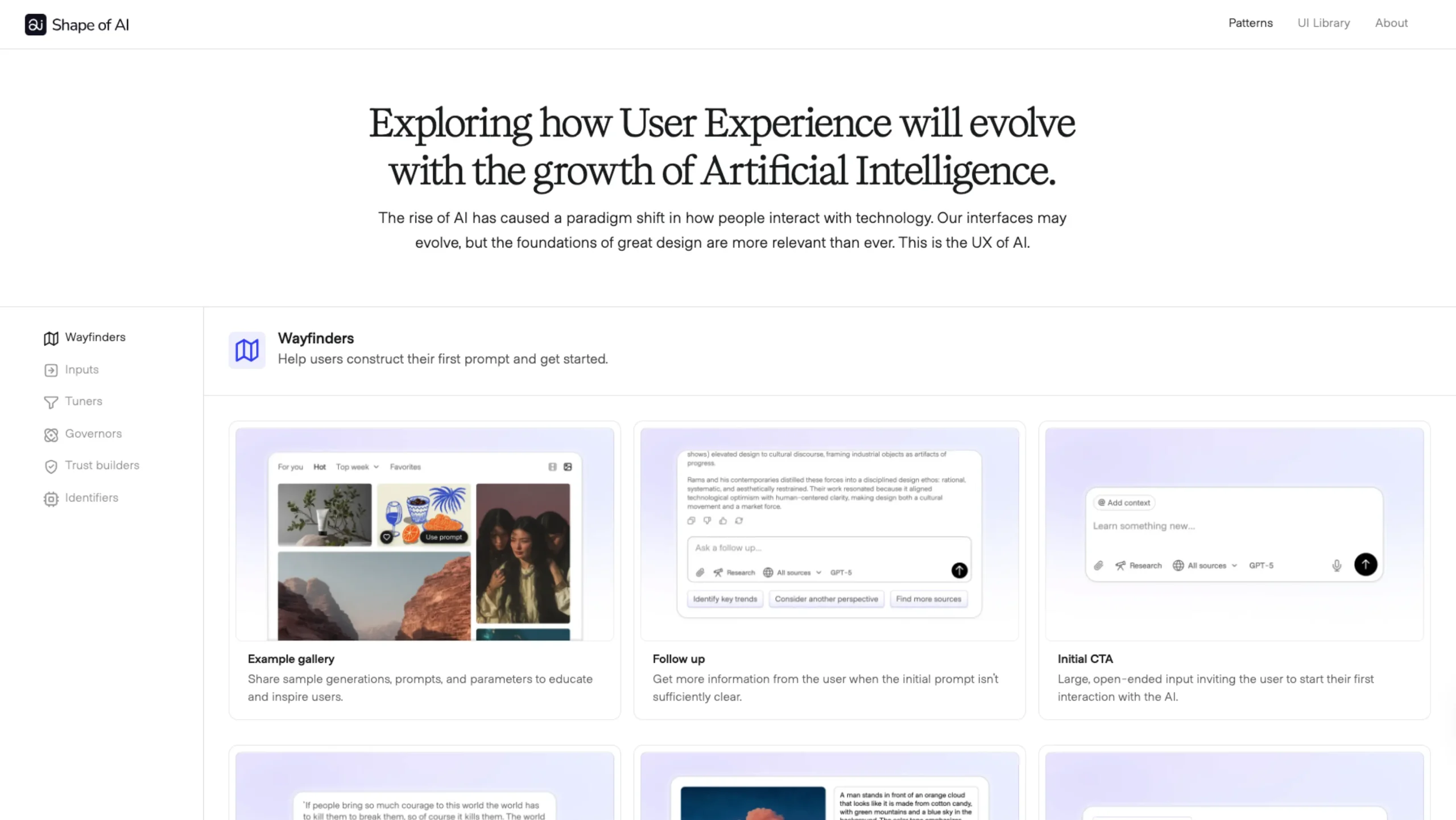
The Shape of AI is one of those projects that instantly feels timely if you’re working anywhere near AI, product, or UX. It sits at the intersection of design, ethics, and systems thinking—and does it in a way that feels clear, approachable, and very human.
What is The Shape of AI?
The Shape of AI is an ongoing project and pattern library that exists to make the technology and impact of artificial intelligence more understandable, so people can collectively influence a future in which technology enhances life rather than causes harm.
It’s curated and written by Emily Campbell—a design leader who advises on AI UX and explores how AI is reshaping design, creativity, and human interaction.
The project lives at shapeof.ai and extends into a newsletter and community, where designers and product folks explore emerging AI patterns together.
In short: The Shape of AI helps designers see how AI is changing products—and how design can respond.
Why this moment needs design more than ever
The project starts from a simple but powerful premise:
Artificial Intelligence is going to fundamentally change how people work, connect, learn, and live.
We’re only just beginning to see those shifts show up in:
- Every day, digital products
- Services and multi-channel experiences
- Organizations, institutions, and workflows
Technology is accelerating faster than humans can comfortably adapt. Designers can’t afford to reinvent the wheel every time a new AI feature appears. Instead, The Shape of AI argues that we need:
- Proven frameworks of human interaction and cognition
- Shared patterns that balance human needs with algorithmic feedback loops
- Experiences that feel familiar and legible, even when the underlying tech is complex
By deeply understanding human behavior—and how it adjusts in a computational, AI-first landscape—designers can craft experiences that feel intuitive, grounded, and trustworthy, rather than chaotic or intimidating.
This isn’t just a technical shift. It’s a chance to reset how we approach technology altogether.
The Shape of AI treats this moment as an open invitation: designers get to help shape what comes next, not just react to it.
A pattern library for AI UX
At the heart of shapeof.ai is a pattern library dedicated to AI interactions. Instead of treating AI as a single, mysterious black box, the site breaks down AI UX into specific, named patterns that designers can recognize, reuse, and critique.
Some of the recurring patterns include:
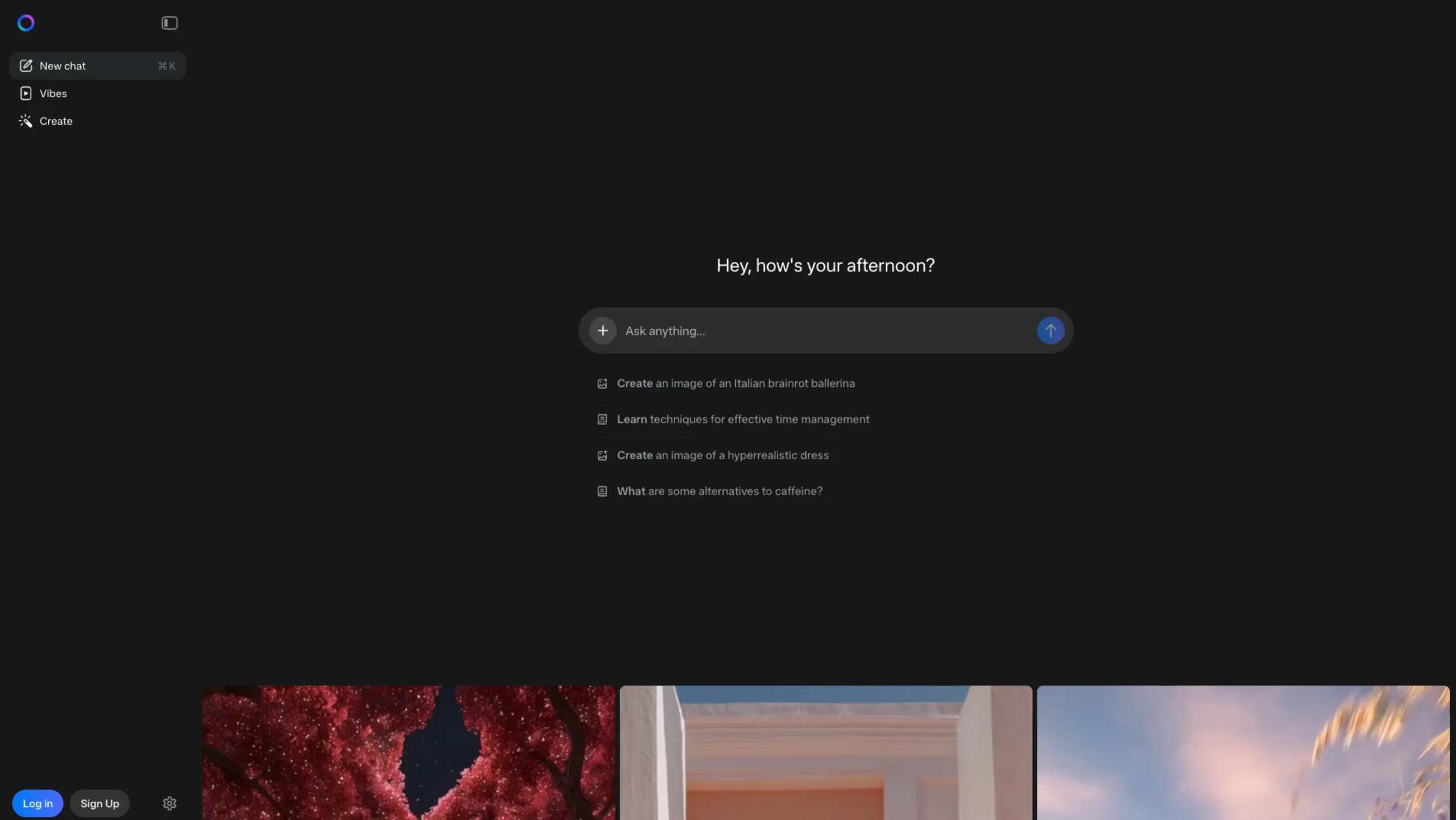
- Open input – The now-familiar “chat box” / natural language prompt that powers many AI tools. The pattern page explains how open-ended input encourages conversation with the model, but also where it fails—such as when users don’t know what to ask next or don’t have strong prompting skills. It also suggests design features such as example galleries, guidance, and controls to keep users in charge.
- Templates – Pre-built prompts and scenarios that help people get started in complex products (“help my kids with homework,” “rewrite this email,” etc.). Templates reduce anxiety about blank pages and make advanced use cases more straightforward to discover.
- Follow up – Smart follow-up prompts and inline actions that help refine or extend an interaction instead of forcing users to start over. The pattern highlights how good follow-ups save compute, reduce frustration, and make AI feel like it’s working with the user.
- Example gallery – Collections of sample generations that show what’s possible and help users understand the range of outcomes a system can produce. This pattern is beneficial for continuous onboarding and exploration.
- Expand – Actions that let AI build on existing content (e.g., expanding images, extending clips, or elaborating on text) while still respecting the original intent.
- Describe – A “look under the hood” action that breaks a generation into components—prompt, parameters, tokens—so users can better understand how something was created and how to improve it.
- Stream of Thought – Making the AI’s reasoning more visible: the plan it formed, the tools it called, the code it ran, and the checks it made along the way. When systems show their inner logic, they become easier to trust and debug.
- Citations – Connecting AI outputs back to their sources—documents, web pages, transcripts, or databases—to improve transparency and help users verify information.
Each pattern reads like a mini design essay: what it is, why it matters, where it fails, how to support it, and how to design it thoughtfully.
For UI/UX designers, it’s a goldmine of language and structure for thinking about AI features—beyond “add a chat box.”
A project shaped by real product work
The Shape of AI doesn’t come from theory alone. Emily started this project while working on AI products and advising teams on AI design and product strategy. As she dug into real products, she noticed something worrying:
- AI experiences were highly inconsistent across tools and companies.
- Many teams were rushing to “do AI” without a clear plan for how features should work—or whether they should exist at all from a user’s perspective.
The project responds to a very real pattern in the industry:
Companies are in a race to the starting line, bolting AI into existing products, while struggling to integrate it gracefully into the experience.
The Shape of AI treats AI as a transformative layer, not a bolt-on widget. It insists that every part of the experience has to evolve:
- UI and visual language
- Core interaction patterns
- User expectations and mental models
- Team practices and product strategy
- Organizational understanding of what “good AI” looks like
The future isn’t a hypothetical; it’s already here. The Shape of AI frames the fundamental question as:
How will design respond?
Community, newsletter, and ongoing conversation
Beyond the website and pattern library, The Shape of AI also runs:
- A free newsletter, where Emily shares observations, essays, and examples about how AI is changing design, work, and behavior.
- A Slack community, where people discuss emerging AI patterns, new products, and the evolving role of design in this space. The community is free to join and encourages open participation.
Both channels extend the site into an ongoing conversation: not just what patterns exist today, but how they’re evolving as tools, teams, and expectations change.
Why we’re featuring Shape of AI on UIUXshowcase
For designers, PMs, and researchers trying to make sense of AI UX, The Shape of AI is more than a pretty site—it’s a living reference. It:
- Gives shared names to emerging AI patterns
- Connects interface decisions to human behavior and cognition
- Treats AI as both a design challenge and a societal shift
- Encourages thoughtful, human-centered responses instead of knee-jerk “add AI here” features
If you’re designing AI products—or trying to retrofit AI into existing experiences—Shapeof.ai is absolutely worth bookmarking, reading, and returning to as this space continues to evolve.