Tunera is a transnational type foundry on a mission to bring fresh, original typefaces to everyone.
What Is Tunera Type Foundry?
Tunera Type Foundry is an independent typeface distribution platform created by Ariel Martín Pérez in January 2020.
The idea behind Tunera is simple but ambitious: to explore new typographic forms, concepts, and visual universes—especially those that don’t always get enough attention in the world of type design.
Today, the foundry is run by a small team comprising Ariel Martín Pérez and Anton Moglia.
Together, they curate and publish open-source typefaces that feel experimental, thoughtful, and concept-driven.
Tunera isn’t about mass-market fonts—it’s about typography as research, culture, and expression.
What Can Be Done With Tunera’s Fonts?
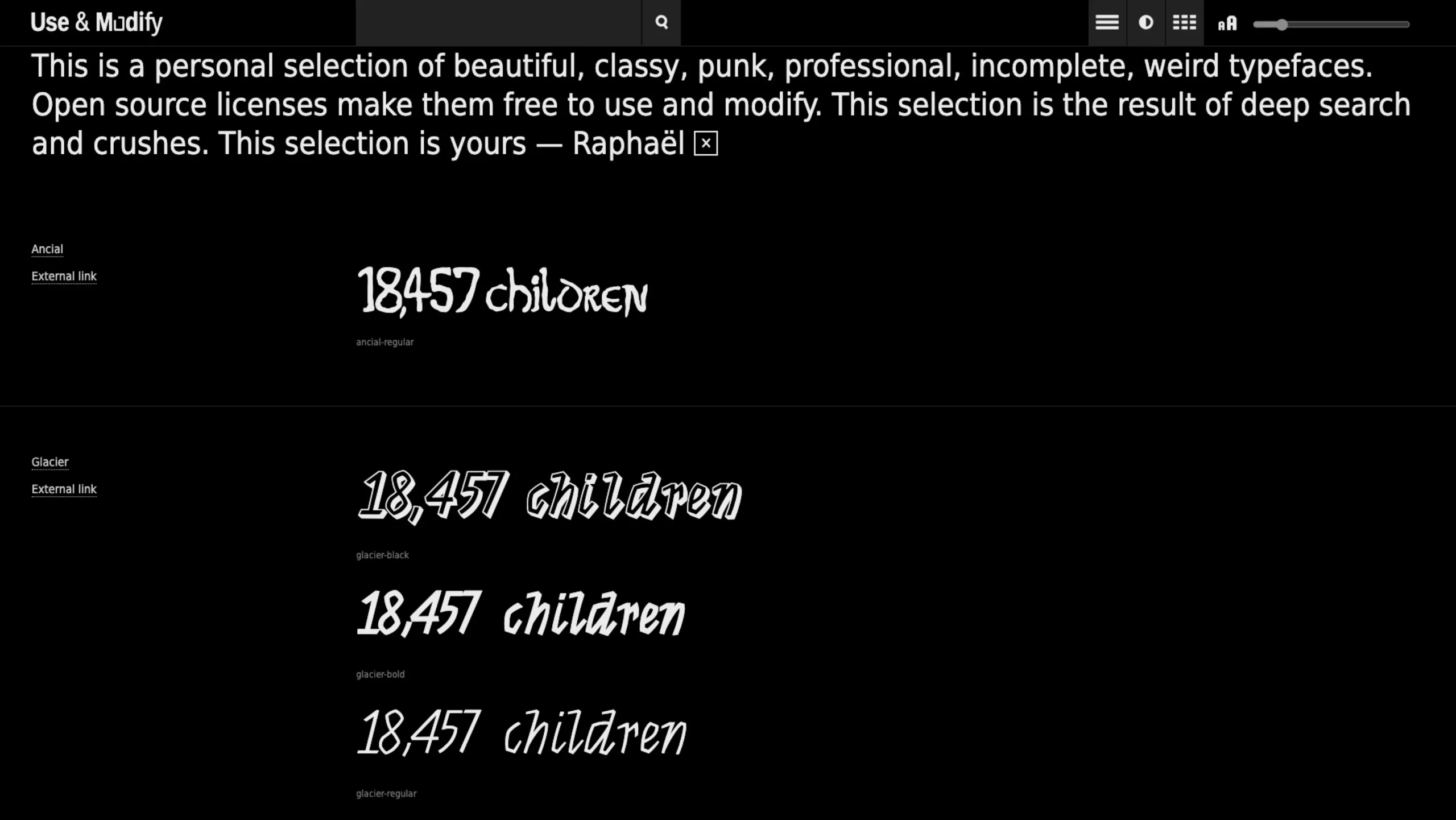
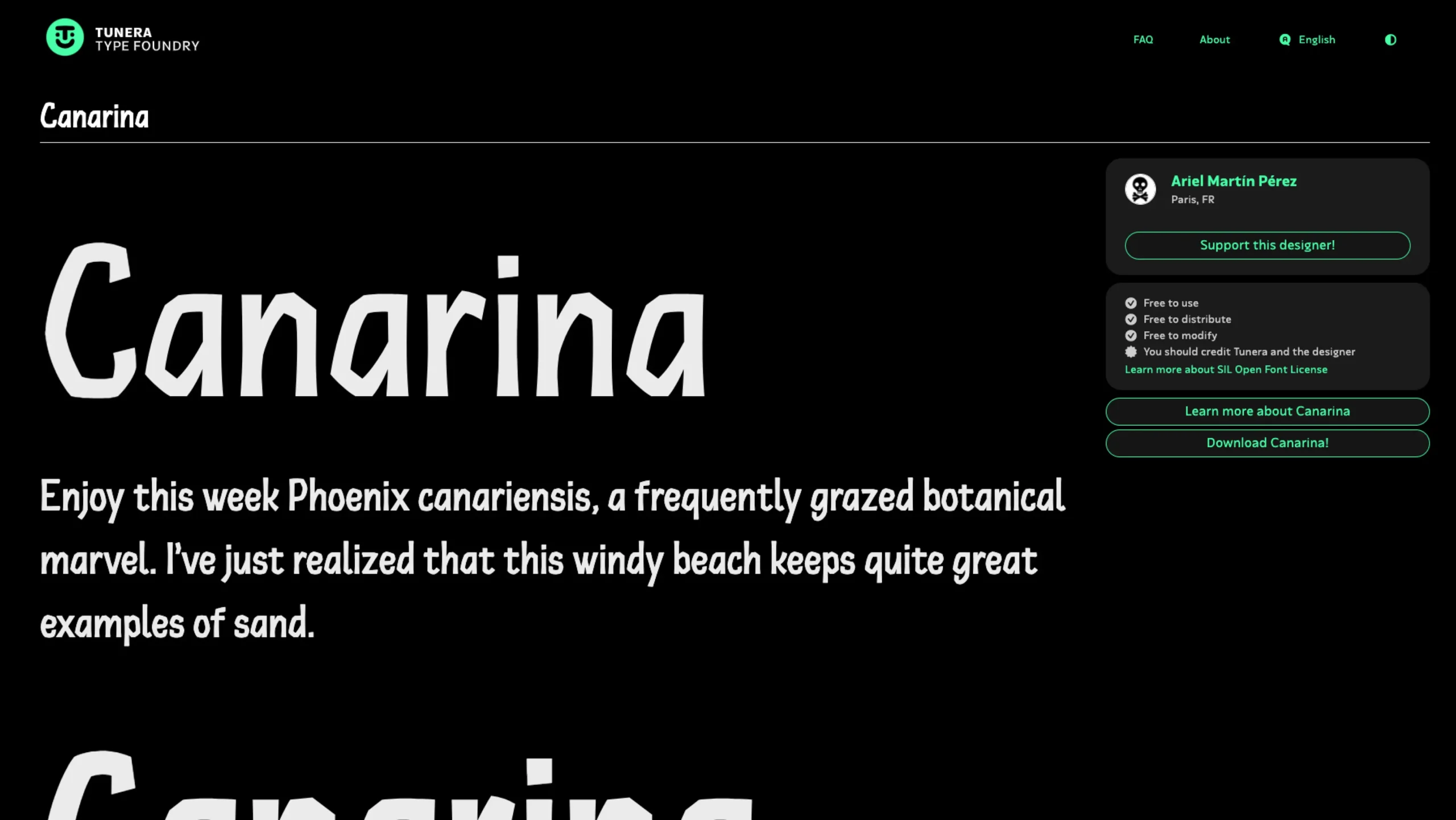
All fonts published by Tunera are released under the SIL Open Font License (OFL), which makes them very flexible to use.
What You Can Do
Tunera’s typefaces can be used free of charge for both personal and commercial projects.
Designers are free to apply them to branding, posters, websites, publications—anything they like.
The fonts can also be shared with others, such as friends or collaborators.
They can even be modified to create new typefaces. In open-source typography, these modified versions are called forks.
When doing this, credit must always be given to the original designer, and the new typeface must use a completely different name.
If someone wants to support the designers behind the work, donations are welcome and can be made directly through the font pages.
What You Can’t Do
Tunera’s typefaces cannot be sold.
They can also be redistributed only with their original credit files. Any documentation that comes with the font—such as README files—must stay attached.
Removing credit information is considered a violation of the SIL OFL.
Creating modified versions without crediting the original author is also not allowed. And again, the original font name can’t be reused for forks.
What Tunera Encourages
Even though it isn’t a legal requirement of the license, Tunera strongly encourages designers to credit the typeface and its creator whenever possible—especially in large or high-profile projects.
If space is limited, credits can be added online instead, such as on a portfolio or project page.
This small gesture helps introduce the foundry and its designers to a broader audience—and supports the open-source ecosystem as a whole.
Can Designers Submit Their Own Typefaces?
Yes—Tunera is open to publishing new open-source fonts, as long as they fit the spirit of the project.
Each submission is reviewed based on a few key criteria:
- Originality
This matters most. Tunera looks for fonts with fresh ideas, strong concepts, and styles that don’t feel overused. Fonts that tell a story or explore new territory are especially valued. - Technical quality
Fonts should be well drawn, properly spaced, and correctly kerned. Clean outlines, sensible point placement, and solid craftsmanship are essential. - Glyph set and language support.
For Latin-based fonts, basic diacritics, punctuation, and ideally a lowercase set are expected. Fonts supporting non-Latin scripts—or multiple scripts—are more than welcome.
Designers interested in submitting a typeface can reach out directly at contact@tunera.xyz.
Internships and Job Opportunities
Tunera is run by two freelance designers living in different cities. Because of this setup, they don’t currently have the capacity to host interns or offer job positions.
If this changes in the future, it will be announced publicly on their social channels. Until then, they kindly ask people not to reach out by email regarding internships or employment.
If the Fonts Are Free, How Does Tunera Sustain Itself?
Some of Tunera’s typefaces are commissioned projects, funded by institutions or organizations. For example, the production of Roubaix Industrielle was supported by the city of Roubaix.
Other fonts are purely experimental works created by designers without direct financial backing. Most contributors are freelance designers with income from other projects.
Donations help acknowledge and support the designers’ work, but Tunera itself remains a non-commercial project.
In practical terms, Anton Moglia handles the web design, while Ariel Martín Pérez covers costs such as hosting and domain fees. Anyone who wants to support the platform can contribute by making donations linked to the Tunera website.
Missing Characters or Features in a Font?
Fonts on Tunera are provided without guarantees. That said, most of them are pretty comprehensive and support a wide range of Latin-based languages—and sometimes additional scripts, such as Cyrillic.
If a specific character or feature is missing, users can contact the font’s designer directly. Depending on the request, the designer may ask for financial compensation for the extra work.
For those who are technically inclined, modifying the font themselves is also an option. That’s one of the most significant advantages of open-source typography.
Commissioning a Custom Typeface
If someone falls in love with a Tunera typeface and wants a custom font for a brand, company, association, or personal project, the best approach is to contact the designer directly.
Availability and pricing depend on the scope, complexity, and requirements of the project. Designers will provide details directly.