


With the Figma MCP app in Claude, powered by Anthropic, teams can now turn AI conversations into editable FigJam diagrams—instantly.
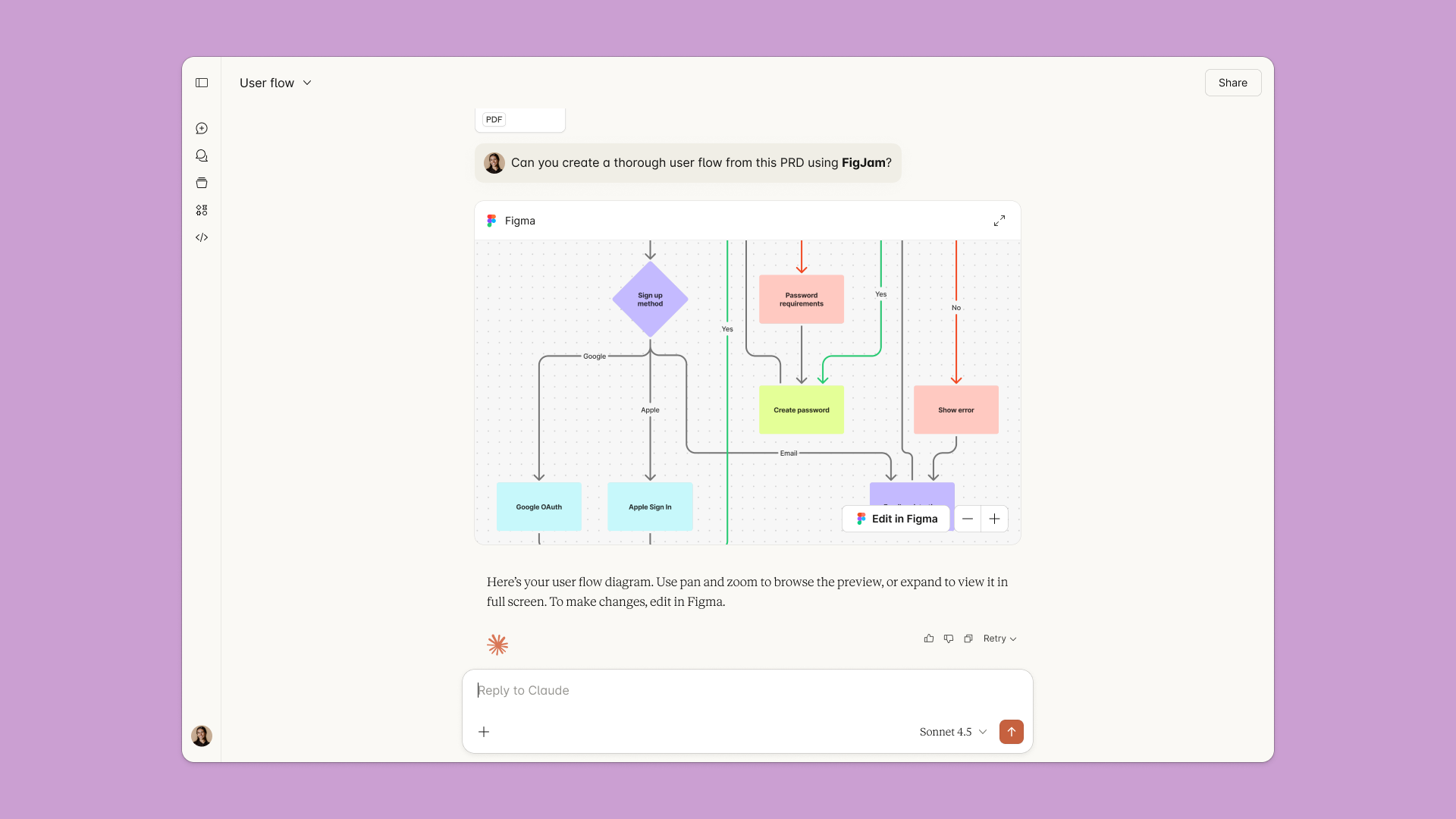
Designers, developers, and product managers no longer have to stop at text-based ideas.
They can visualize, shape, and build on them together.
AI chats are great for solo brainstorming. But real progress happens when ideas move into a shared space.
With Claude, written prompts, PDFs, screenshots, or images can be transformed directly into FigJam diagrams—no copy-pasting, no context switching.
What starts as a conversation quickly becomes a visual flow your whole team can react to and refine.
Make Thinking Visible, Faster
Diagrams have always helped teams simplify complex ideas. User flows, system maps, timelines—they turn abstract thinking into something concrete.
With Claude generating diagrams directly inside FigJam, that process becomes dramatically faster.
Designers can map user journeys in minutes. Product managers can generate early Gantt charts from PRDs to spot dependencies and risks sooner.
Engineers can visualize system architecture—services, APIs, data flows—using existing documentation or code as input.
The result? Fewer misunderstandings, faster alignment, and better decisions before anything gets built.
One Canvas for Collaboration
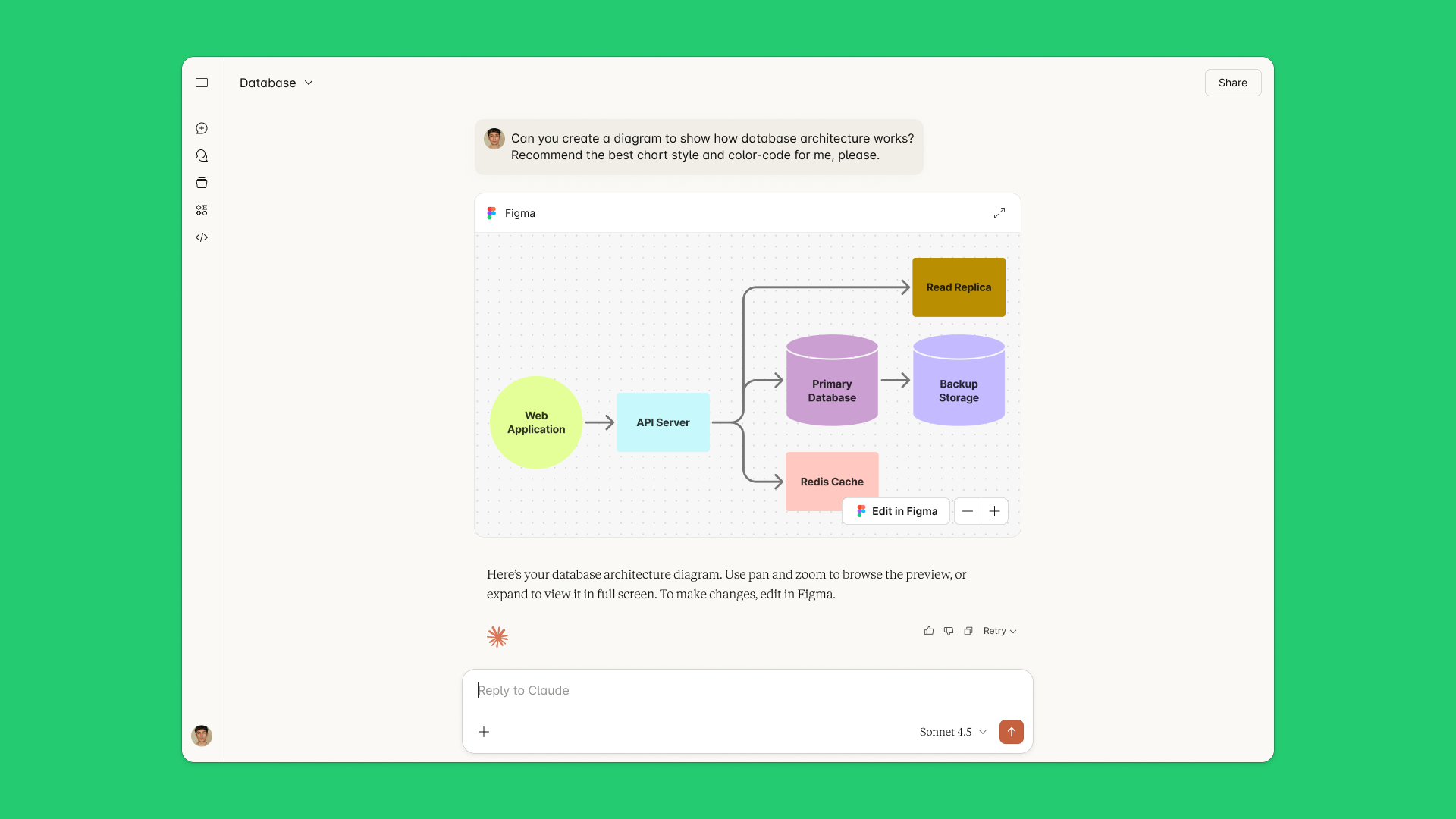
FigJam becomes the shared language across product, design, and engineering.
Diagrams aren’t static artifacts anymore—they’re living documents teams can comment on, refine, and evolve together.
Early ideas turn into structured plans, and structured plans turn into execution-ready systems.
Once ideas are inside the Figma ecosystem, they travel easily.
Flows can be refined in Figma Design, shared in Figma Slides, or translated into code.
With ongoing improvements to FigJam’s diagramming tools—more shapes, smarter connectors, better control—teams can move smoothly from exploration to precision.
AI as a Real Collaborator
Claude doesn’t just generate one-off diagrams.
With multi-turn context, teams can explore alternatives, compare approaches, and choose the right visual format—whether that’s a decision tree, sequence diagram, state diagram, or project timeline.
This is where AI becomes more than a helper. It becomes part of how teams think together.
By turning conversations into editable diagrams, FigJam and Claude close the gap between thinking and doing.
Ideas don’t stay trapped in chat windows anymore—they take shape, evolve, and move forward in the same space where real work happens.
That’s not just faster collaboration. It’s better collaboration—visual, shared, and always in motion.