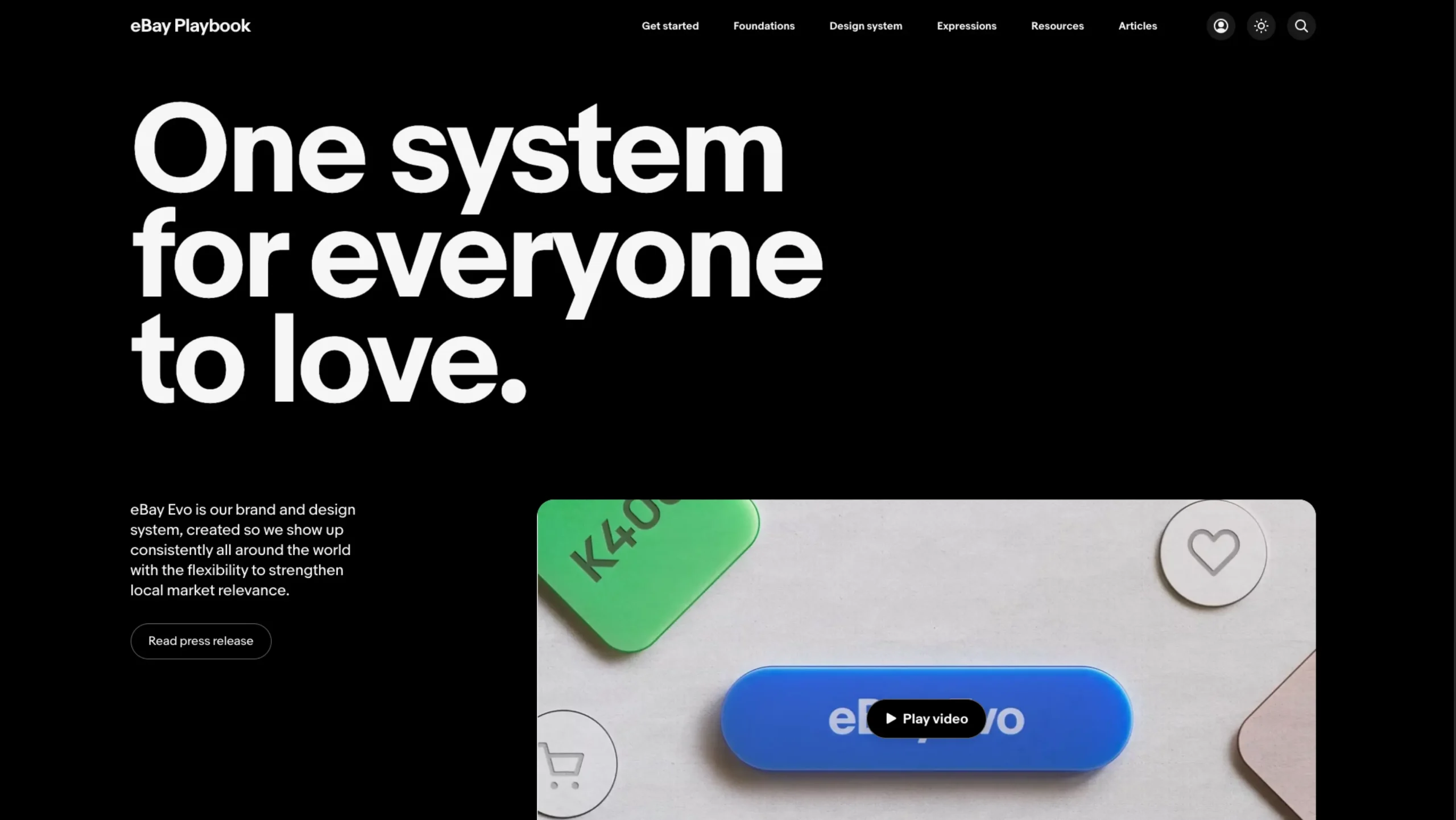
The eBay Design Playbook is a public guide to how design works at eBay, covering principles, patterns, accessibility standards, and product thinking used to design at a massive scale.
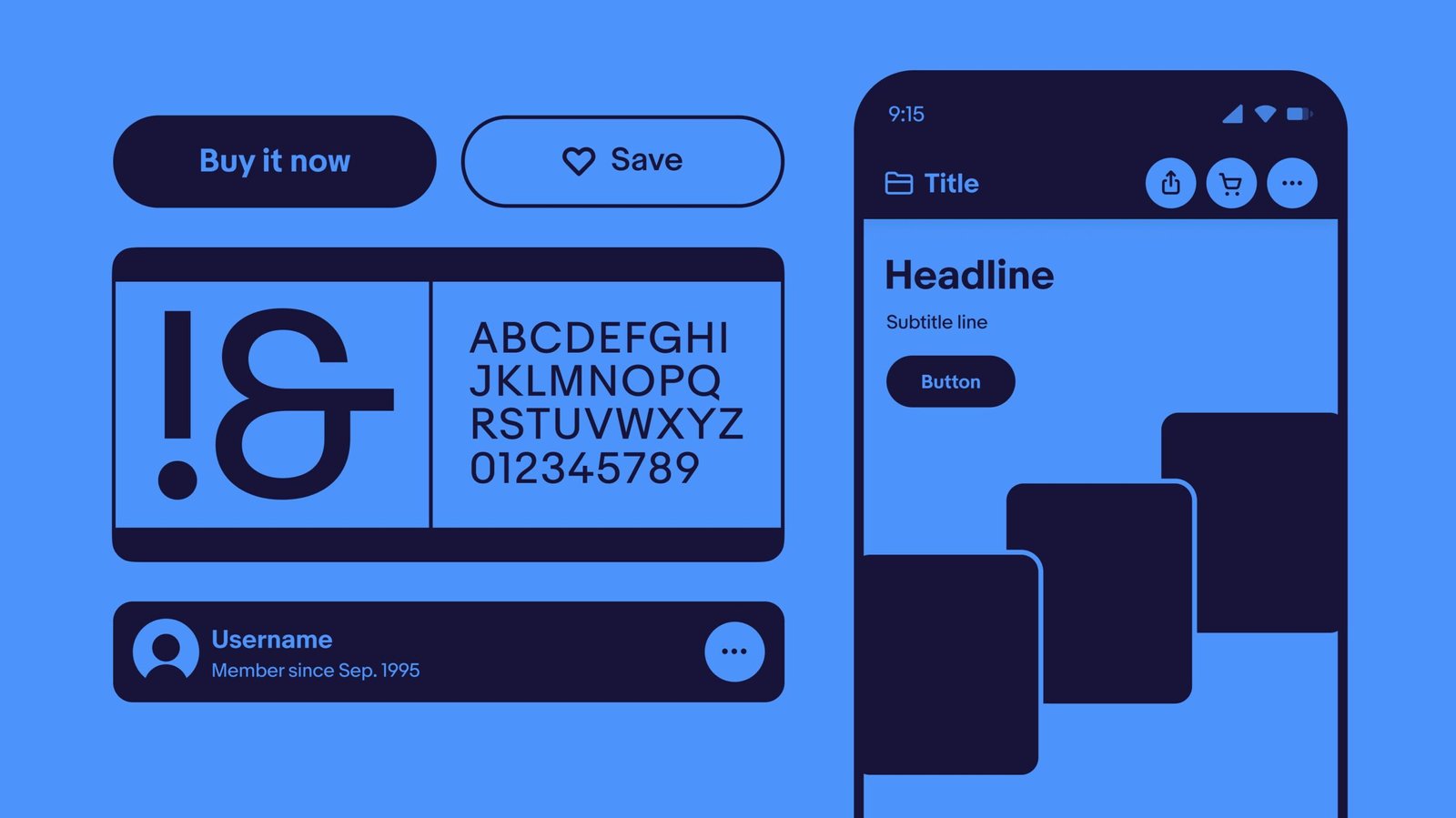
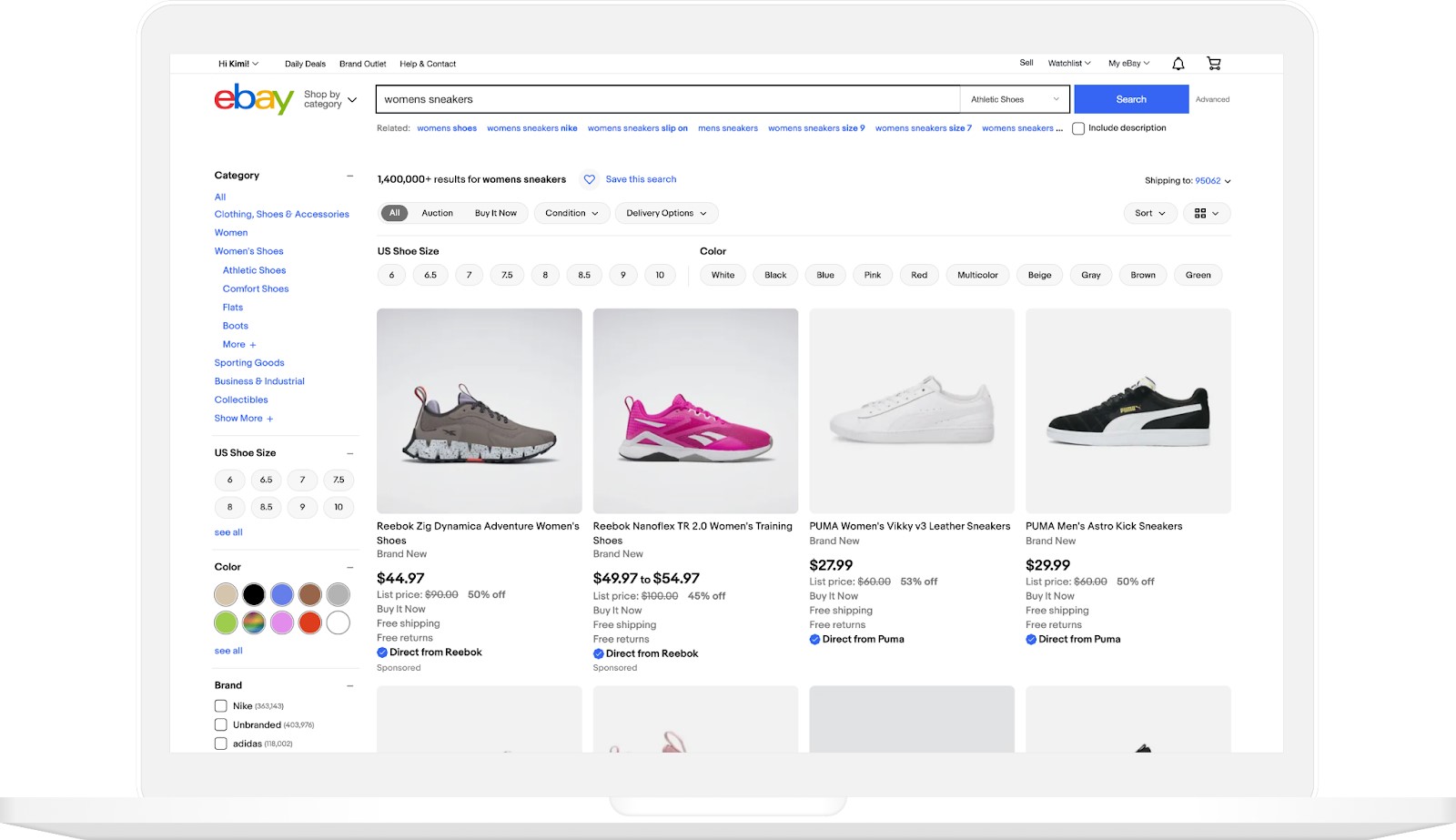
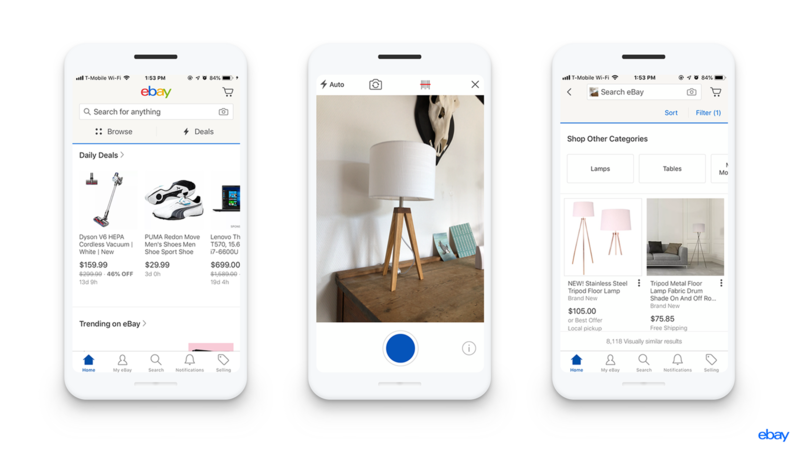
eBay Evo Is a Brand and Design System
A quiet evolution that changed how a 30-year-old marketplace shows up everywhere
It didn’t start with a redesign. It started with a feeling.
There’s a strange moment that happens inside mature products. Nothing is broken. Pages load. Buttons work. Metrics look fine. And yet—something feels slightly off.
Not wrong. Just… uneven.
That’s where Evo begins.
For eBay Inc., a brand that helped shape the early internet, consistency isn’t cosmetic. It’s emotional. It’s trust.
It’s the comfort of knowing where you are the second a screen loads. When that comfort slips, users feel it long before they can explain it.
Internally, teams feel it too. Designers notice patterns drifting. Developers maintain near-identical components that aren’t quite the same.
Accessibility guidance is late again. No single failure. Just entropy doing what entropy does.
Evo wasn’t a dramatic reset. It was a realization shared across teams:
They need to show up as ourselves—everywhere—without thinking so hard about it every time.
That sounds simple. It never is.
A brand that grew faster than its shared language
eBay grew organically. New products. New markets. New teams solving real problems under real pressure.
Each decision made sense locally. Over time, though, those decisions stacked.
Design choices picked up accents. Components evolved in parallel. Documentation is spread across tools.
Designers worked from Figma. Developers checked separate docs. Accessibility lived somewhere else entirely.
Nobody was careless. The system no longer had a single voice.
And when systems lose a shared language, collaboration slows in quiet ways. Extra Slack messages.
Hesitation before shipping. Workarounds that feel harmless but add up.
Evo emerged from respect for the brand’s history and the people who carry it forward.
“I threw a pebble into this little pond…”
That line from Tyler Moore, Senior Director of Design at eBay, captures the beginning perfectly.
The early work wasn’t about brand. It was practical. Product-first improvements.
Cleaning up components. Updating foundations that hadn’t aged well. Normal design system maintenance.
But systems are funny like that. Touch one part, and everything else responds.
Cleaner components raise questions about typography. Typography leads to voice.
Voice leads to expression. Expression demands better documentation.
Better documentation exposes gaps between design, code, and accessibility.
Before long, the work shifted from components to coherence.
Those ripples turned into waves—and teams wanted to ride them.
Evo isn’t “just” a design system
Most companies already have design systems. What they often lack is shared understanding.
Before Evo, information existed at eBay—but not together. Designers had their truth. Developers had theirs.
Accessibility guidelines live elsewhere. Updating documentation meant manual edits, tickets, and delays. Reality changed faster than the docs.
That gap creates fatigue. People stop trusting documentation. Then they stop checking it.
Evo set out to fix that—not by adding more rules, but by changing how information flows.
Foundations that stay quiet (on purpose)
Foundations don’t get applause. When they work, nobody notices them. That’s the point.
Evo’s foundations—color, typography, spacing, grids—weren’t designed to impress in isolation. They were designed to behave.
Color signals hierarchy and feedback without drama. Typography respects reading speed and screen size.
Spacing supports scanning instead of crowding. Grids provide structure without boxing teams in.
Accessibility wasn’t layered on later. It shaped decisions from the start—contrast, focus states, motion, text sizing. When accessibility is built into the foundations, it no longer feels like extra work and becomes the norm.
The result is a system that narrows choices just enough to remove doubt, while freeing teams to focus on real problems.
Restrictive and freeing at the same time. That contradiction works.
When documentation stops feeling like homework
Here’s the turning point.
When eBay set out to document Evo, they didn’t want a reference guide. They wanted an experience. Something teams would open willingly. Something that reflected how people actually work.
The eBay Playbook became that place.
Brand, design system, engineering, and accessibility live together. Not linked. Not mirrored. Together. One space. One language.
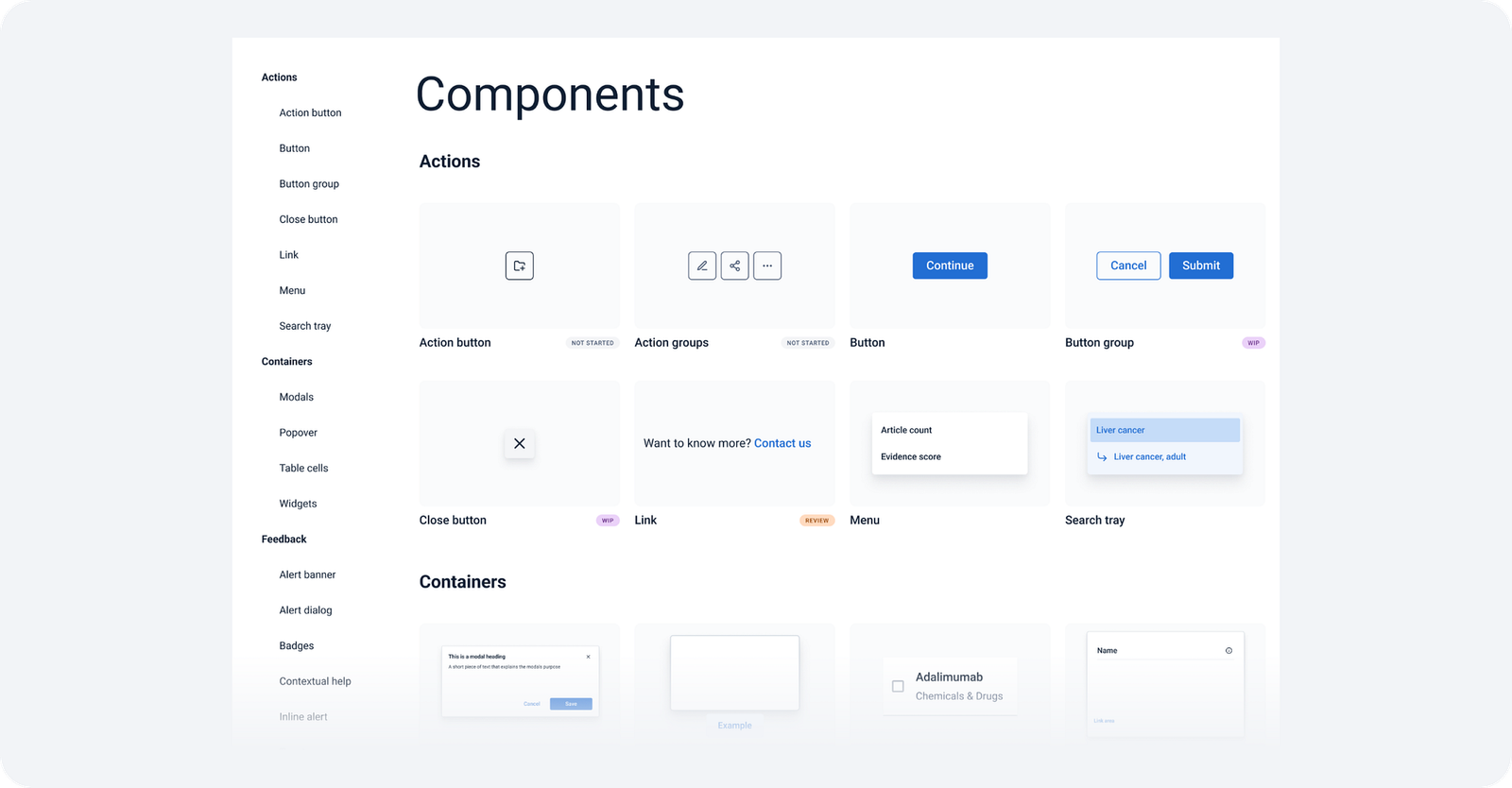
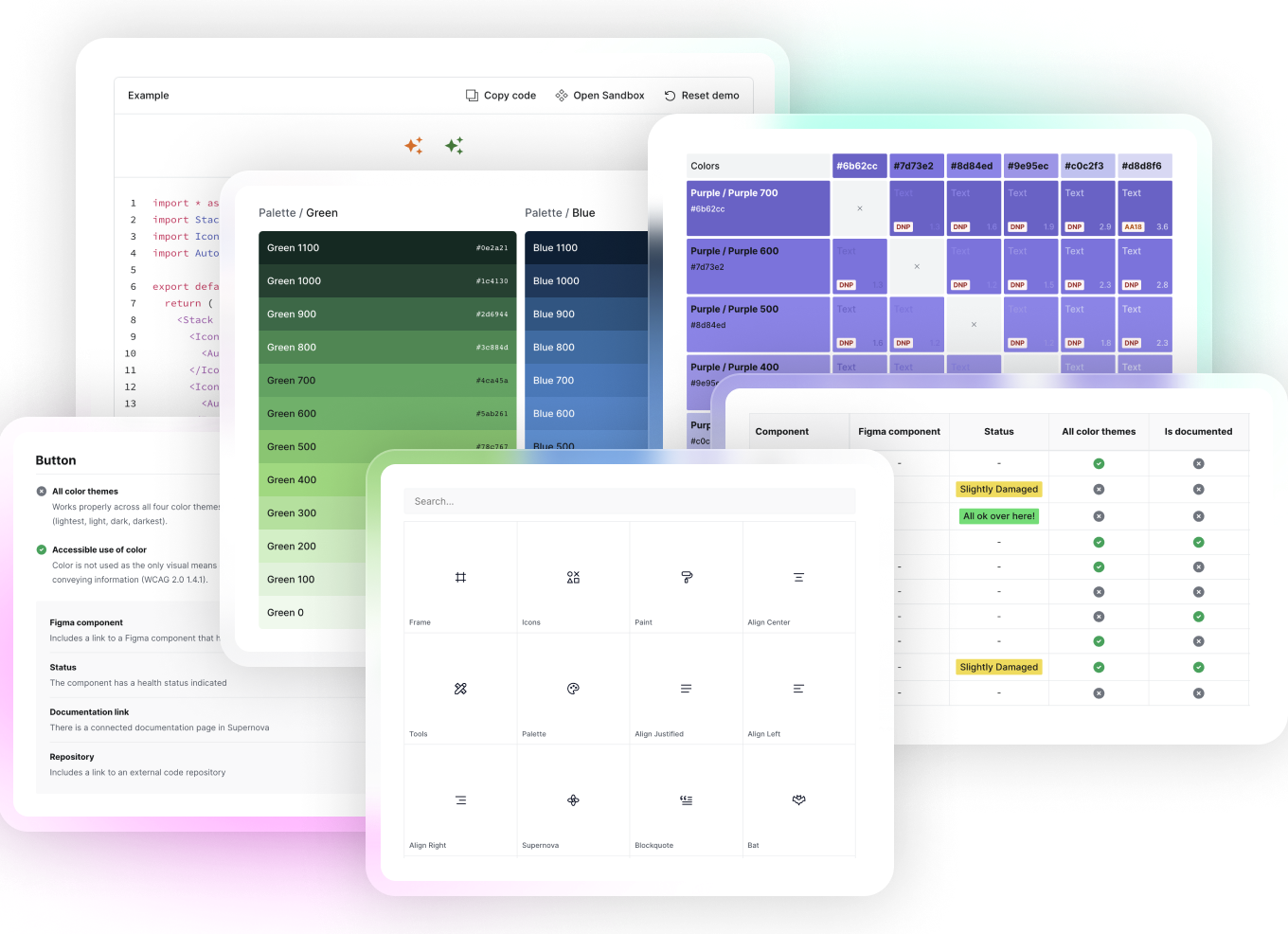
Components aren’t listed like inventory. They’re shown with context—where they exist, which platforms support them, what’s current, what’s evolving. That information updates automatically, pulled straight from library metadata.
No stale tables. No guessing.
Automation that removed tension, not just time
The real breakthrough wasn’t speed. It was friction disappearing.
Every Playbook page starts in Figma. Updates happen in Figma. A custom exporter validates content, checks component usage, and publishes directly—no manual CMS work.
What used to take days now takes minutes.
That changes behavior.
When updating documentation is easy, people keep it accurate. When accuracy is visible, trust grows.
Designers’ own correctness. Developers stop guessing. Accessibility gaps surface early.
Automation didn’t enforce collaboration. It made collaboration the easiest option.
That’s how silos actually break.
Dev Mode, variables, and fewer translation errors
Design and engineering finally shared a common inspection surface.
Developers used Dev Mode to inspect components, translate styles, and understand intent. Variables mapped cleanly to CSS. Design decisions flowed into code without reinterpretation.
It wasn’t flashy. It was practical. And that practicality built credibility fast.
Accessibility became a shared craft
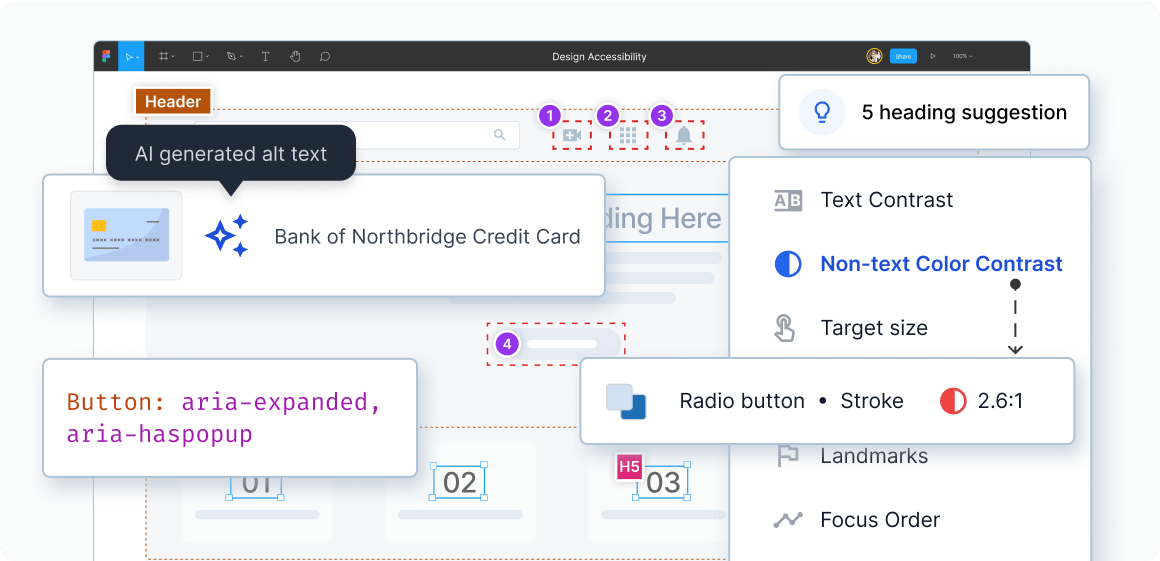
One of the most human moments in the system lives in alt text.
Instead of hiding accessibility in audits, Evo made it visible. Embedded directly into components. Color-coded. Green for complete. Yellow for attention needed.
No scolding. No policing. Just clarity.
Accessibility became a puzzle that teams wanted to solve. Designers noticed gaps. Writers got more precise. Engineers trusted what shipped.
Care became contagious.
Joy showed up in the weeds
There’s a Slack channel called “Playbook in the Weeds.” That name says everything.
It’s where teams debate naming, spacing, edge cases, and image roles. The kind of details people only care about when they’re invested.
That’s how you know a system crossed the line from tool to craft.
Joy didn’t come from jokes or gimmicks. It came from care. From systems that behaved predictably. From feedback that made the effort visible.
Good systems reduce anxiety. Great ones replace it with quiet pride.
What changed after launch (and what stopped being a problem)
After Evo and the Playbook launched, change didn’t arrive with fireworks. It showed up in habits.
Teams started closer to “done.” Fewer basic questions. Office hours shifted from troubleshooting to pattern discussions. Accessibility became proactive without being labeled as such.
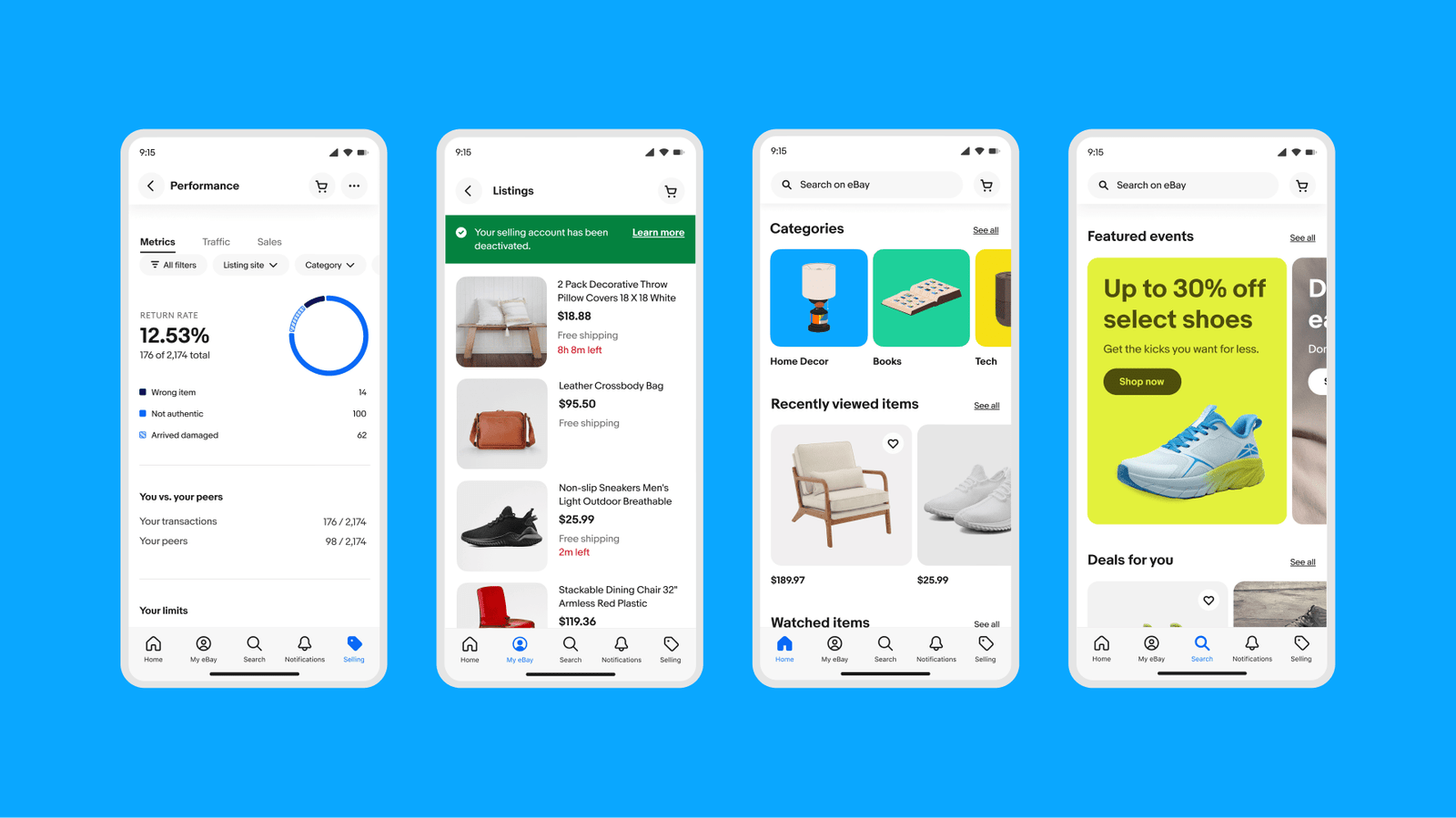
Consistency showed up beyond visuals—flows felt familiar, interactions were predictable, and the brand was coherent across surfaces.
People stopped asking whether they should use Evo.
They just did.
That’s adoption without enforcement.
Measuring impact without flattening it
Some results were easy to spot: increased component usage, stronger visual quality, faster onboarding.
Others were quieter: fewer forks, fewer workarounds, fewer side systems solving the same problem again.
The most telling metric? Trust.
Teams trusted that the system reflected reality. That trust sped up delivery without sacrificing care.
Evo was never meant to be finished
Here’s the part many systems get wrong.
Completion is a trap.
Evo was designed to evolve. Component status is honest. Gaps are visible. Nothing pretends to be done before it is.
That transparency invites contribution instead of frustration.
As the brand grows, the system adjusts. Sometimes that means adding. Sometimes removing. Often refining.
Restraint, it turns out, is a sign of confidence.
What Evo quietly teaches other teams
You don’t need eBay’s scale to learn from Evo.
What matters is mindset:
- Make reality visible
- Make the right thing easy
- Respect people’s time
- Let systems adapt without losing their center
When documentation delights instead of frustrates, consistency follows naturally.
The highest compliment a system can earn
It’s invisibility.
When teams stop thinking about the system and start thinking about the problem they’re solving, the system has done its job.
Evo didn’t succeed by being louder.
It succeeded by being clearer.
And that quiet confidence—that steady rhythm of showing up the same way, everywhere—is what allows a 30-year-old marketplace to keep evolving without losing itself.
Not finished. Just well underway.