


What Is Bounce Rate?
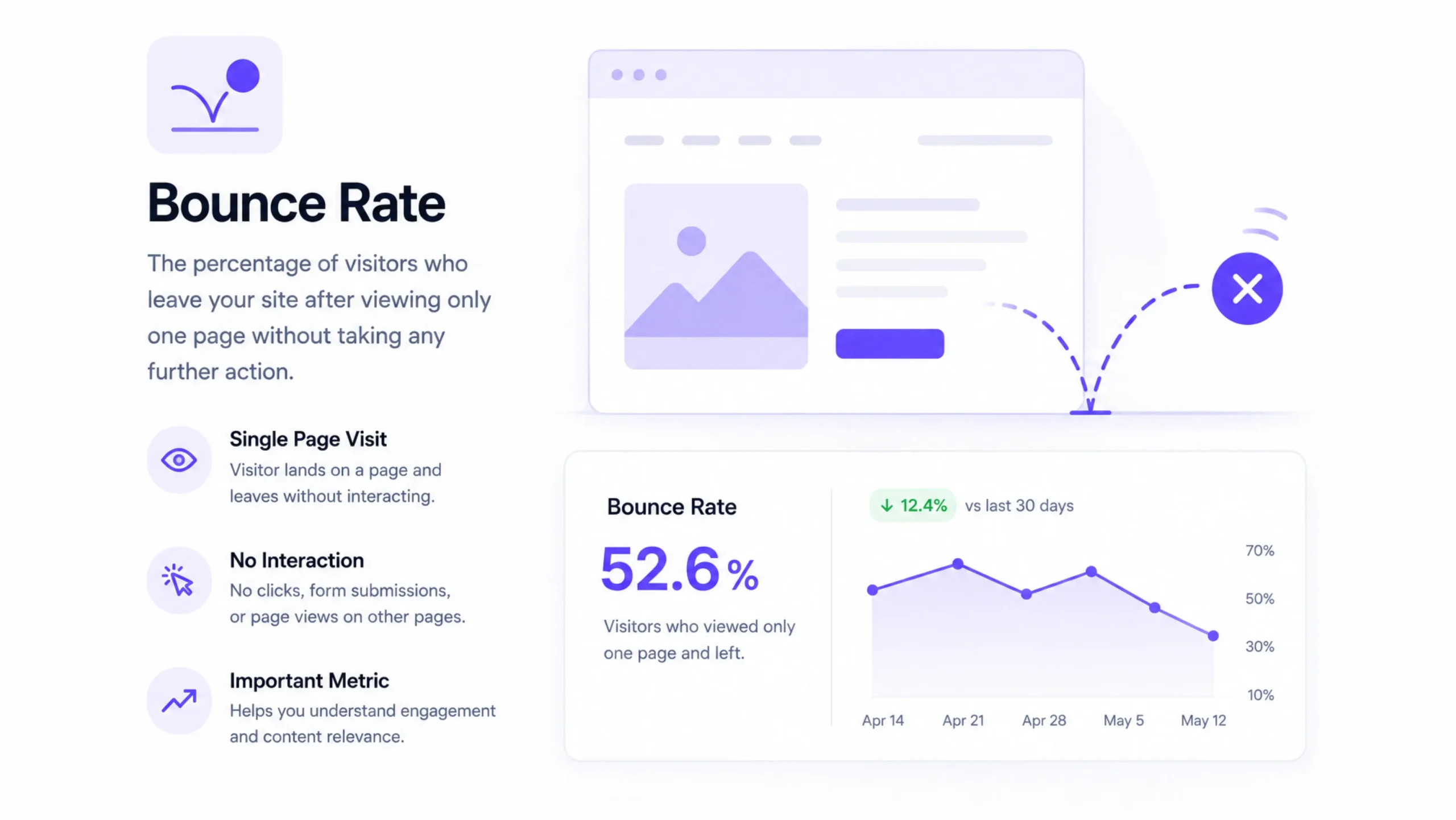
Bounce Rate is a website analytics metric that measures the percentage of visitors who enter a website and leave without interacting further. They view a single page and then exit the site without clicking another page, filling out a form, making a purchase, or completing any meaningful action.
In simple terms, a bounce occurs when someone arrives on a webpage and leaves without continuing their visit.
Imagine walking into a store, taking a quick look around the entrance, and immediately walking back out. That’s essentially what a bounce represents in the digital space.
Website owners, marketers, designers, and SEO professionals often monitor bounce rate to better understand visitor behavior and identify potential issues with user experience or content performance.
Why Does Bounce Rate Matter?
Traffic alone doesn’t tell the whole story.
A website may attract thousands of visitors each month, but if most people leave immediately, something might not be working as expected.
Bounce rate helps businesses understand:
- Visitor engagement
- Content relevance
- User experience quality
- Marketing campaign effectiveness
- Website performance issues
A high bounce rate doesn’t automatically mean failure. Context matters.
A visitor might find the exact answer they need on a single page and leave satisfied. On the other hand, they might leave because the page loads slowly or doesn’t meet their expectations.
That’s why bounce rate should be analyzed alongside other metrics.
How Is Bounce Rate Calculated?
The formula is straightforward.
Number of Single-Page Sessions ÷ Total Sessions × 100
For example:
- Total Visits: 1,000
- Single-Page Visits: 600
Bounce Rate = 60%
This means 60% of visitors left without exploring another page or taking additional actions.
What Is Considered a Good Bounce Rate?
There’s no universal number that applies to every website.
Different industries and page types naturally produce different bounce rates.
Here are some common ranges:
| Bounce Rate | Interpretation |
|---|---|
| 20% – 40% | Very strong engagement |
| 41% – 55% | Healthy performance |
| 56% – 70% | Average for many websites |
| Above 70% | May require investigation |
A blog article may have a higher bounce rate than an ecommerce website.
A knowledge base article may perform perfectly well with a bounce rate that would concern an online store owner.
That’s why comparisons should always be made within similar website categories.
Why Do Visitors Bounce?
Visitors leave websites for many reasons.
Sometimes the page fails to meet expectations. Sometimes visitors simply find what they need immediately.
Let’s look at some common causes.
Slow Loading Speed
People are impatient online.
A few extra seconds of loading time can cause visitors to abandon a page before it fully appears.
Think about your own browsing habits. Most people won’t wait very long.
Poor Mobile Experience
Mobile traffic dominates many industries.
If a website looks broken, cluttered, or difficult to use on a phone, visitors often leave quickly.
Misleading Marketing
A mismatch between an advertisement and a landing page creates frustration.
If someone clicks an ad promising one thing and finds something completely different, they are likely to exit immediately.
Weak Content
Visitors arrive expecting answers, information, or solutions.
Content that feels vague, outdated, or unhelpful often increases bounce rates.
Difficult Navigation
Users should know where to go next.
Confusing menus, broken links, and poor page structure can stop visitors from exploring further.
Too Many Distractions
Ironically, pages packed with pop-ups, banners, autoplay videos, and promotional messages may push visitors away rather than keep them engaged.
Bounce Rate and SEO
Many people assume bounce rate is a direct ranking factor.
The reality is more complicated.
Search engines focus on user satisfaction and relevance. Bounce rate itself isn’t typically used as a direct ranking signal, but it can reveal issues that impact SEO performance.
For example:
- Poor content quality
- Slow page speed
- Weak user experience
- Irrelevant search traffic
If visitors consistently leave because a page fails to meet their expectations, organic performance may suffer over time.
A page that answers search intent effectively may still have a high bounce rate while delivering excellent results.
That’s why context matters so much.
Bounce Rate vs Exit Rate
These two metrics are often confused.
They’re related, but they’re not the same thing.
Bounce Rate
Measures visitors who leave after viewing only one page.
Exit Rate
Measures the percentage of visitors who leave from a specific page, regardless of how many pages they viewed beforehand.
For example:
A visitor views:
Homepage → Services Page → Contact Page → Leaves
This contributes to the Contact Page’s exit rate but not the website’s bounce rate.
Understanding this distinction helps marketers interpret data more accurately.
Pages That Naturally Have Higher Bounce Rates
Not every page is meant to encourage multiple page views.
Some pages naturally produce higher bounce rates.
Examples include:
Blog Posts
A visitor may read an article, get the information they need, and leave.
Dictionary and Glossary Pages
People often search for a specific definition, read it, and move on.
Contact Information Pages
Visitors may grab a phone number or email address and leave.
News Articles
Readers frequently consume a single article and then return to other activities.
These situations aren’t necessarily negative.
The page may have accomplished its purpose successfully.
How to Reduce Bounce Rate
Reducing bounce rate starts with understanding why visitors leave.
Several improvements can encourage users to stay longer and explore further.
Improve Page Speed
Faster websites create better experiences.
Compress images, reduce unnecessary scripts, and improve server performance where possible.
Create Better Content
Content should answer questions clearly and provide genuine value.
People stay longer when information feels useful and relevant.
Add Internal Links
Guide visitors to related content.
Helpful internal links create natural pathways through the website.
Strengthen Calls to Action
Tell visitors what to do next.
A clear next step can significantly improve engagement.
Improve Readability
Large blocks of text can feel overwhelming.
Use:
- Headings
- Subheadings
- Lists
- Visual elements
- White space
These make content easier to consume.
Optimize for Mobile Devices
Mobile-friendly websites often experience stronger engagement and lower bounce rates.
Bounce Rate in Modern Analytics
Analytics platforms continue to evolve.
For example, modern versions of Google Analytics place greater emphasis on engagement metrics rather than traditional bounce rate measurements alone.
Metrics such as:
- Engaged sessions
- Average engagement time
- Conversion events
- User interactions
provide deeper insights into visitor behavior.
Still, bounce rate remains a useful indicator when interpreted correctly.
Common Bounce Rate Misconceptions
Several myths surround bounce rate.
Myth 1: A High Bounce Rate Is Always Bad
Not necessarily.
Some pages achieve their purpose with a single visit.
Myth 2: Bounce Rate Equals Failure
A visitor may leave satisfied after finding exactly what they wanted.
Myth 3: Every Website Should Aim for the Same Bounce Rate
Different industries and content types produce different visitor behaviors.
Comparisons should remain relevant to the website’s purpose.
Final Thoughts
Bounce Rate measures the percentage of visitors who leave a website after viewing only one page. While it can provide valuable insights into engagement and user behavior, it should never be viewed in isolation.
A high bounce rate may reveal issues such as slow loading speeds, poor user experience, weak content, or mismatched traffic sources. Yet in some cases, it simply indicates that visitors found the information they needed quickly.
The key is understanding the context behind the numbers. By combining bounce rate data with engagement, conversion, and user experience metrics, businesses can make smarter decisions and create more effective digital experiences.
Frequently Asked Questions (FAQs)
1. What is bounce rate?
Bounce rate is the percentage of visitors who leave a website after viewing only one page without taking further action.
2. Is a high bounce rate always bad?
No. Some pages naturally have high bounce rates because visitors find the information they need and leave satisfied.
3. What causes a high bounce rate?
Common causes include slow loading speed, poor mobile experience, irrelevant content, confusing navigation, and mismatched marketing messages.
4. What is a good bounce rate?
A bounce rate between 40% and 60% is considered normal for many websites, though acceptable ranges vary by industry and page type.
5. How can bounce rate be reduced?
Improving page speed, creating better content, optimizing mobile usability, adding internal links, and strengthening calls to action can help reduce bounce rate.
6. What is the difference between bounce rate and exit rate?
Bounce rate measures visitors who leave after viewing one page, while exit rate measures visitors who leave from a specific page after viewing one or more pages.