


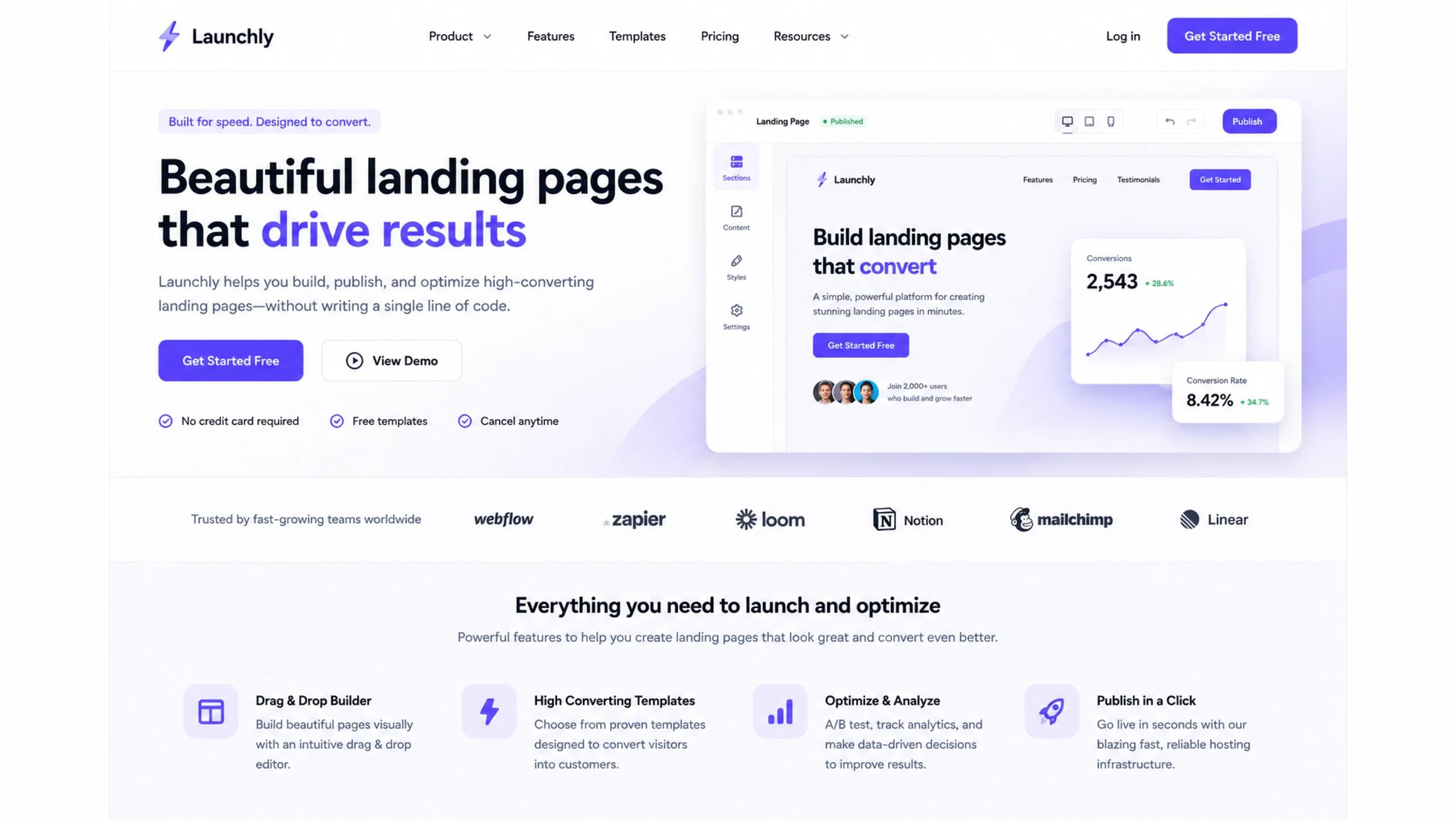
What Is a Landing Page?
A landing page is a dedicated web page designed to persuade visitors to take a specific action. Unlike a traditional website homepage, which often contains multiple navigation options and destinations, a landing page focuses on a single objective.
That objective might be signing up for a newsletter, downloading an ebook, requesting a demo, purchasing a product, registering for an event, or filling out a contact form.
Think of it like a well-trained salesperson. A homepage introduces your company and points visitors in many directions. A landing page, by contrast, has one job and sticks to it.
A visitor clicks an advertisement, email link, social media post, or search result and arrives on a page created specifically for that campaign. The experience feels direct and intentional, which often leads to higher conversion rates.
A Quick Look at How Landing Pages Work
Imagine you’re running a coffee shop and offering a free coffee coupon. You could send people to your homepage and hope they find the offer. Or you could send them to a dedicated page that highlights the coupon and includes a simple claim form.
Most businesses discover that the second approach performs much better.
That’s the basic idea behind landing pages. Remove distractions, keep the message clear, and guide visitors toward one action.
Why Are Landing Pages Important?
Many businesses spend money driving traffic through advertising, SEO, social media, and email campaigns. Yet traffic alone doesn’t generate results.
Visitors need direction.
A landing page helps bridge the gap between attracting visitors and converting them into customers, subscribers, or leads.
Some common benefits include:
- Higher conversion rates
- Better campaign tracking
- More qualified leads
- Improved user experience
- Stronger marketing performance
- Clearer messaging
You know what? Sometimes a small change in a landing page headline can generate more leads than increasing an advertising budget.
Key Elements of a Landing Page
Successful landing pages share several common components.
Compelling Headline
The headline is usually the first thing visitors notice. It should explain the offer clearly and quickly.
A good headline answers the question:
“What do I get if I stay on this page?”
Supporting Copy
The content should explain the offer, benefits, and value without overwhelming readers.
Keep the focus on solving problems rather than listing features.
Visual Elements
Images, videos, illustrations, screenshots, and product demonstrations help visitors understand the offer faster.
Visual content often communicates value in seconds.
Call-to-Action (CTA)
The CTA is the action you want visitors to take.
Examples include:
- Start Free Trial
- Book a Demo
- Download Guide
- Subscribe Now
- Get Started
The CTA should be visible, simple, and persuasive.
Lead Capture Form
Many landing pages include forms that collect information such as:
- Name
- Email address
- Phone number
- Company name
Shorter forms usually generate more submissions, though business goals may require additional details.
Social Proof
People trust other people.
Testimonials, reviews, ratings, client logos, and case studies help build confidence.
A visitor may hesitate for a moment, see positive customer feedback, and then decide to take action.
Trust Signals
Trust signals reduce uncertainty.
Examples include:
- Security badges
- Money-back guarantees
- Certifications
- Privacy statements
- Industry awards
These small details often make a noticeable difference.
Types of Landing Pages
Landing pages come in different forms depending on the objective.
Lead Generation Landing Pages
These pages collect visitor information through forms.
They are popular among SaaS companies, agencies, consultants, healthcare providers, and educational institutions.
Click-Through Landing Pages
These pages warm visitors up before sending them to a pricing page or checkout process.
The goal is to build interest and reduce hesitation.
Product Landing Pages
Product pages highlight features, benefits, pricing, and customer success stories.
Technology startups frequently use them for software launches.
Event Registration Pages
Event organizers use landing pages to promote webinars, conferences, workshops, and training sessions.
Sales Landing Pages
These pages focus heavily on persuasion and often include long-form content, testimonials, FAQs, and pricing details.
Landing Pages vs Homepages
People often confuse landing pages with homepages.
The difference is simple.
| Homepage | Landing Page |
|---|---|
| Multiple goals | One primary goal |
| Many navigation links | Minimal distractions |
| General company information | Campaign-specific content |
| Broad audience | Targeted audience |
| Exploration-focused | Conversion-focused |
A homepage welcomes visitors.
A landing page persuades visitors.
Both are valuable, though they serve different purposes.
What Makes a Landing Page Effective?
Here’s the thing: successful landing pages rarely rely on flashy design alone.
They combine several elements that work together.
Clear Value Proposition
Visitors should understand the offer within seconds.
Consistent Messaging
The page should match the advertisement, email, or campaign that brought visitors there.
Unexpected messaging often causes people to leave.
Mobile-Friendly Design
Mobile traffic continues to grow each year.
Landing pages must work smoothly across smartphones, tablets, and desktops.
Fast Loading Speed
Slow pages frustrate users.
Every extra second can reduce conversions.
Simple User Flow
Reduce unnecessary choices and guide visitors through a straightforward path.
Common Landing Page Mistakes
Even experienced marketers make mistakes.
Some common ones include:
- Too many calls-to-action
- Weak headlines
- Long forms
- Poor mobile experience
- Slow loading times
- Generic stock images
- Lack of trust signals
- Confusing page layouts
Ironically, adding more information can sometimes reduce results. Visitors often respond better to clarity than complexity.
Landing Page Tools and Platforms
Several tools help businesses create landing pages without extensive coding.
Popular options include:
- Framer
- Webflow
- Unbounce
- Leadpages
- Instapage
- HubSpot
- WordPress
- Shopify
Many of these platforms offer drag-and-drop builders, templates, analytics, and A/B testing capabilities.
Landing Pages and Conversion Rate Optimization
Landing pages play a major role in Conversion Rate Optimization (CRO).
Marketers frequently test:
- Headlines
- CTA buttons
- Images
- Form lengths
- Page layouts
- Colors
- Testimonials
Small improvements can create significant gains over time.
A one-percent increase may sound minor. Yet for a business generating thousands of monthly leads, that small gain can produce meaningful revenue growth.
The Future of Landing Pages
Landing pages continue to evolve.
Artificial intelligence, personalization, behavioral targeting, and dynamic content are changing how businesses communicate with visitors.
Many modern landing pages can adjust messaging based on user behavior, location, traffic source, or audience segment.
The goal remains the same, though: present the right message to the right person at the right moment.
Final Thoughts
A landing page is one of the most effective tools for turning website visitors into leads, customers, subscribers, or prospects. By focusing attention on a single goal and removing distractions, landing pages create a clear path for action.
Businesses that invest in thoughtful landing page design often see stronger campaign performance, better lead quality, and higher conversion rates. Whether you’re promoting a product, collecting leads, or launching a new service, a well-crafted landing page can make a measurable difference.
Frequently Asked Questions (FAQs)
1. What is a landing page used for?
A landing page is used to encourage visitors to complete a specific action, such as signing up, making a purchase, requesting a demo, or downloading a resource.
2. How is a landing page different from a homepage?
A homepage serves multiple purposes and audiences, while a landing page focuses on a single goal and campaign-specific message.
3. Can a landing page improve conversion rates?
Yes. Landing pages reduce distractions and guide visitors toward one action, which often increases conversion rates.
4. What should every landing page include?
Most landing pages should include a clear headline, supporting content, visual elements, a call-to-action, trust signals, and a simple conversion form.
5. Are landing pages important for paid advertising?
Yes. Paid advertising campaigns typically perform better when visitors are directed to dedicated landing pages instead of general website pages.
6. Which tools can be used to create landing pages?
Popular tools include Framer, Webflow, Unbounce, Leadpages, HubSpot, Shopify, and WordPress.