


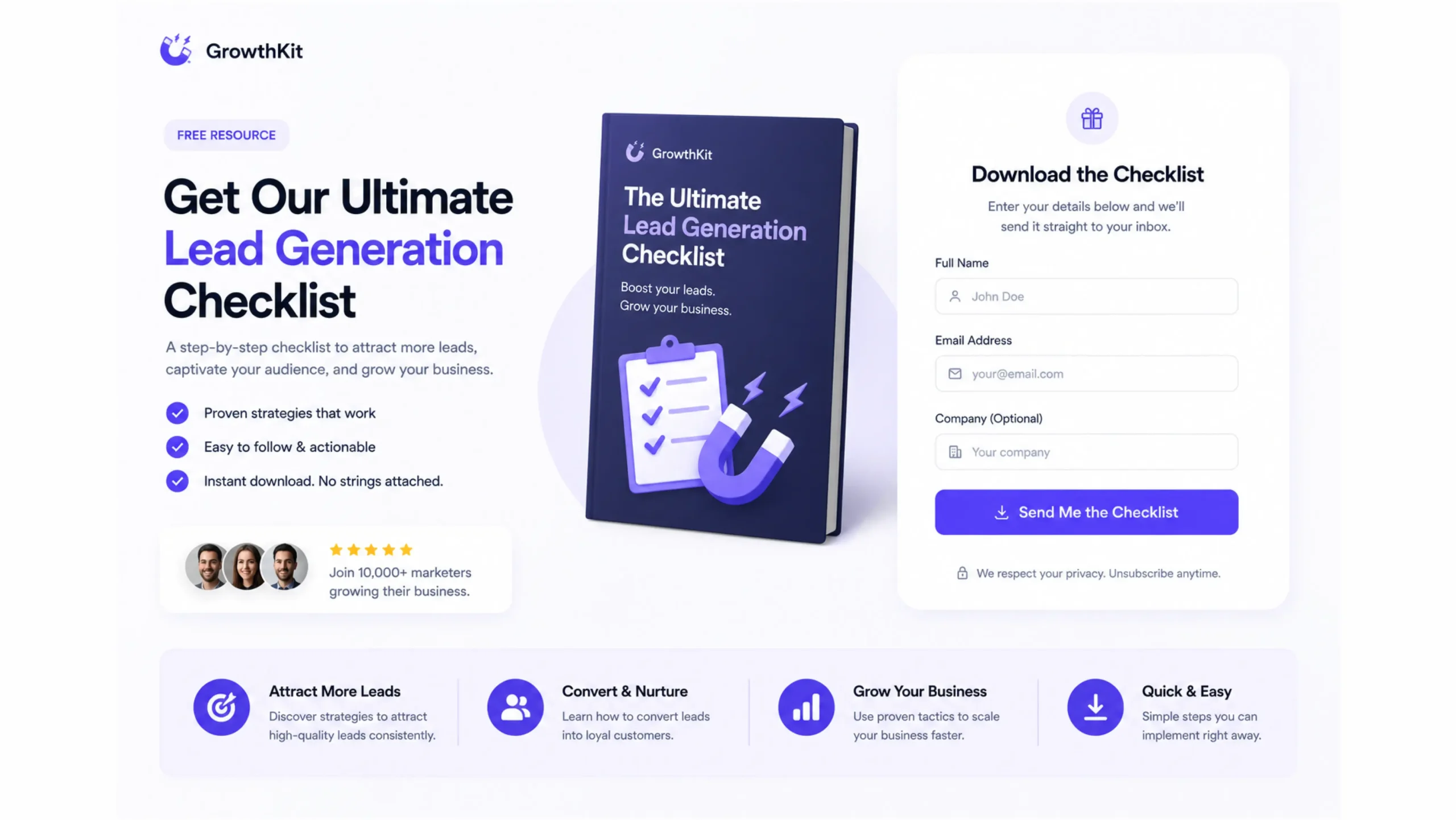
What Is a Lead Magnet?
A lead magnet is a valuable piece of content or an offer that businesses provide for free in exchange for a visitor’s contact details, usually an email address.
Think about the last time you downloaded an ebook, signed up for a free template, received a discount coupon, or accessed a webinar. Chances are, you interacted with a lead magnet.
Businesses use lead magnets to attract people who may be interested in their products or services. Instead of asking visitors to buy immediately, they offer something useful first. It’s a simple exchange: value for contact information.
This approach helps companies build trust before making a sales pitch.
Why Are Lead Magnets Important?
Getting website traffic is only half the battle. Visitors may browse a website, read a blog post, and leave without taking any action.
That’s where lead magnets come in.
A well-crafted lead magnet gives visitors a reason to stay connected. It turns anonymous traffic into identifiable prospects who can later receive emails, offers, updates, and educational content.
For businesses, this means:
- More qualified leads
- Larger email lists
- Better customer relationships
- Increased sales opportunities
- Improved marketing performance
For visitors, it means getting something useful without spending money.
It’s a win-win arrangement when done correctly.
How Does a Lead Magnet Work?
The process is surprisingly simple.
A visitor lands on a website and sees an offer that solves a specific problem or provides immediate value. Interested users submit their contact information through a form.
After completing the form, they receive the promised resource.
The business gains a lead, and the visitor gains something valuable.
Picture a fitness coach offering a free meal-planning guide. Someone interested in healthier eating downloads the guide and joins the coach’s email list. Later, that person may become a paying client.
The lead magnet starts the relationship.
Common Types of Lead Magnets
Lead magnets come in many formats. The most effective ones usually solve a small problem quickly.
Ebooks
Ebooks remain one of the most popular lead magnets.
They allow businesses to educate potential customers while showcasing expertise.
Examples include:
- Beginner’s guides
- Industry reports
- Educational resources
- Strategy handbooks
Checklists
People love checklists because they’re practical and easy to use.
A checklist helps users complete a task step by step without feeling overwhelmed.
Templates
Templates save time.
Designers, marketers, developers, and business owners frequently exchange their email addresses for ready-made resources.
Examples include:
- Proposal templates
- Design templates
- Budget spreadsheets
- Social media calendars
Webinars
Webinars provide educational value while allowing businesses to connect directly with their audience.
Many software companies use webinars to demonstrate products and answer questions in real time.
Free Trials
Software businesses often offer limited-time access to their products.
This allows potential customers to experience the product before making a purchase decision.
Discount Coupons
Ecommerce brands commonly offer discounts in exchange for email subscriptions.
A simple “Get 10% Off Your First Order” message can be surprisingly effective.
Resource Libraries
Some companies provide access to a collection of tools, guides, videos, and templates.
These libraries often attract highly engaged audiences.
What Makes a Good Lead Magnet?
Not every free offer generates leads.
People share their contact information only when the perceived value feels worthwhile.
A strong lead magnet typically has several characteristics.
It Solves a Specific Problem
General advice often gets ignored.
Specific solutions attract attention.
For example:
“Marketing Guide” sounds broad.
“10-Step SaaS Launch Checklist” feels far more useful.
It Delivers Quick Results
Visitors prefer resources that help them immediately.
The faster the value, the better the conversion potential.
It Matches Audience Interests
A lead magnet should attract the same audience that might eventually purchase the product or service.
A mismatch creates poor-quality leads.
It Is Easy to Consume
Nobody wants to download a 300-page document to solve a simple issue.
Short guides, templates, checklists, and cheat sheets often perform well because they’re easy to digest.
It Builds Trust
A good lead magnet demonstrates expertise without feeling like a sales brochure.
People appreciate helpful information. Constant selling usually pushes them away.
Lead Magnets and Email Marketing
Lead magnets and email marketing work together.
The lead magnet captures contact information. Email marketing nurtures the relationship.
Once someone joins an email list, businesses can continue providing value through:
- Educational emails
- Product updates
- Industry insights
- Case studies
- Promotional campaigns
The goal isn’t immediate sales every time.
It’s about building familiarity and trust over time.
People tend to buy from brands they recognize and trust.
Popular Lead Magnet Examples
Many successful companies use lead magnets as part of their marketing strategy.
Here are a few examples:
- HubSpot offers marketing guides and templates.
- Canva provides free design resources.
- Shopify shares ecommerce guides and business tools.
- Mailchimp offers marketing checklists and tutorials.
- Semrush provides free SEO tools and reports.
Each example focuses on delivering something genuinely useful.
That’s often the difference between a lead magnet people download and one they ignore.
Lead Magnet vs Landing Page
These terms are often confused, though they serve different purposes.
A lead magnet is the offer itself.
A landing page is the page used to promote that offer.
For example:
- Free SEO Checklist = Lead Magnet
- Web page promoting and delivering the checklist = Landing Page
The two frequently work together.
Mistakes Businesses Make with Lead Magnets
Some lead magnets fail because they miss the mark.
Common mistakes include:
Asking for Too Much Information
Long forms create friction.
Many users hesitate when asked for excessive details.
Offering Generic Content
Visitors have seen thousands of generic PDFs.
The offer needs to feel useful and relevant.
Focusing on Features Instead of Value
People care about outcomes.
Explain what the resource helps them achieve.
Poor Design and Presentation
A valuable resource can lose credibility if it looks rushed or outdated.
Presentation matters.
Attracting the Wrong Audience
A lead magnet should attract potential customers, not random visitors looking for free content.
Measuring Lead Magnet Success
Businesses often track several metrics to evaluate performance.
These include:
- Conversion rate
- Number of leads generated
- Cost per lead
- Email open rates
- Click-through rates
- Sales generated from leads
High download numbers are great, though lead quality matters just as much.
A smaller list of interested prospects often performs better than a massive list of unqualified contacts.
Lead Magnets in Modern Marketing
Lead magnets continue to play a major role in digital marketing.
People have become more selective about sharing their email addresses. That means businesses must provide genuine value.
Artificial intelligence, personalization, and interactive content are shaping newer lead magnet formats.
Today, visitors might exchange their contact details for:
- AI-powered assessments
- Interactive calculators
- Personalized reports
- Industry benchmarks
- Custom recommendations
The format changes, but the principle stays the same: provide value first.
Final Thoughts
A lead magnet is one of the most effective ways to turn website visitors into potential customers. By offering something useful in exchange for contact information, businesses can build email lists, generate qualified leads, and create meaningful relationships with their audience.
The strongest lead magnets solve a clear problem, deliver value quickly, and attract the right people. Whether it’s a checklist, ebook, webinar, template, or free trial, a thoughtful lead magnet can become a powerful part of a company’s growth strategy.
Frequently Asked Questions (FAQs)
1. What is a lead magnet?
A lead magnet is a free resource or incentive offered in exchange for a visitor’s contact information, typically an email address.
2. Why are lead magnets important?
Lead magnets help businesses generate leads, grow email lists, and build relationships with potential customers.
3. What are common examples of lead magnets?
Popular examples include ebooks, checklists, templates, webinars, discount coupons, free trials, and downloadable guides.
4. What makes a lead magnet effective?
An effective lead magnet solves a specific problem, provides immediate value, matches audience interests, and is easy to consume.
5. Can small businesses use lead magnets?
Yes. Lead magnets are useful for businesses of all sizes and can be created with minimal cost.
6. What is the difference between a lead magnet and a landing page?
A lead magnet is the offer itself, while a landing page is the web page used to present and promote that offer.