


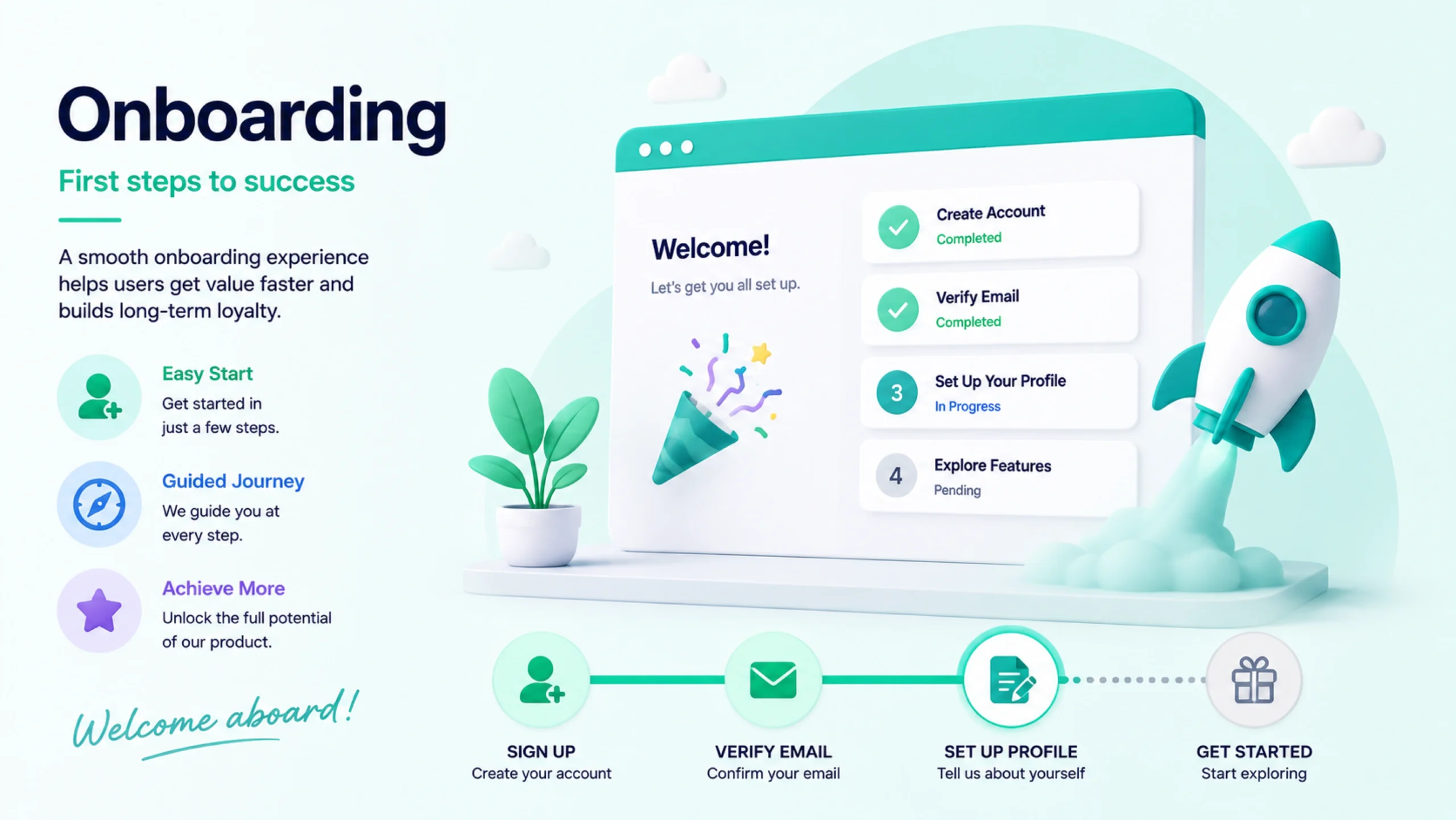
What Is Onboarding?
Onboarding is the process of introducing someone to a product, platform, service, or company and helping them become comfortable using it.
Think about moving into a new house. You don’t instantly know where everything is. You spend time exploring rooms, learning how things work, and settling in. Onboarding works much the same way.
For businesses, onboarding helps new users or customers reach their first success quickly. For employees, it helps them understand their role, company culture, and responsibilities.
A strong onboarding experience removes confusion and creates confidence from day one.
Why Onboarding Matters
First impressions carry weight.
A customer might spend weeks researching software before signing up. If the first experience feels confusing, frustration can appear almost immediately.
Many companies spend significant budgets attracting customers. Yet surprisingly, many lose users during the first few days because they fail to explain how the product works or why it matters.
Good onboarding helps people:
- Understand product value faster
- Build confidence
- Complete important setup steps
- Stay engaged longer
- Reach goals sooner
When people experience quick wins, they’re more likely to stick around.
How Onboarding Works
The onboarding process varies depending on the business, but the goal stays the same: help people succeed quickly.
A typical onboarding journey may include:
Welcome Experience
The first interaction introduces users to the product or platform.
Setup and Configuration
Users complete account settings, preferences, or integrations.
Guided Learning
Tooltips, tutorials, videos, or walkthroughs explain key features.
First Success Milestone
Users achieve an important goal that demonstrates value.
Ongoing Support
Help articles, customer success teams, and training resources provide continued guidance.
Each step builds confidence and reduces uncertainty.
Different Types of Onboarding
Onboarding isn’t limited to software products.
Customer Onboarding
Helps new customers learn how to use a product or service effectively.
Employee Onboarding
Introduces new hires to company culture, processes, and expectations.
Client Onboarding
Used by agencies, consultants, and service providers to gather information and begin projects smoothly.
Product Onboarding
Focuses specifically on helping users understand product features and workflows.
Although the audience changes, the objective remains similar—help people get comfortable and productive.
The Building Blocks of Great Onboarding
Successful onboarding often includes a few common ingredients.
Clear Instructions
People should always know what to do next.
Simple Steps
Breaking tasks into manageable actions prevents overwhelm.
Progress Indicators
Showing progress encourages completion.
Educational Content
Videos, checklists, and interactive guides help users learn naturally.
Personalized Experiences
Different users may have different goals. Personalized onboarding can make guidance more relevant.
The best onboarding experiences feel helpful rather than overwhelming.
Why Great Onboarding Pays Off
Here’s the thing.
People don’t buy products because they love learning software. They buy products because they want results.
Onboarding helps bridge that gap.
Businesses with strong onboarding often see:
- Higher customer retention
- Better user engagement
- Increased product adoption
- Lower support requests
- Improved customer satisfaction
For subscription-based businesses, these improvements can directly impact revenue.
Common Onboarding Mistakes
Not every onboarding experience succeeds.
Some common mistakes include:
Too Much Information
Trying to teach everything at once can confuse users.
Too Little Guidance
Leaving users to figure things out alone often leads to frustration.
Long Setup Processes
Lengthy forms and complicated configurations create friction.
Generic Experiences
Users with different goals may need different paths.
Ignoring User Feedback
Customers frequently reveal onboarding issues through support requests and reviews.
Small obstacles during onboarding can become major reasons people leave.
Measuring Onboarding Success
Companies track several metrics to evaluate onboarding performance.
Time to First Value
How quickly users experience meaningful benefits.
Activation Rate
The percentage of users who complete key onboarding actions.
Product Adoption
How many features users actively use after onboarding.
Retention Rate
The number of users who continue using the product over time.
Customer Satisfaction
Feedback collected through surveys and reviews.
These metrics help teams identify weak points and opportunities for improvement.
Onboarding in SaaS Products
Onboarding plays a particularly important role in SaaS businesses.
Many software products operate through subscriptions. A customer who signs up but never fully understands the platform may cancel quickly.
This is why SaaS companies invest heavily in onboarding experiences.
Popular SaaS platforms often use:
- Interactive product tours
- Welcome emails
- Setup checklists
- Video tutorials
- Customer success programs
- Knowledge bases
The goal is helping users achieve value as quickly as possible.
Technology Is Changing Onboarding
Artificial intelligence and automation are beginning to influence onboarding experiences.
Many modern platforms now provide:
- Personalized walkthroughs
- Smart recommendations
- Automated training paths
- Behavioral guidance based on user actions
Yet the foundation remains unchanged.
People want clarity. They want confidence. They want to know they’re heading in the right direction.
Technology simply helps deliver that experience more efficiently.
Final Thoughts
Onboarding is the process of helping new users, customers, employees, or clients become comfortable and successful with a product, service, or organization. It creates the first meaningful experience after signup, purchase, or hiring.
A thoughtful onboarding process reduces confusion, builds confidence, improves retention, and helps people achieve value faster. For businesses, it often becomes one of the strongest drivers of long-term customer satisfaction and growth.
Frequently Asked Questions (FAQs)
1. What is onboarding?
Onboarding is the process of helping new users, customers, or employees learn how to use a product, service, or system effectively.
2. Why is onboarding important?
It helps people understand value quickly, reduces confusion, improves engagement, and increases retention.
3. What is customer onboarding?
Customer onboarding introduces new customers to a product or service and helps them achieve early success.
4. What is product onboarding?
Product onboarding focuses on teaching users how to navigate and use a product’s key features.
5. How do companies measure onboarding success?
Common metrics include activation rate, retention rate, time to first value, customer satisfaction, and feature adoption.
6. What makes a good onboarding experience?
Clear instructions, simple steps, educational resources, personalization, and quick wins help create an effective onboarding experience.