


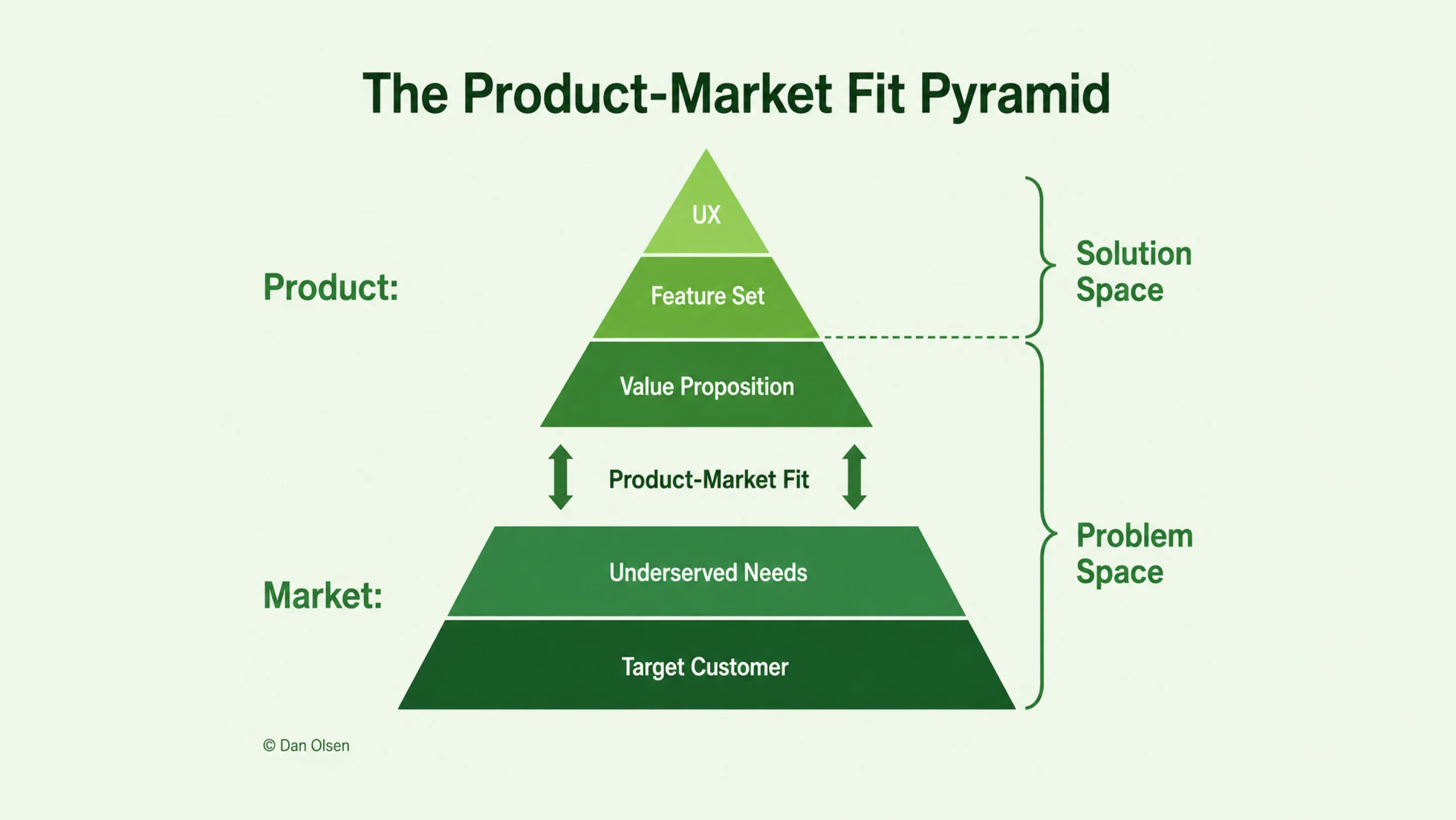
What Is Product-Market Fit?
Product-Market Fit describes the point at which a product successfully satisfies a real market need and customers actively want, use, and recommend it.
It’s one of the most talked-about concepts in startups, SaaS businesses, mobile apps, and digital products.
Yet it often sounds mysterious.
People discuss it as if it’s a magical milestone.
In reality, it’s much easier to recognize than many think.
When customers genuinely need your product, continue using it, and would be disappointed if it disappeared tomorrow, you’re getting very close.
That’s Product-Market Fit.
Why Product-Market Fit Matters So Much
Many products fail for a simple reason.
They solve a problem that customers don’t care enough about.
A team can have:
- Great designers
- Talented developers
- Strong branding
- Large budgets
- Advanced technology
Yet none of those things guarantee success.
If the market doesn’t need the solution, growth becomes difficult.
Think of it like opening a coffee shop.
You could have beautiful interiors, premium furniture, and amazing packaging.
But if nobody nearby wants specialty coffee, the business struggles.
The same principle applies to software products.
Before growth comes demand.
Before demand comes Product-Market Fit.
The Simple Explanation
Here’s the thing.
Product-Market Fit happens when three elements come together:
- A real customer problem
- A product that solves it
- A market willing to adopt the solution
Remove any one of these pieces and the equation falls apart.
A strong product without a meaningful problem rarely succeeds.
A meaningful problem without a useful solution doesn’t help anyone.
A solution with no market demand remains invisible.
Success happens when all three connect.
The Origin of Product-Market Fit
The term became widely known through entrepreneur and investor Marc Andreessen.
He described Product-Market Fit as being in a good market with a product that can satisfy that market.
The statement sounds simple.
Yet countless companies spend years trying to achieve exactly that.
The challenge isn’t building products.
The challenge is building products people truly want.
What Does Product-Market Fit Feel Like?
Many founders describe Product-Market Fit as a noticeable shift.
Before finding it, growth feels forced.
After finding it, momentum starts appearing naturally.
Customers begin:
- Referring others
- Returning frequently
- Requesting new features
- Leaving positive reviews
- Recommending the product to colleagues
Support teams hear fewer questions about basic value.
Sales conversations become easier.
Marketing feels more effective.
The product starts pulling customers in rather than pushing them.
Signs You’ve Achieved Product-Market Fit
There isn’t a single universal metric.
Still, several indicators appear repeatedly.
Customers Keep Coming Back
Retention is one of the strongest signals.
People continue using the product because it helps them accomplish something meaningful.
Repeated usage often reveals genuine value.
Users Recommend the Product
Word-of-mouth growth is powerful.
People rarely recommend products they don’t care about.
Referrals often indicate strong satisfaction.
Customer Acquisition Becomes Easier
Marketing costs may decrease.
Conversion rates often improve.
Potential customers understand the value proposition more quickly.
Users Would Miss the Product
A common test asks:
“How would you feel if you could no longer use this product?”
If a large percentage of users say they would be very disappointed, Product-Market Fit may be emerging.
Revenue Becomes More Predictable
For subscription products, customer retention often improves.
Recurring revenue becomes steadier.
Growth becomes easier to forecast.
Signs You’re Still Looking for Product-Market Fit
Many products haven’t reached Product-Market Fit yet.
That’s normal.
Most successful companies spent considerable time searching for it.
Common warning signs include:
- High customer churn
- Low engagement
- Weak retention
- Frequent confusion about value
- Slow organic growth
- Limited referrals
Sometimes customers sign up but never return.
Other times they use the product once and disappear.
Those behaviors often signal a mismatch between the solution and market needs.
Product-Market Fit Isn’t the Same as Product Development
Many people confuse these concepts.
Building a product and achieving Product-Market Fit are different things.
A team can release a polished application with hundreds of features and still miss the market.
Meanwhile, a simple product can gain strong traction because it solves the right problem.
Product development focuses on creating the solution.
Product-Market Fit focuses on validating demand.
Both matter.
One doesn’t replace the other.
How Companies Find Product-Market Fit
There isn’t a guaranteed formula.
Most successful products follow a similar pattern.
Start With Customer Problems
Strong products usually begin with research.
Teams talk to customers.
They observe behaviors.
They identify frustrations.
The goal is discovering problems worth solving.
Build a Focused Solution
Early products should remain focused.
Trying to solve every problem often weakens the experience.
Many successful products began by addressing a single pain point exceptionally well.
Test With Real Users
Assumptions can be dangerous.
Customer feedback reveals reality.
Teams learn:
- What users value
- What users ignore
- What causes friction
- What creates excitement
Those insights guide future improvements.
Iterate Continuously
Product-Market Fit rarely appears overnight.
Products evolve.
Features change.
Positioning shifts.
Markets respond.
Teams learn.
The process repeats.
Each iteration moves the product closer to stronger market acceptance.
Common Mistakes That Prevent Product-Market Fit
Many organizations unknowingly create barriers.
Building Too Many Features
More features don’t automatically create more value.
Sometimes they create confusion.
Simplicity often reveals what customers truly need.
Ignoring User Feedback
Teams occasionally fall in love with their own ideas.
Customers rarely care about internal assumptions.
Their behavior tells the real story.
Solving Small Problems
Some problems exist but aren’t painful enough to motivate action.
People may agree a problem exists while still refusing to pay for a solution.
The strongest products solve meaningful frustrations.
Chasing Competitors
Copying competitors rarely creates differentiation.
Customers need a reason to choose one product over another.
Distinct value matters.
Measuring Vanity Metrics
Downloads and page views can look impressive.
Retention and engagement often tell a more accurate story.
Numbers only matter if they reflect genuine customer value.
Measuring Product-Market Fit
Several approaches help teams evaluate progress.
Retention Metrics
Do users return?
Do they continue engaging over time?
Retention often provides stronger insights than acquisition numbers.
Customer Satisfaction Surveys
Feedback surveys reveal how customers feel about the product.
Patterns become visible over time.
Net Promoter Score (NPS)
NPS measures willingness to recommend a product.
Strong recommendations often indicate growing customer loyalty.
Revenue Growth
Paying customers provide powerful validation.
People vote with their wallets.
Consistent revenue growth may indicate increasing demand.
Engagement Data
Frequent usage often signals product value.
Products that become part of daily routines tend to develop stronger customer relationships.
Real-World Examples
Many successful products experienced a period of searching before finding their audience.
Slack
Originally connected to an internal communication need, Slack eventually became a widely adopted workplace collaboration platform.
Airbnb
Early growth was slow.
Continuous experimentation helped identify what travelers and hosts valued most.
Spotify
The company focused on solving frustrations associated with digital music access.
Its product steadily evolved around customer behavior.
Each example demonstrates an important lesson.
Product-Market Fit is usually discovered.
It is rarely guessed correctly from the start.
Product-Market Fit for Startups
For startups, Product-Market Fit often determines survival.
Before scaling marketing efforts, hiring aggressively, or raising large investments, startups need evidence that customers genuinely want the product.
Without Product-Market Fit, growth efforts can amplify problems rather than solve them.
Many experienced founders focus on finding Product-Market Fit before pursuing rapid expansion.
Product-Market Fit for Established Companies
Large organizations aren’t exempt.
Customer expectations change constantly.
Markets shift.
New competitors emerge.
A product that fit the market five years ago may struggle today.
Established companies continuously evaluate customer needs to remain relevant.
The search never truly ends.
Product-Market Fit Is Not Permanent
This surprises many people.
Product-Market Fit isn’t a destination you reach once.
It’s a relationship between a product and its market.
Markets evolve.
Technology changes.
Customer behavior shifts.
New alternatives appear.
Companies must continue listening, learning, and adapting.
The products that remain successful for years are often those that keep refining their fit with changing customer needs.
Final Thoughts
Product-Market Fit occurs when a product successfully solves a meaningful problem for a market that actively wants the solution. It represents one of the most important milestones in product development because it validates that customers see real value in what a company offers.
Strong Product-Market Fit creates momentum. Customers stay longer, recommend the product more frequently, and contribute to sustainable growth.
The path to achieving it usually involves research, experimentation, feedback, and continuous improvement. Teams that stay close to customer needs often discover opportunities that competitors miss.
At its core, Product-Market Fit isn’t about building more features.
It’s about building something people genuinely want.
Frequently Asked Questions (FAQs)
1. What is Product-Market Fit?
Product-Market Fit is the stage where a product successfully meets a market need and customers consistently use, value, and recommend it.
2. Why is Product-Market Fit important?
It helps validate demand, improve retention, support growth, and reduce the risk of investing in products that customers don’t need.
3. How do you know if you’ve achieved Product-Market Fit?
Strong retention, customer referrals, recurring usage, positive feedback, and growing demand are common indicators.
4. Is Product-Market Fit only important for startups?
No. Startups and established companies both need to maintain Product-Market Fit as customer expectations and market conditions change.
5. Can a company lose Product-Market Fit?
Yes. Market trends, technology changes, and shifting customer preferences can weaken Product-Market Fit over time.
6. What is the difference between Product-Market Fit and product development?
Product development focuses on building a solution, while Product-Market Fit focuses on validating that customers genuinely want and need that solution.