


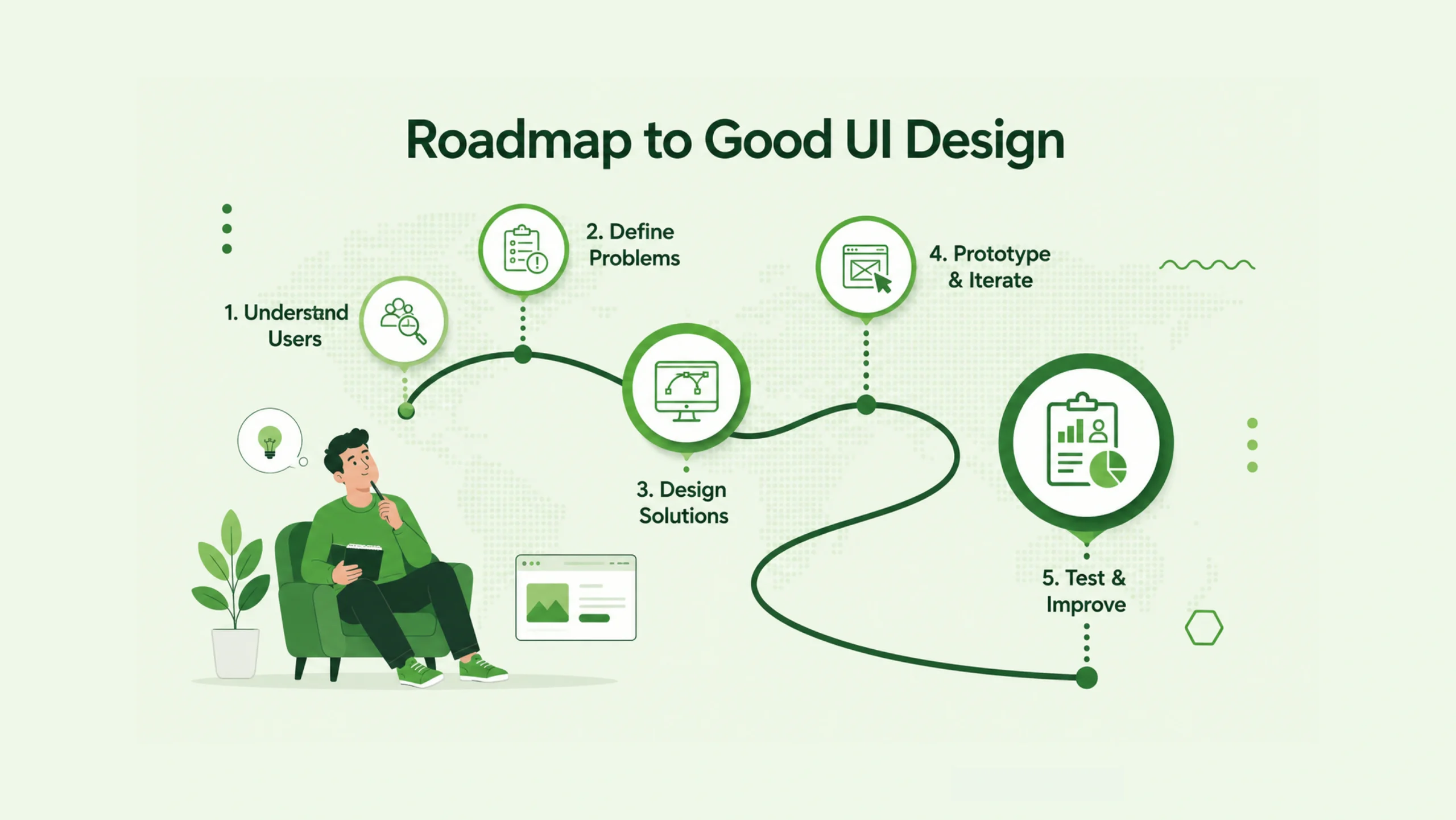
A product roadmap is a strategic plan that outlines the direction, priorities, goals, and major initiatives for a product over a specific period of time.
Think of it as a shared guide that helps teams understand where a product is heading and why certain work is being prioritized.
A roadmap doesn’t describe every task, screen, or feature.
Instead, it provides a bigger picture.
It connects product decisions with business goals and customer needs.
For product managers, designers, developers, executives, and stakeholders, the roadmap becomes a reference point that keeps everyone moving in the same direction.
Why Product Roadmaps Matter
Imagine starting a road trip without knowing the destination.
You might keep driving.
You might stay busy.
Yet you wouldn’t know if you’re making progress.
Products face a similar challenge.
Without a roadmap, teams often work reactively.
New requests appear.
Stakeholders suggest ideas.
Competitors launch features.
Priorities shift weekly.
The result can feel chaotic.
A roadmap creates focus.
It helps teams decide what deserves attention and what can wait.
More Than a Timeline
One common misconception is that a roadmap is simply a schedule.
It isn’t.
A roadmap certainly includes timing and planning, but its primary purpose is communication.
A strong roadmap answers questions such as:
- Where is the product going?
- What goals are we trying to achieve?
- Which initiatives matter most?
- Why are we investing in these improvements?
The “why” often matters more than the dates.
Dates may change.
The product vision should remain clear.
The Main Purpose of a Product Roadmap
A roadmap serves several important functions.
It helps:
- Align teams around shared goals
- Communicate product strategy
- Prioritize initiatives
- Support decision-making
- Manage stakeholder expectations
- Connect customer needs with product development
Without a roadmap, teams may still produce work.
What often disappears is clarity.
What Does a Product Roadmap Include?
Roadmaps vary across organizations, but most contain several common elements.
Product Goals
Goals explain what the product aims to accomplish.
Examples might include:
- Increasing customer retention
- Improving onboarding
- Expanding into new markets
- Growing revenue
- Reducing support requests
Goals help teams understand the desired outcome.
Strategic Initiatives
Initiatives are larger areas of work that support business objectives.
For example:
- Mobile app improvements
- AI-powered recommendations
- Performance optimization
- Customer self-service tools
These initiatives often contain multiple projects and features.
Priorities
Roadmaps show what deserves attention first.
Everything cannot be worked on simultaneously.
Prioritization helps allocate resources effectively.
Time Horizons
Many roadmaps organize work into periods such as:
- Current quarter
- Next quarter
- Future opportunities
This structure helps teams understand short-term and long-term direction.
Different Types of Product Roadmaps
Not every roadmap looks the same.
Different audiences require different views.
Strategic Roadmaps
These focus on high-level business objectives and long-term direction.
Executives and leadership teams commonly use them.
Feature Roadmaps
These emphasize planned features and product improvements.
They help communicate upcoming functionality.
Technology Roadmaps
Technology roadmaps focus on infrastructure, technical improvements, architecture updates, and platform investments.
Engineering teams often rely on them.
Release Roadmaps
Release roadmaps highlight upcoming launches and delivery timelines.
They help coordinate product, marketing, support, and sales activities.
How Product Roadmaps Are Created
Creating a roadmap isn’t simply brainstorming features.
The process usually involves gathering information from multiple sources.
Product teams often review:
- Customer feedback
- User research
- Analytics
- Business goals
- Market opportunities
- Technical constraints
- Competitive analysis
Once the information is collected, teams identify themes and priorities.
Those priorities become roadmap initiatives.
Customer Needs Play a Major Role
Here’s the thing.
Roadmaps shouldn’t be built entirely around executive opinions.
The strongest roadmaps reflect customer needs.
Support tickets, interviews, surveys, usability studies, and behavioral data often reveal recurring problems.
These insights help product teams identify where investments will create the greatest value.
Customers may not define the roadmap.
They frequently influence it.
Product Roadmap vs Product Backlog
People often confuse these two concepts.
They’re related but very different.
A product roadmap focuses on strategy and direction.
A product backlog contains detailed work items.
Think of it this way.
The roadmap answers:
“Where are we going?”
The backlog answers:
“What specific tasks will we complete?”
A roadmap may mention onboarding improvements.
The backlog contains the individual stories, tickets, and tasks needed to make those improvements happen.
Product Roadmaps in Agile Teams
Some people assume agile teams don’t use roadmaps.
The opposite is usually true.
Agile teams often rely heavily on roadmaps.
The difference is flexibility.
Roadmaps provide direction without locking teams into rigid plans.
Markets change.
Customer expectations shift.
New opportunities emerge.
Agile roadmaps allow teams to adjust priorities while maintaining strategic focus.
Common Product Roadmap Mistakes
Creating a roadmap is one thing.
Maintaining a useful roadmap is another.
Several mistakes appear frequently.
Treating the Roadmap as a Promise
Roadmaps communicate intent.
They aren’t contracts.
New information can change priorities.
A roadmap should evolve as teams learn.
Adding Too Much Detail
Some roadmaps become overloaded with tasks and features.
When that happens, strategic thinking often gets lost.
Roadmaps work best when they focus on outcomes rather than excessive detail.
Ignoring Customer Feedback
Roadmaps built solely around internal assumptions often drift away from customer needs.
Research and customer insights should regularly influence planning decisions.
Chasing Every Opportunity
Every market contains opportunities.
Attempting to pursue all of them creates confusion.
Focus remains one of the most valuable product skills.
A Real-World Example
Imagine a fitness app.
The company wants to increase user retention.
Instead of listing dozens of unrelated features, the roadmap focuses on several initiatives:
- Personalized workout plans
- Habit-building reminders
- Improved onboarding
- Social accountability features
Each initiative supports the larger retention goal.
The roadmap provides direction without defining every feature in advance.
This flexibility allows the team to adapt as customer feedback arrives.
Why Product Roadmaps Change
Some people see roadmap changes as failure.
Actually, changes often indicate learning.
New research may reveal unexpected customer needs.
A competitor may introduce a disruptive feature.
Technology may create new possibilities.
Business priorities may evolve.
A roadmap should adapt to changing conditions.
A roadmap that never changes may suggest a team isn’t paying attention to new information.
Product Roadmaps and Product Strategy
Roadmaps and strategy work closely together.
Product strategy defines what success looks like.
The roadmap outlines how the organization plans to move closer to that vision.
Strategy provides direction.
The roadmap translates that direction into actionable priorities.
Without strategy, roadmaps become lists of projects.
Without roadmaps, strategy remains difficult to execute.
Final Thoughts
A product roadmap is a strategic plan that communicates a product’s direction, priorities, and major initiatives over time.
It helps teams align around common goals, make better decisions, and maintain focus on customer and business outcomes.
Strong roadmaps don’t attempt to predict every detail. Instead, they provide enough structure to guide decisions while leaving room for learning and adaptation.
The most effective roadmaps connect vision with action.
They help organizations understand where they’re going, why they’re heading there, and what matters most along the way.
Frequently Asked Questions (FAQs)
1. What is a product roadmap?
A product roadmap is a strategic plan that outlines a product’s direction, goals, priorities, and major initiatives over time.
2. Why is a product roadmap important?
It helps align teams, communicate priorities, support decision-making, and connect product work with business objectives.
3. Who uses product roadmaps?
Product managers, designers, developers, executives, stakeholders, marketing teams, and customer support teams often use roadmaps.
4. What is the difference between a roadmap and a backlog?
A roadmap focuses on strategic direction, while a backlog contains detailed tasks, user stories, and development work items.
5. How often should a product roadmap be updated?
Roadmaps should be reviewed regularly and adjusted as customer needs, market conditions, and business priorities evolve.
6. Do agile teams use product roadmaps?
Yes. Agile teams use flexible roadmaps to provide direction while adapting to new information and changing priorities.