


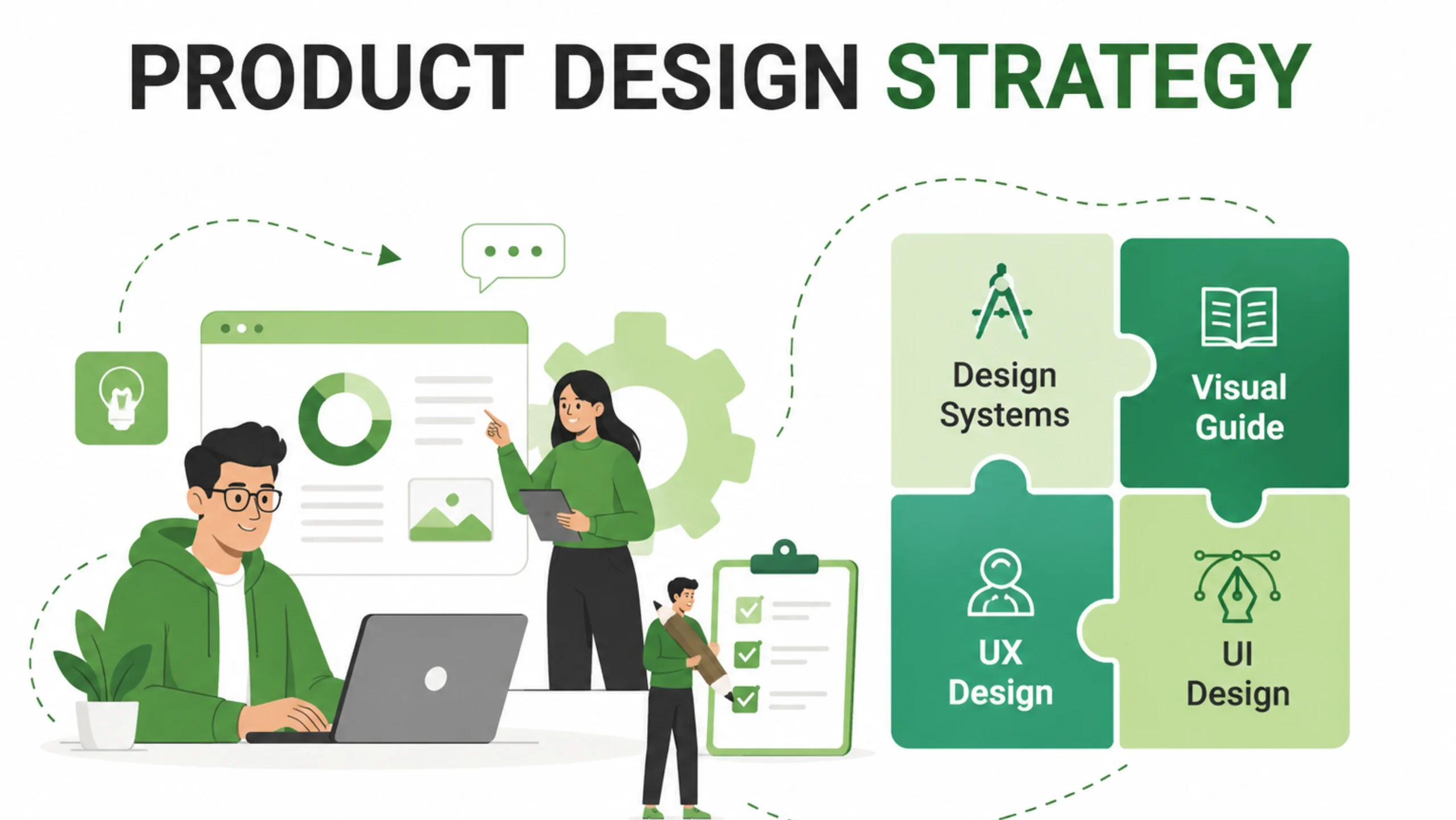
What Is Product Strategy?
Product strategy is a high-level plan that defines what a product aims to achieve, who it serves, the value it delivers, and how it supports business goals.
Think of it as the bridge between an organization’s vision and the actual features users experience.
Without strategy, teams often build features.
With strategy, teams build purposefully.
A product strategy provides direction, helping teams make decisions about what to build, what to postpone, and what to avoid altogether.
In simple terms, product strategy answers a few critical questions:
- Who are we serving?
- What problems are we solving?
- Why does this matter?
- How will we succeed?
- What should we focus on next?
Those answers guide product decisions for months or even years.
Why Product Strategy Matters
Imagine starting a road trip without knowing your destination.
You might enjoy the drive for a while, but eventually you’ll wonder where you’re going.
Products work the same way.
Teams can stay busy building features, fixing bugs, and releasing updates. Yet activity alone doesn’t create success.
Product strategy provides direction.
It helps teams focus their energy on opportunities that create value for customers and the business.
Without a strategy, product decisions often become reactive.
The loudest stakeholder wins.
The newest competitor feature gets copied.
The latest trend becomes a priority.
Over time, the product loses focus.
A strong strategy prevents that from happening.
More Than a Plan on a Slide
Some people think product strategy is a presentation deck created once a year.
In reality, it’s an ongoing guide for decision-making.
The document itself matters less than the thinking behind it.
A good strategy helps teams answer difficult questions:
- Should we build this feature?
- Is this customer segment worth pursuing?
- Does this opportunity support our goals?
- Are we solving the right problem?
If a strategy can’t help answer those questions, it’s probably too vague.
The Purpose of Product Strategy
At its core, product strategy creates focus.
Most organizations have more opportunities than they can realistically pursue.
There are always new features to build.
New customer requests arrive every week.
Competitors release new capabilities.
Technology changes rapidly.
Product strategy helps separate important opportunities from distractions.
It gives teams permission to say “no” to ideas that don’t support long-term goals.
Interestingly, strategy is often about what you choose not to do.
That can feel uncomfortable.
Yet focus is what makes products stronger.
Product Strategy vs Product Vision
These terms are often used together, but they aren’t the same thing.
Product Vision
A product vision describes the future.
It explains what the product ultimately wants to become.
Vision answers:
“Where are we going?”
For example:
“Create the simplest way for small businesses to manage their finances.”
Product Strategy
Strategy explains how the organization plans to move closer to that vision.
Strategy answers:
“How will we get there?”
The vision inspires.
The strategy guides action.
Product Strategy vs Product Roadmap
Another common source of confusion is the difference between strategy and roadmap.
A roadmap usually contains initiatives, priorities, and timelines.
A strategy explains the reasoning behind those priorities.
Think of it this way:
- Vision = Destination
- Strategy = Route
- Roadmap = Planned stops along the way
Without strategy, a roadmap becomes a list of activities.
Without a roadmap, strategy remains theoretical.
The two work together.
The Building Blocks of Product Strategy
Strong product strategies often include several core elements.
Customer Understanding
Everything starts with customers.
Teams need a clear picture of:
- User needs
- Motivations
- Goals
- Frustrations
- Behaviors
Products succeed when they solve meaningful problems.
Customer research provides the evidence needed to identify those problems.
Market Awareness
Customers don’t exist in isolation.
Competitors, trends, regulations, and technology all influence decisions.
Market awareness helps teams identify:
- Emerging opportunities
- Competitive gaps
- Industry changes
- Customer expectations
This perspective helps products remain relevant.
Business Objectives
A product strategy must support business goals.
That connection is important.
A feature might delight users but contribute little to company growth.
Another initiative might generate revenue while creating frustration for customers.
Strong strategies balance both sides.
The goal is sustainable value creation.
Differentiation
Why should customers choose your product?
That’s one of the biggest strategic questions.
Differentiation may come from:
- Better usability
- Lower cost
- Faster service
- Specialized functionality
- Stronger customer support
- Innovative technology
Products rarely win by being identical to competitors.
They win by offering something people value.
Strategy Is About Choices
Here’s the thing.
Many teams think strategy means having lots of ideas.
Actually, strategy is often about narrowing choices.
A strategy that tries to satisfy everyone usually satisfies no one.
For example:
A project management tool cannot simultaneously target:
- Enterprise corporations
- Small startups
- Freelancers
- Students
- Government agencies
At least not effectively in the beginning.
Successful products often focus on a specific audience first.
Expansion comes later.
Focus creates clarity.
Creating a Product Strategy Framework
Although every organization works differently, many strategies follow a similar structure.
Step 1: Define the Vision
Start with the long-term outcome.
What future does the product want to create?
The answer should be inspiring yet realistic.
Step 2: Understand Users
Conduct research.
Interview customers.
Analyze support tickets.
Study behavior patterns.
Look for recurring problems.
Patterns often reveal opportunities.
Step 3: Analyze the Market
Examine competitors and industry trends.
Look for unmet needs.
Search for areas where customer expectations are not being met.
Step 4: Identify Strategic Opportunities
Once research is complete, opportunities become clearer.
Teams evaluate:
- Customer impact
- Business value
- Market demand
- Technical feasibility
The strongest opportunities usually sit where these factors overlap.
Step 5: Prioritize
Resources are limited.
Time is limited.
Budgets are limited.
Prioritization helps teams focus on the opportunities that matter most.
Step 6: Communicate Clearly
A strategy only works if people understand it.
Designers, developers, executives, marketers, and support teams should all understand the product direction.
Clarity creates consistency.
Popular Product Strategy Models
Different organizations use different frameworks.
Some common examples include:
Outcome-Based Strategy
Focuses on customer and business outcomes rather than feature delivery.
Jobs-to-Be-Done
Centers on understanding what customers are trying to accomplish.
North Star Metric
Uses a single metric to guide strategic decisions.
Examples include:
- Active users
- Completed transactions
- Customer retention
- Time spent in product
Growth Strategy
Focuses on acquisition, retention, expansion, and revenue growth.
Each model offers a different perspective, yet all aim to guide decision-making.
Common Product Strategy Challenges
Creating strategy sounds straightforward.
Executing it is harder.
Several challenges appear repeatedly.
Too Many Priorities
If everything is important, nothing is important.
Teams often struggle with competing requests from stakeholders.
Lack of Research
Strategies built on assumptions tend to break under real-world conditions.
Evidence matters.
Constant Shifting
Markets change.
Strategies should adapt.
Yet changing direction every month creates confusion.
Balance is necessary.
Short-Term Pressure
Organizations often face pressure to deliver immediate results.
Sometimes those pressures conflict with long-term goals.
Managing that tension is part of strategic leadership.
Product Strategy in the Age of AI
Artificial intelligence is influencing product strategy across nearly every industry.
Teams can now:
- Analyze customer feedback faster
- Identify patterns in large datasets
- Predict trends
- Generate insights
- Test concepts rapidly
Still, technology doesn’t replace strategic thinking.
AI can reveal patterns.
Humans decide which patterns matter.
Customer empathy, business judgment, and market awareness remain deeply human skills.
Why Great Products Need Great Strategy
Some products succeed because they have remarkable technology.
Others succeed because they solve meaningful problems.
The strongest products combine both.
A great strategy creates that connection.
It links customer needs, market opportunities, and business goals into a clear direction.
Without strategy, teams often build more.
With strategy, teams build smarter.
And smart decisions tend to compound over time.
A small strategic advantage today can become a major competitive advantage years later.
Final Thoughts
Product strategy is the plan that connects vision, customer needs, market opportunities, and business objectives. It guides decision-making, creates focus, and helps organizations invest their resources wisely.
Rather than reacting to every request or trend, teams use product strategy to make deliberate choices. Those choices shape the future of the product and influence how effectively it serves both customers and business goals.
The strongest products rarely emerge from random feature requests.
They emerge from clear thinking, meaningful research, and a well-defined strategy that keeps everyone moving in the same direction.
Frequently Asked Questions (FAQs)
1. What is product strategy?
Product strategy is a plan that defines how a product will achieve business goals while solving customer problems and delivering value.
2. Why is product strategy important?
It helps teams prioritize effectively, make informed decisions, maintain focus, and avoid building unnecessary features.
3. What is the difference between product vision and product strategy?
Product vision describes the future state of the product, while product strategy explains how the organization plans to achieve that future.
4. Who creates product strategy?
Product managers typically lead the process, working closely with executives, designers, developers, researchers, marketers, and stakeholders.
5. How often should product strategy be updated?
Most organizations review and refine their strategy regularly as customer needs, business goals, and market conditions evolve.
6. What makes a good product strategy?
A good product strategy is clear, customer-focused, evidence-based, aligned with business goals, and easy for teams to understand and follow.