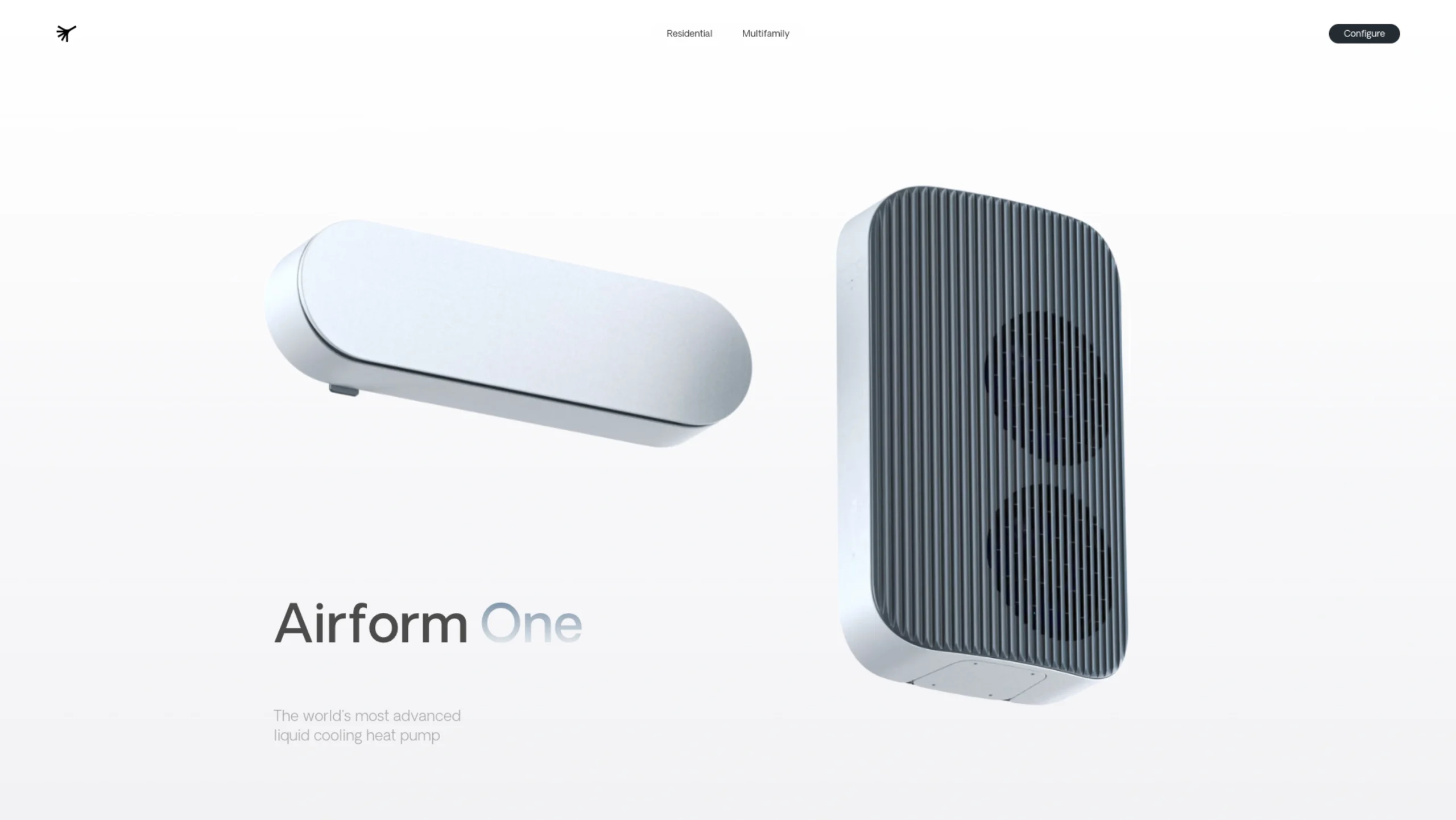
Shifting completely away from the bulky, expensive, and structurally invasive sheet-metal ductwork typical of traditional HVAC setups, Airform introduces a high-performance system that replaces central AC units with automated, space-grade robotic indoor units and highly efficient hydronic manifold lines.
The Technological Infrastructure & Features
The core system relies on a unified, fluid engineering blueprint that treats home heating and cooling as a hyper-targeted, data-backed utility:
- “Cool the Person, Not the Room”: Leveraging a constantly learning artificial intelligence brain called Element™, Airform constantly monitors both the interior and exterior environments. Instead of wasting massive amounts of energy cooling large volumes of empty air, it uses a patented double-plenum mechanism to target specific physical regions—like a couch, desk, or bed—to perfectly match occupant preferences.
- The World’s First Residential CO2 Split-System: The hardware uses an ultra-efficient heat pump architecture powered by eco-friendly refrigerants such as CO2, R290, and R32. It transfers heat through a closed loop using simple water—the most efficient heat-transfer medium on Earth—eliminating the risk of chemical leakage or emissions.
- Hydronic Interconnectivity: By replacing standard central duct systems with hydronic coolant lines, multiple Airform indoor modules can be daisy-chained. This network allows separate units to share thermal energy throughout a home, drastically reducing overall operational workload.
- Integrated IAQ & Humidity Engineering: As a pioneer in the split-system space, Airform includes a built-in Enthalpy Recovery Ventilator (ERV) and an automated humidification-tracking system. It cycles fresh external air into the home while retaining indoor energy and moisture levels, significantly improving indoor air quality (IAQ) for urban spaces or wildfire-prone regions.