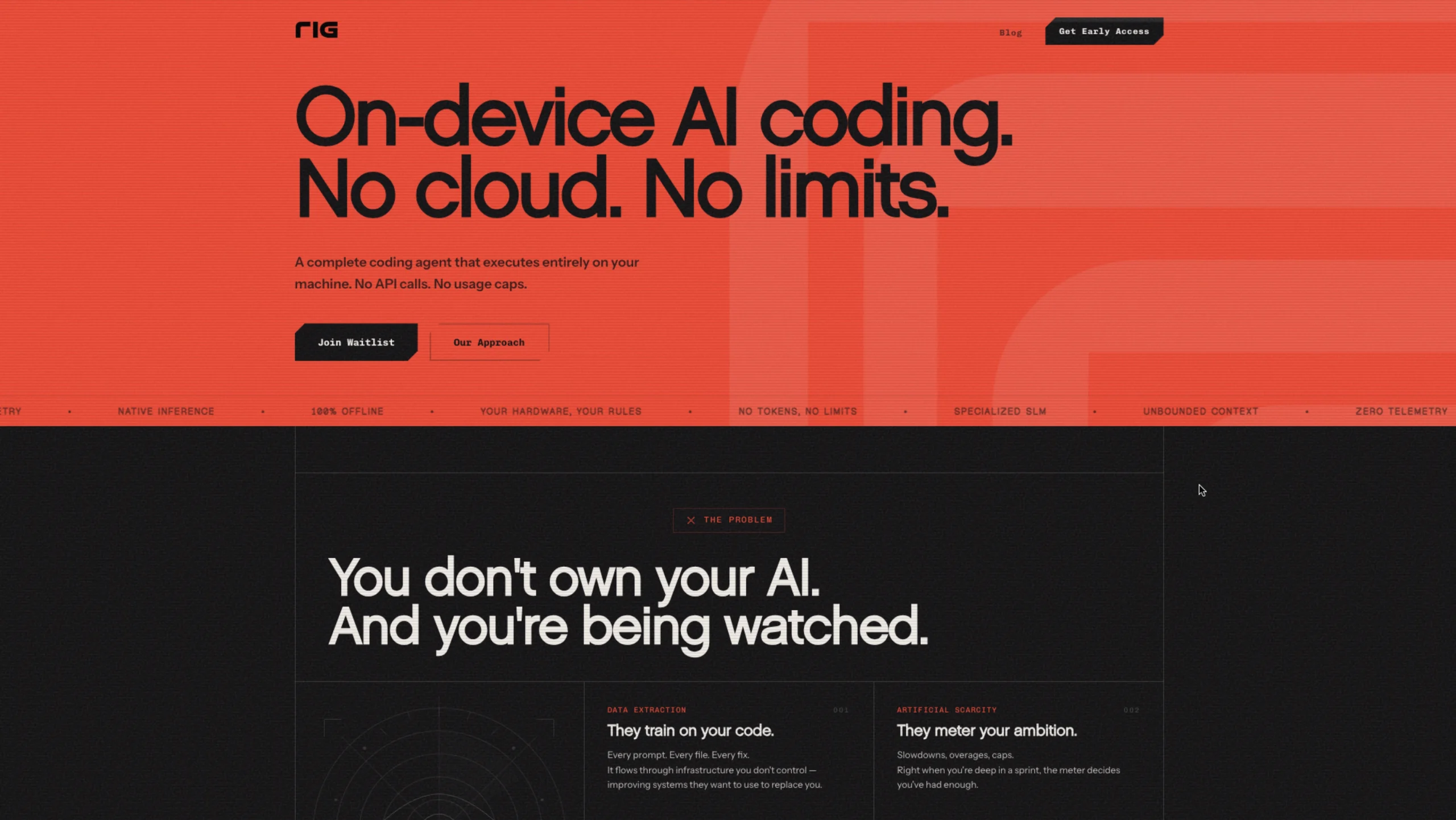
Rig AI (redirecting into the core ecosystem at rig.rs and managed via 0xPlaygrounds) is the developer home for Rig, a powerful, open-source Rust library built specifically for constructing modular and scalable Large Language Model (LLM) applications. As the engineering landscape increasingly demands high-performance, memory-efficient backends for AI implementations, Rig provides a native Rust alternative to traditional Python-based orchestration frameworks like LangChain or LlamaIndex.
The platform targets software architects, design engineers, and systems developers who require compile-time safety, high concurrency, and low latency when deploying AI agents. Built to eliminate boilerplate code, Rig abstracts the complexities of multi-provider integrations, vector database communication, and agentic control flows into clean, idiomatic Rust. It stands as a critical infrastructure asset for tech teams building embedded AI systems, real-time data pipelines, and highly autonomous web utilities.
Key Features
- Unified Provider Interfacing: Provides a singular, type-safe abstraction layer across more than 20 leading LLM and GenAI providers, including OpenAI, Anthropic, Google Gemini, and Cohere.
- Streamlined Vector Store Matrix: Features seamless, out-of-the-box integration with over 10 vector database ecosystems (such as MongoDB, Qdrant, and LanceDB) to facilitate high-speed semantic search.
- Advanced Agentic & RAG Frameworks: Simplifies the configuration of complex Retrieval-Augmented Generation (RAG) pipelines, multi-turn streaming, automated tool-calling, and reasoning loops with minimal code overhead.
- Full WASM Support & Edge Portability: Engineered with WebAssembly (WASM) compatibility at its core, enabling developers to compile and execute intelligent agents directly inside modern web browsers, edge runtimes, or resource-constrained serverless environments.
- Enterprise-Ready Infrastructure: Trusted by prominent research institutions and web-scale engineering teams—including St. Jude Children’s Research Hospital and Nethermind—for deploying production-grade, memory-managed AI applications.