


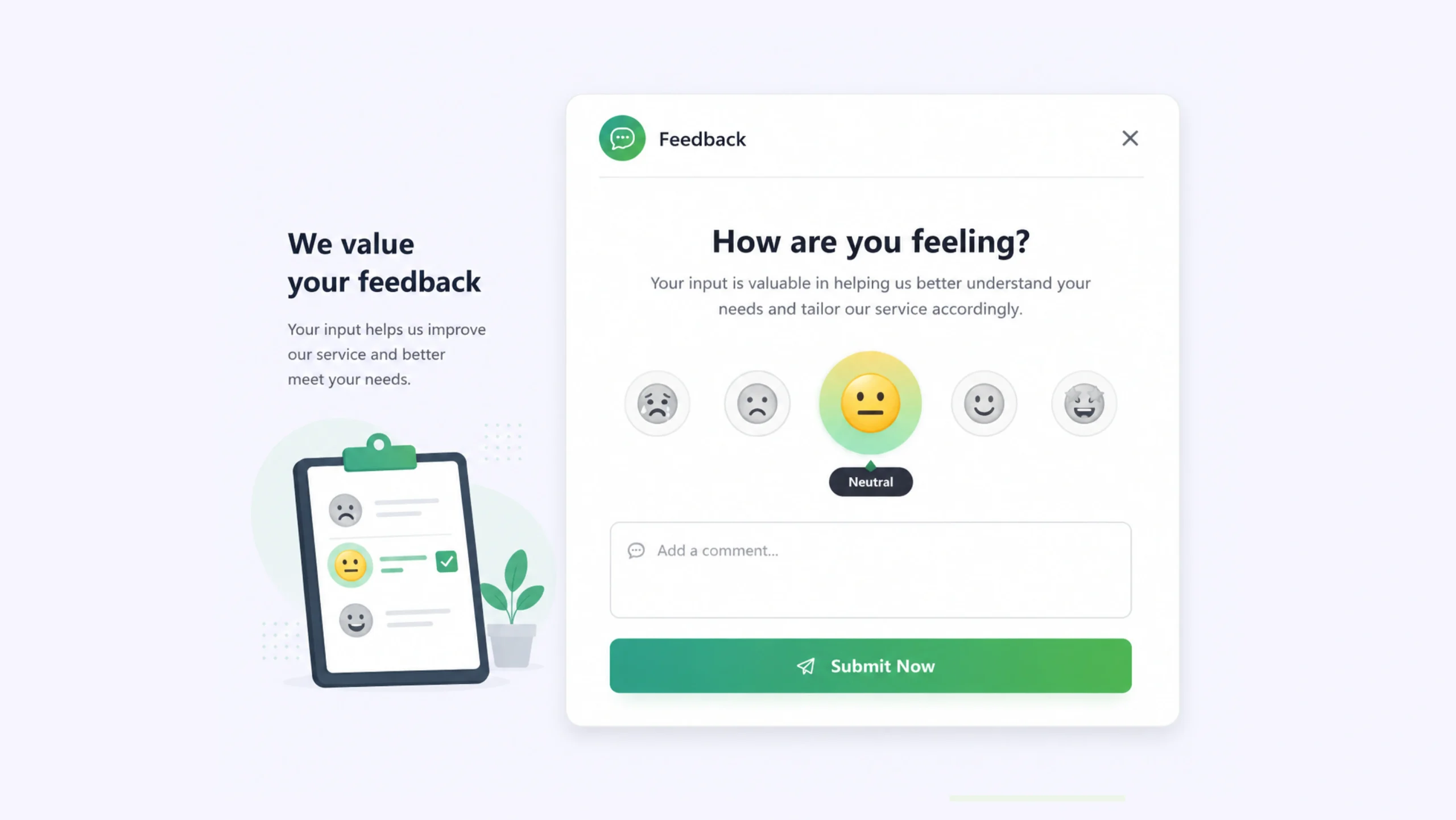
What Is Customer Feedback?
Customer feedback is the information, opinions, suggestions, experiences, and observations that customers share about a product, service, brand, or experience.
It tells businesses what customers like, dislike, expect, struggle with, and appreciate.
In simple terms, customer feedback is the customer’s voice.
Sometimes that voice comes through surveys.
Sometimes it appears in support tickets, app reviews, social media comments, interviews, or casual conversations.
No matter where it comes from, feedback provides direct insight into how people experience a product in real life.
Why Customer Feedback Matters
Imagine preparing a meal for guests.
You can assume everyone enjoyed it.
Or you can ask them.
The second approach gives you real answers.
Product development works the same way.
Teams often spend months building features, improving interfaces, and launching updates. Without feedback, they’re making educated guesses.
Customer feedback replaces assumptions with evidence.
It reveals what is actually happening rather than what teams believe is happening.
That’s a powerful difference.
More Than Praise or Complaints
Many people associate feedback with complaints.
That’s only part of the picture.
Positive feedback helps teams understand what customers value most.
Constructive feedback highlights opportunities for improvement.
Even neutral feedback can uncover useful patterns.
A simple comment such as “I couldn’t find the settings page” may reveal a navigation issue affecting thousands of users.
Small observations often lead to meaningful discoveries.
The Different Types of Customer Feedback
Feedback comes in many forms.
Each type provides a different perspective.
Positive Feedback
Positive feedback highlights experiences customers enjoy.
Examples include:
- Satisfaction with a feature
- Appreciation for customer service
- Praise for product quality
- Recommendations to others
Positive feedback helps teams identify strengths worth protecting.
Negative Feedback
Negative feedback points out frustrations, obstacles, or unmet expectations.
Examples include:
- Bugs
- Slow performance
- Confusing workflows
- Missing features
Though difficult to hear, negative feedback often drives valuable improvements.
Feature Requests
Customers frequently suggest new capabilities.
These requests can reveal unmet needs and future opportunities.
Not every request should be implemented, though recurring requests often deserve attention.
Behavioral Feedback
Sometimes customers don’t tell you what they think.
They show you.
Analytics, usage patterns, drop-off rates, and engagement metrics reveal behavioral feedback that complements direct comments.
How Businesses Collect Customer Feedback
There are many ways to gather feedback.
Modern companies rarely rely on a single source.
Surveys
Surveys remain one of the most common approaches.
They can measure satisfaction, loyalty, feature interest, and overall experience.
User Interviews
Interviews allow businesses to explore thoughts, motivations, and emotions in greater depth.
A 30-minute conversation can reveal insights that never appear in survey data.
Customer Support Conversations
Support teams hear customer frustrations daily.
These conversations often contain valuable information about usability and product issues.
Online Reviews
App stores, review websites, and social platforms provide a constant stream of customer opinions.
Product Analytics
Behavioral data shows what users actually do rather than what they claim to do.
Both perspectives matter.
Customer Feedback and Product Development
Here’s the thing.
Great products rarely emerge from assumptions alone.
Many successful products evolve through continuous learning.
Customer feedback helps teams:
- Discover problems
- Validate ideas
- Prioritize features
- Improve usability
- Reduce customer frustration
The feedback loop becomes part of the product development process itself.
Build.
Measure.
Listen.
Improve.
Then repeat.
Customer Feedback vs Customer Complaints
These terms often get mixed together.
They’re related but different.
A complaint is a specific expression of dissatisfaction.
Feedback includes complaints, suggestions, praise, observations, and recommendations.
Every complaint is feedback.
Not all feedback is a complaint.
This distinction matters because focusing only on complaints can create a narrow view of customer experience.
Why Product Teams Value Feedback
Product managers, UX designers, researchers, developers, and marketers all benefit from customer feedback.
For designers, feedback reveals usability challenges.
For developers, it highlights technical issues.
For marketers, it uncovers customer motivations.
For product managers, it helps guide feature decisions.
Everyone gains a clearer understanding of customer needs.
The Connection Between Feedback and User Experience
User experience thrives on continuous learning.
A design may appear logical during internal reviews.
Real users often see things differently.
A button might be difficult to locate.
A checkout flow may feel confusing.
An onboarding experience may ask too many questions.
Customer feedback exposes these issues.
Many usability improvements begin with simple comments from users.
Common Mistakes Businesses Make
Collecting feedback is valuable.
Using it poorly can create new problems.
Several mistakes appear frequently.
Ignoring Feedback
The most obvious mistake is asking for feedback and doing nothing with it.
Customers notice.
And they remember.
Chasing Every Request
Not every suggestion deserves implementation.
Businesses must evaluate requests based on customer needs, product goals, and overall impact.
Listening Only to Loud Voices
A few vocal users may not represent the broader audience.
Feedback should be analyzed alongside research and data.
Collecting Too Much Feedback
More information isn’t always better.
Without a clear process, teams can become overwhelmed and struggle to identify meaningful patterns.
Turning Feedback Into Action
Feedback becomes valuable when it influences decisions.
Effective teams often follow a simple process:
- Collect feedback.
- Organize and categorize it.
- Identify recurring themes.
- Prioritize opportunities.
- Implement improvements.
- Measure results.
The process sounds straightforward.
Yet many organizations struggle with the final step—taking action.
Listening matters.
Responding matters even more.
The Emotional Side of Feedback
Customers provide feedback because they care.
A person who takes time to write a review, submit a suggestion, or participate in an interview is investing effort.
Sometimes that effort comes from frustration.
Sometimes it comes from enthusiasm.
Either way, feedback represents engagement.
People rarely offer opinions about products they don’t care about.
Viewed this way, feedback becomes an opportunity rather than a burden.
Customer Feedback in Modern Product Teams
Today, customer feedback plays a central role in product strategy.
Companies increasingly combine:
- User interviews
- Surveys
- Analytics
- Customer support data
- Market research
This broader perspective creates a more accurate picture of customer needs.
Instead of relying on opinions from within the organization, teams gain insight directly from the people using the product.
Final Thoughts
Customer feedback is the information customers share about their experiences, expectations, challenges, and satisfaction with a product or service. It helps businesses understand customer needs, identify opportunities, and make better decisions.
The strongest products rarely emerge from assumptions alone. They evolve through continuous listening, learning, and improvement.
When organizations genuinely pay attention to customer feedback, they gain something incredibly valuable: a clearer understanding of the people they serve.
Frequently Asked Questions (FAQs)
1. What is customer feedback?
Customer feedback is information, opinions, suggestions, and experiences shared by customers about a product, service, or brand.
2. Why is customer feedback important?
It helps businesses understand customer needs, improve products, and make informed decisions.
3. What are common ways to collect customer feedback?
Popular methods include surveys, interviews, reviews, support conversations, and product analytics.
4. Is customer feedback the same as a complaint?
No. Complaints are one form of feedback, while feedback also includes praise, suggestions, and observations.
5. How does customer feedback improve UX?
Feedback helps identify usability issues, confusing workflows, and areas where users struggle.
6. What should companies do after collecting feedback?
They should analyse patterns, prioritise improvements, take action, and measure results.Customer Feedback