


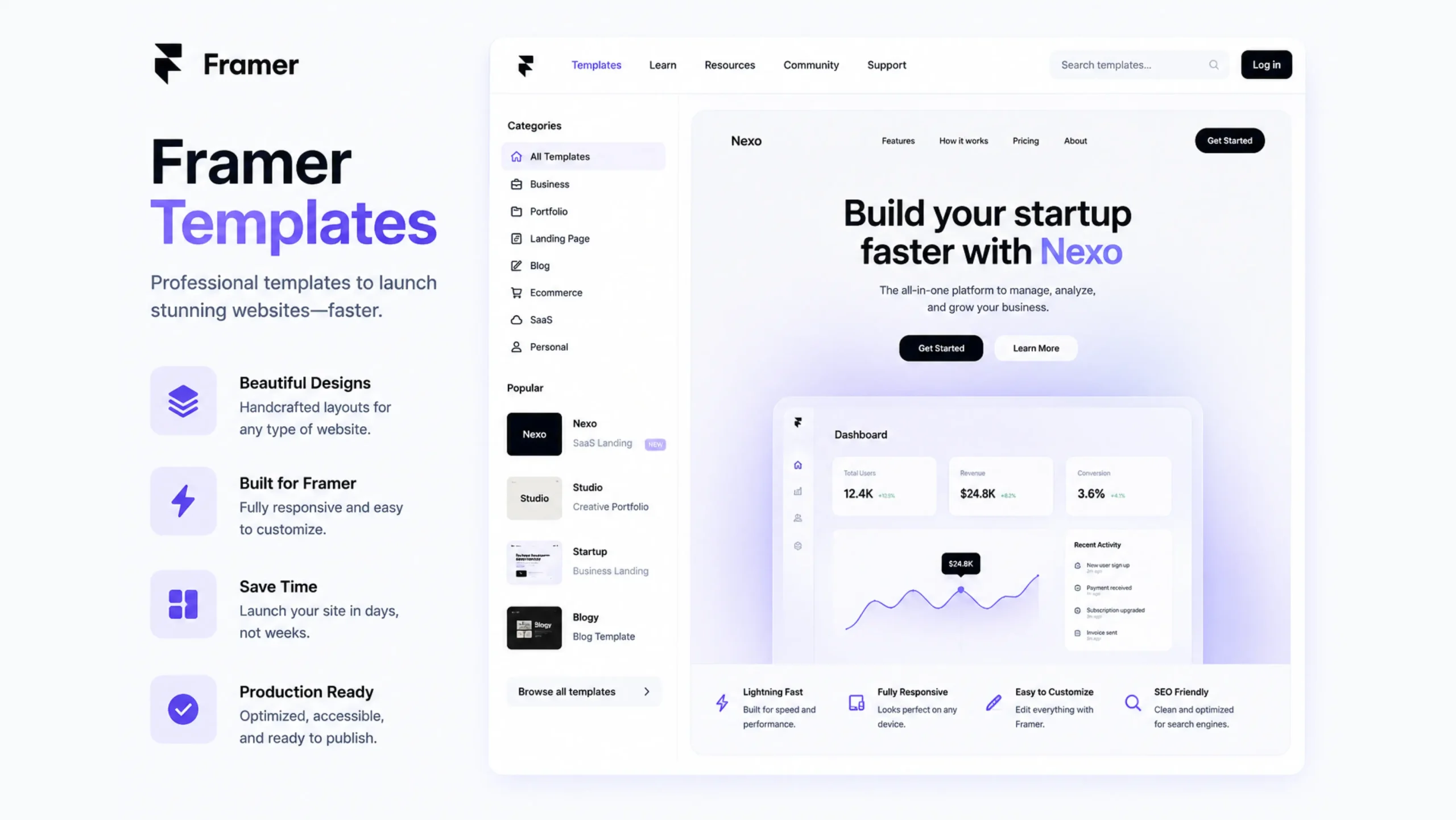
What Is a Framer Template?
A Framer Template is a pre-designed website layout built within Framer that users can customize and publish without starting from a blank canvas. It provides ready-made pages, sections, styles, and interactions that help accelerate website creation.
Think of it like moving into a fully furnished apartment. The walls, furniture, lighting, and layout are already there. You simply rearrange a few things, add your personality, and make the space your own.
That’s essentially what a Framer Template does for website creation.
Instead of spending days building navigation menus, hero sections, pricing tables, and footers from scratch, users can begin with a professionally crafted foundation.
Why Framer Templates Have Become So Popular
Building a website from scratch takes time.
Even experienced designers spend hours creating layouts, setting typography, configuring responsiveness, and refining interactions.
Templates remove much of that repetitive work.
A startup founder launching a SaaS product doesn’t necessarily want to spend weeks designing every page element. They want a website that looks polished and works well.
This growing demand for speed has made templates one of Framer’s most popular resources.
Here’s the Thing: Speed Matters
Most website projects share common building blocks.
Almost every site includes:
- Navigation
- Hero section
- Feature blocks
- Testimonials
- Contact forms
- Footer areas
Why rebuild these pieces every single time?
Templates allow creators to focus on branding, messaging, and content rather than repeating the same design tasks.
That’s a major reason why freelancers and agencies frequently rely on them.
How Framer Templates Work
Framer Templates come with pre-built structures and styling.
Users can:
- Select a template.
- Duplicate it into their workspace.
- Replace placeholder content.
- Customize colors and typography.
- Publish the website.
Most templates are fully editable.
Designers can modify:
- Layouts
- Images
- Components
- Animations
- Text
- CMS content
- Styling
The template acts as a starting point rather than a fixed design.
Different Types of Framer Templates
Framer’s marketplace contains templates for many industries and goals.
Let’s look at the most common categories.
Startup Templates
Built for SaaS companies, technology products, and software businesses.
These templates often include:
- Product showcases
- Pricing pages
- Feature sections
- Customer testimonials
Portfolio Templates
Popular among designers, developers, photographers, and creators.
Portfolio templates focus heavily on visual presentation and personal branding.
Agency Templates
Creative agencies often need polished websites with service pages, project showcases, and lead-generation sections.
Agency templates typically include these elements from the start.
Ecommerce Templates
Some templates support online stores and product-focused experiences.
These designs emphasize product visibility and conversion-focused layouts.
Blog Templates
Content creators and publishers often choose templates optimized for articles, categories, and content management.
Why Designers Love Framer Templates
You know what?
Templates sometimes receive criticism.
Some people assume templates make every website look the same.
Oddly enough, the opposite can be true.
A strong template provides structure, while customization creates distinction.
Designers appreciate templates because they help reduce repetitive work.
Benefits include:
Faster Project Delivery
Projects move from concept to launch much more quickly.
Lower Design Costs
Businesses spend less time and money creating foundational layouts.
Professional Starting Point
Many templates are built by experienced designers who understand visual hierarchy and usability.
Mobile Responsiveness
Most modern Framer templates already include responsive layouts.
That’s one less thing to worry about.
Built-In Interactions
Animations, hover effects, and transitions often come preconfigured.
Real-World Uses of Framer Templates
Templates appear in countless projects.
A few examples include:
Startup Landing Pages
Founders can launch product websites within days instead of weeks.
Personal Portfolios
Designers often customize portfolio templates to showcase work and attract clients.
Marketing Websites
Businesses use templates for service pages, lead generation campaigns, and company websites.
Product Launches
Templates help teams publish promotional sites quickly when launching new products.
Event Websites
Conferences, workshops, and community events frequently rely on template-based websites.
Framer Templates vs Custom Design
Many people ask whether they should use a template or build a website from scratch.
The answer depends on project goals.
| Feature | Framer Template | Custom Design |
|---|---|---|
| Speed | High | Lower |
| Cost | Lower | Higher |
| Flexibility | Moderate to High | Very High |
| Setup Time | Minimal | Significant |
| Originality | Depends on customization | Complete control |
Templates provide efficiency.
Custom designs provide total creative freedom.
Neither approach is automatically better.
Each serves a different purpose.
Choosing the Right Framer Template
Selecting a template is a bit like choosing a house.
The structure should already fit most of your needs.
Before selecting one, consider:
Project Goals
What is the website trying to achieve?
Lead generation?
Sales?
Personal branding?
Content Requirements
A beautiful template may not work if it lacks the sections your content requires.
Mobile Experience
Always review mobile layouts before making a decision.
Customization Options
Some templates are easier to modify than others.
A flexible structure saves time later.
Performance
Lightweight templates generally load faster and provide a smoother experience.
Common Challenges with Framer Templates
Templates solve many problems.
They can create a few new ones too.
Over-Customization
Heavy modifications can sometimes take longer than creating a custom design.
Similar Designs
Popular templates may appear across multiple websites.
Strong branding helps prevent this issue.
Unused Sections
Many templates include features that some businesses don’t need.
Cleaning these sections takes additional effort.
Learning Curve
New users still need time to understand Framer’s interface and editing workflow.
The Growing Template Economy
The popularity of Framer has created an active marketplace of premium templates.
Independent designers now sell template products alongside traditional design services.
This creates opportunities for:
- Designers
- Freelancers
- Agencies
- Entrepreneurs
A single well-designed template can generate revenue long after it has been published.
That’s one reason template marketplaces continue to expand.
The Future of Framer Templates
As AI-assisted design tools continue evolving, templates are becoming smarter and more adaptable.
Future templates may offer:
- Personalized layouts
- Automated content suggestions
- Dynamic design variations
- Smarter CMS integration
Even with these changes, the core idea remains simple.
People want professional websites without spending months building them.
Templates help make that possible.
Final Thoughts
Framer Templates provide a practical way to create professional websites quickly. They offer pre-built layouts, responsive structures, animations, and reusable components that dramatically reduce setup time.
For startups, freelancers, agencies, and creators, templates offer an efficient starting point that balances speed with customization. Users can launch polished websites faster while still adapting designs to match their brand and goals.
A well-chosen Framer Template doesn’t replace creativity—it creates more room for it by removing repetitive work and letting teams focus on content, strategy, and user experience.
Frequently Asked Questions (FAQs)
1. What is a Framer Template?
A Framer Template is a pre-designed website that users can customize and publish inside Framer.
2. Are Framer Templates customizable?
Yes. Users can edit layouts, colors, typography, images, content, animations, and components.
3. Do Framer Templates support mobile devices?
Most modern Framer templates are responsive and adapt automatically to different screen sizes.
4. Can beginners use Framer Templates?
Yes. Templates are often the easiest way for beginners to create professional websites quickly.
5. Are Framer Templates free?
Some templates are free, while others are sold as premium products through marketplaces.
6. Should I use a template or build from scratch?
Templates work well for speed and efficiency, while custom designs provide complete creative control and flexibility.