AI is changing how software works. Models are getting larger, datasets keep growing, and applications read the same information again and again. Yet many teams are still relying on storage systems that were built long before AI became part of the equation.
That’s the problem Shelby is trying to solve.
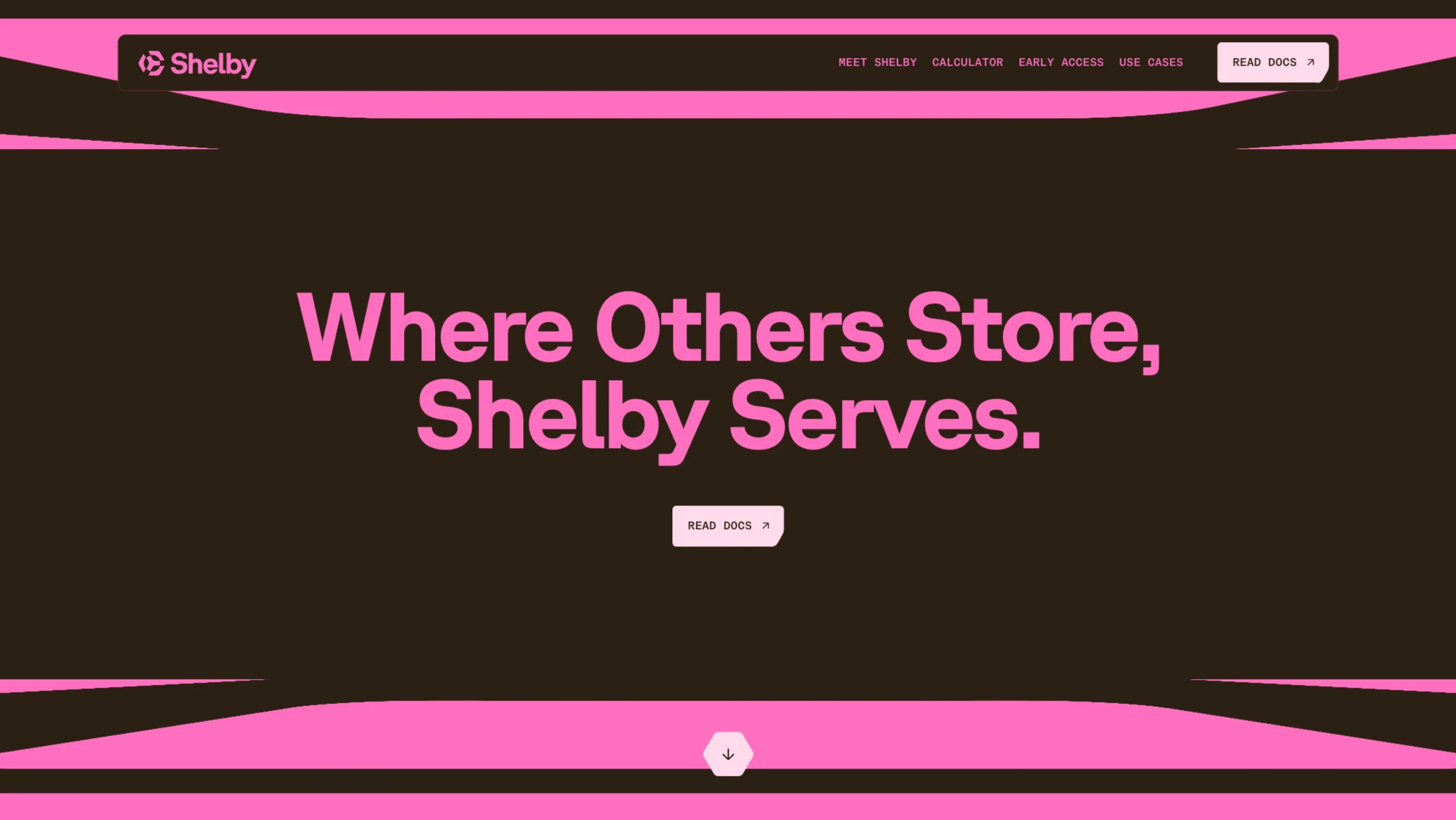
Shelby is a global object storage platform created specifically for AI workloads. Instead of treating storage as a place where data simply sits, Shelby treats it as an active part of the AI stack—fast, verifiable, globally available, and priced for the way modern AI applications actually operate.
The idea sounds simple: store your data once and let AI access it from anywhere. But behind that simplicity is a very different approach to storage infrastructure.
Why Traditional Cloud Storage Starts to Struggle
Most cloud storage systems were built around a straightforward assumption: data is written occasionally and read occasionally.
AI changes that math.
A single dataset might be accessed thousands or even millions of times by training jobs, inference pipelines, agents, retrieval systems, and analytics platforms. Suddenly, the cost of serving data becomes just as important as the cost of storing it.
Many teams discover this the hard way. Storage costs may look reasonable at first, but once AI workloads start multiplying reads across regions and services, bills can grow surprisingly fast.
Shelby was built with this challenge in mind.
One Namespace, Global Access
One of Shelby’s most interesting ideas is its global namespace.
With traditional cloud providers, data is often tied to specific regions. Teams create separate buckets, duplicate files, and spend time managing data across different locations.
Shelby takes a different route.
Data stored in one location can be accessed through the same path from anywhere in the world. A file written in San Francisco can be read from Singapore without creating duplicate copies or maintaining multiple storage environments.
For distributed AI teams and global applications, that removes a surprising amount of operational overhead.
Every Read Comes With Proof
Trust is becoming a bigger topic in AI infrastructure.
Where did this data come from? Who modified it? Who accessed it? Was the object changed at any point?
Many organizations rely on separate compliance systems, audit tools, and logging platforms to answer those questions.
Shelby embeds verification directly into the data layer itself.
Each object carries information about its origin, storage history, permissions, and access records. Instead of piecing together events from multiple systems later, teams can verify information at the point of access.
For companies working in regulated industries or handling sensitive information, that’s a meaningful shift.
Familiar Tools, No Lock-In
Storage platforms often create friction when teams need to migrate existing workflows.
Shelby avoids that problem by remaining S3-compatible.
If a team already uses Amazon S3 tools, SDKs, or workflows, they can continue working in familiar ways. Existing integrations don’t need to be rebuilt from scratch.
At the same time, Shelby provides additional controls for organizations that want deeper control over data placement and delivery.
The result is a platform that feels familiar while offering capabilities that traditional storage systems were never designed to provide.
The Cost Question Nobody Wants to Ignore
Here’s the thing: AI can make infrastructure bills grow very quickly.
Training models is expensive. Running inference is expensive. Moving data around can become surprisingly expensive too.
Shelby focuses heavily on reducing data-serving costs, particularly egress charges that often increase alongside AI adoption.
Instead of punishing growth, the platform aims to make high-volume reads economically practical. That’s why Shelby includes a cost calculator that allows teams to estimate what happens when AI workloads dramatically increase read requests.
For many organizations, that calculator may be one of the most useful features on the site.
Built for Serious Workloads
Performance claims are easy to make. Delivering them consistently is harder.
Shelby positions itself as enterprise-grade infrastructure with features such as:
- 11 nines of durability
- More than 100 Gbps throughput
- Sub-second read performance
- Global availability
- Built-in verification and auditability
These aren’t features aimed at hobby projects. They’re designed for teams running production AI systems where speed, reliability, and accountability matter every day.
A Different Data Layer for AI
The architecture behind Shelby is built around three core layers working together.
Distributed storage nodes hold data across the network. RPC edge nodes provide access to stored content. A verification and audit layer manages provenance, state tracking, and usage-based payments.
Combined, these layers create a storage system that treats data as something actively served, verified, and consumed rather than simply archived.
That’s an important distinction.
AI doesn’t just store information. It constantly reads, analyzes, retrieves, and reuses it. Shelby was designed around that reality from the start.
Looking Ahead
As AI applications become more data-hungry, infrastructure choices will matter more than ever. Storage is no longer a background service that teams can ignore until costs spike or performance slows down.
Shelby is betting that the next generation of AI products needs a different foundation—one where global access, verification, performance, and predictable economics are built into the storage layer itself.
It’s an ambitious vision. Yet it’s one that reflects a growing truth across the industry: AI may be powered by models, but those models are only as useful as the data they can access quickly, reliably, and affordably.