


Persona: Bringing Real Users Into the Design Process.
Imagine you’re designing a fitness app.
One team member believes users want advanced workout analytics.
Another thinks social features should be the priority.
A stakeholder insists everyone cares about calorie tracking.
Who’s right?
Maybe all of them.
Maybe none of them.
Without a clear picture of the people using the product, decisions can quickly become a collection of opinions.
That’s where personas come into play.
A persona gives teams a realistic representation of their users. It transforms research findings into a relatable character that helps designers, developers, marketers, and stakeholders stay focused on actual user needs.
A well-crafted persona turns abstract data into someone the team can understand, discuss, and design for.
What Is a Persona?
A persona is a fictional character created from user research that represents a specific group of users.
The keyword here is research.
A persona isn’t an imaginary customer invented during a brainstorming session.
It’s based on patterns discovered through interviews, surveys, observations, analytics, and other research activities.
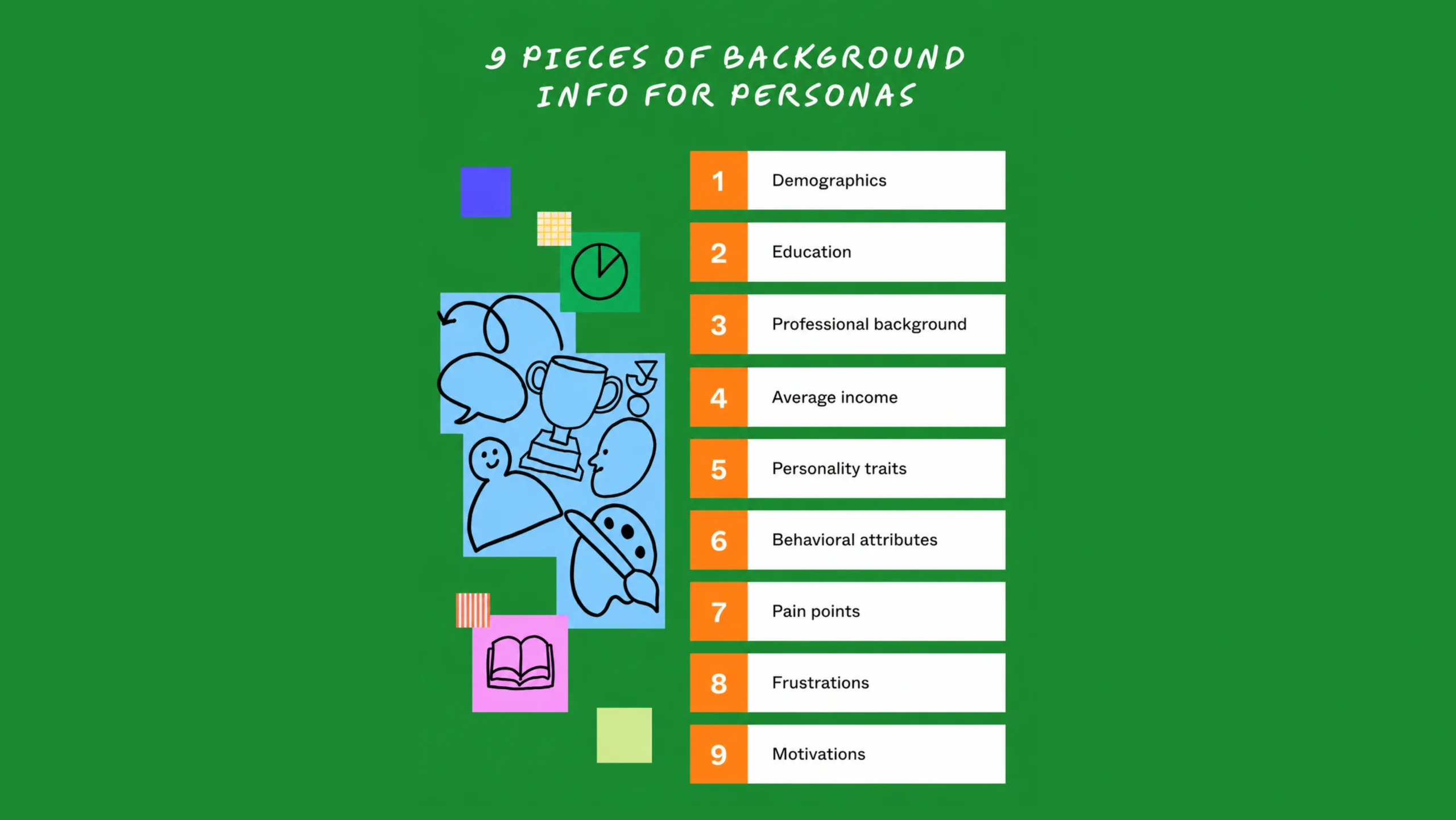
A persona typically includes:
- Name
- Age range
- Occupation
- Goals
- Motivations
- Behaviors
- Challenges
- Needs
- Frustrations
The persona acts as a stand-in for real users during product discussions and design decisions.
Instead of saying:
“What should users want here?”
Teams can ask:
“What would Sarah need in this situation?”
That small shift often leads to better decisions.
Why Personas Matter
Designing for “everyone” usually results in designing for no one.
Products become cluttered.
Features multiply.
User experiences lose focus.
Personas help teams narrow their attention to specific user groups.
They create clarity.
When everyone shares the same understanding of the audience, conversations become more productive.
Decisions become easier.
Design choices become more intentional.
The team gains a common reference point.
More Human Than a Spreadsheet
Research reports often contain valuable information.
The challenge is that large collections of data can feel distant.
Numbers tell part of the story.
People tell the rest.
A persona brings research findings together in a way that feels relatable.
Instead of reading:
“62% of participants reported difficulty scheduling appointments.”
A team may meet:
“Maria, a busy working mother who struggles to find time for appointment scheduling.”
The underlying insight remains the same.
The human connection becomes stronger.
The Purpose of Personas
Personas help teams understand and empathize with users.
Their primary goals include:
- Guiding design decisions
- Prioritizing features
- Supporting product strategy
- Improving communication among teams
- Creating user-focused experiences
- Reducing assumptions
- Encouraging empathy
Personas help answer important questions:
- Who are we designing for?
- What problems are they trying to solve?
- What motivates them?
- What challenges do they face?
These questions appear throughout product development.
Having clear answers makes a significant difference.
Types of Personas
Not all personas serve the same purpose.
Different projects require different approaches.
User Personas
These are the most common personas in UX design.
User personas represent actual product users and focus on behaviors, goals, and needs.
For example:
A food delivery platform may create personas for:
- Busy professionals
- College students
- Families
- Senior citizens
Each group interacts with the product differently.
Buyer Personas
Buyer personas focus on purchasing decisions.
Marketing and sales teams frequently use them.
A buyer may not always be the same person who uses the product.
For example, a company purchasing software may have:
- Decision-makers
- Budget approvers
- End users
Each group has different motivations.
Customer Personas
Customer personas examine the broader relationship between users and a brand.
These personas help organizations understand customer expectations throughout the customer lifecycle.
Proto Personas
Proto personas are preliminary personas created before formal research.
Teams use assumptions and existing knowledge to create them.
They can be useful during early planning.
Still, research should eventually validate or replace those assumptions.
What Does a Persona Include?
A persona contains several elements that help teams understand the user.
Let’s break them down.
Name and Photo
Most personas include a fictional name and image.
This makes the persona easier to remember and discuss.
For example:
- Sarah Thompson
- David Patel
- Emma Wilson
The goal isn’t realism.
The goal is relatability.
Demographic Information
Basic demographic details may include:
- Age range
- Occupation
- Location
- Education level
These details provide context.
They should never become stereotypes.
Goals
Goals describe what users want to achieve.
Examples include:
- Ordering food quickly
- Managing finances
- Booking appointments
- Learning new skills
Goals often drive user behavior.
Motivations
Motivations explain why users pursue those goals.
For example:
A user may track expenses because they want financial security.
Another may exercise regularly because they value health and confidence.
Understanding motivation helps teams create meaningful experiences.
Pain Points
Pain points are frustrations or obstacles users encounter.
Examples include:
- Complicated navigation
- Long checkout processes
- Poor search functionality
- Confusing instructions
Pain points often reveal opportunities for improvement.
Behaviors
Behaviors describe how users interact with products.
Examples might include:
- Mobile-first browsing
- Frequent online purchases
- Heavy reliance on reviews
- Preference for self-service options
Behavioral insights often influence design decisions.
Quotes
Many personas include representative quotes.
For example:
“I don’t have time to compare dozens of options.”
A quote helps capture the user’s mindset.
It adds personality and context.
How Personas Are Created
Effective personas begin with research.
That’s worth repeating.
Personas should come from evidence, not imagination.
The creation process usually follows several steps.
Step 1: Conduct User Research
Researchers gather information through:
- Interviews
- Surveys
- Usability testing
- Analytics
- Observations
- Customer feedback
The goal is collecting real user insights.
Step 2: Identify Patterns
Researchers review findings and look for recurring themes.
Common patterns may emerge around:
- Goals
- Behaviors
- Challenges
- Motivations
These patterns form the foundation of personas.
Step 3: Group Similar Users
Users with similar characteristics are grouped together.
Each group may become a separate persona.
The number of personas depends on the complexity of the product and audience.
Step 4: Build Persona Profiles
Researchers create detailed profiles that summarize key findings.
The profile should feel realistic and easy to understand.
Clarity matters more than excessive detail.
Step 5: Share With the Team
Personas become useful only when people use them.
Designers, product managers, developers, marketers, and stakeholders should all have access to them.
A persona hidden in a forgotten folder helps nobody.
Personas in UX Design
Personas play a major role throughout the UX process.
They help teams:
- Define user needs
- Prioritize features
- Create user flows
- Design interfaces
- Evaluate design decisions
- Conduct usability testing
Consider a design discussion.
A team debates whether to add a complex reporting dashboard.
Instead of relying on personal opinions, they can evaluate the idea through the lens of their personas.
Would this feature help the primary user accomplish their goals?
That question often simplifies decision-making.
Benefits of Using Personas
Organizations invest time creating personas because the benefits can be substantial.
Better User Focus
Personas keep users at the center of decisions.
Teams stay grounded in actual needs rather than internal assumptions.
Improved Communication
A shared persona creates a common language across departments.
Everyone understands who the product serves.
Stronger Empathy
Personas help teams think about users as people rather than statistics.
That human perspective often leads to better experiences.
More Efficient Decision-Making
When priorities become unclear, personas provide guidance.
Teams can evaluate ideas against user goals and needs.
Better Product Outcomes
Products created with a strong understanding of users tend to be easier, more relevant, and more useful.
That’s good for users and businesses alike.
Common Persona Mistakes
Personas are valuable.
Poorly created personas are not.
Several mistakes appear repeatedly.
Creating Personas Without Research
This is the biggest mistake.
A persona built on assumptions may look impressive but offer little value.
Research should always guide persona creation.
Including Too Much Information
Some personas become overloaded with unnecessary details.
Teams don’t need to know a user’s favorite pizza topping.
Relevant information matters most.
Creating Too Many Personas
A dozen personas often create confusion.
Most projects benefit from a manageable number of well-defined personas.
Treating Personas as Permanent
User behaviors change.
Markets evolve.
Products grow.
Personas should be reviewed and updated periodically.
Relying Only on Demographics
Age and occupation provide context.
Behavior, motivation, and goals provide insight.
Strong personas focus heavily on behavior.
Personas vs Target Audience
These terms are often confused.
They’re related but different.
A target audience describes a broad group of people.
For example:
“Working professionals aged 25–45.”
A persona goes much deeper.
It describes:
- Goals
- Behaviors
- Motivations
- Challenges
- Context
The audience identifies who.
The persona helps explain why.
Personas vs User Segments
User segments group people based on shared characteristics.
Personas humanize those groups.
Think of segmentation as organizing data.
Think of personas as telling the story behind the data.
Many organizations use both.
Popular Tools for Creating Personas
Several tools help teams create and manage personas.
Common options include:
- Figma
- Miro
- Notion
- UXPressia
- Adobe Express
- Canva
- FigJam
- Mural
The tool matters less than the research behind the persona.
A beautiful persona built on weak data remains weak.
The Future of Personas
As research methods evolve, personas continue evolving too.
Analytics platforms, AI tools, and behavioral data provide richer insights than ever before.
Some organizations now use dynamic personas that update as user behavior changes.
Others combine qualitative research with behavioral analytics to create more accurate profiles.
Technology may change the format.
The purpose remains the same.
Understand people better.
Design better experiences.
Personas Are Really About Empathy
Let’s step back for a moment.
A persona isn’t simply a document.
It isn’t a slide deck.
It isn’t a template.
At its core, a persona is a reminder.
A reminder that real people use products.
People with goals.
People with frustrations.
People with limited time and attention.
People trying to accomplish something important to them.
When teams remember that, better products tend to follow.
Final Thoughts
A persona is a research-based representation of a user group that helps teams understand and design for real people. By transforming user insights into relatable profiles, personas create clarity, improve communication, and encourage user-centered decision-making.
They help answer one of the most important questions in product development:
Who are we designing for?
The strongest personas aren’t fictional characters created from imagination.
They’re built from real research, real behaviors, and real human needs.
And when used thoughtfully, they become one of the most valuable tools in UX design.
Frequently Asked Questions (FAQs)
What is a persona in UX design?
A persona is a fictional character based on user research that represents a specific group of users. It helps teams understand user goals, behaviors, needs, and challenges.
Why are personas important?
Personas help teams make user-centered decisions, improve communication, build empathy, and create products that better serve user needs.
How are personas created?
Personas are created using research data collected through interviews, surveys, observations, usability testing, analytics, and other research methods.
What is the difference between a persona and a target audience?
A target audience describes a broad group of people, while a persona provides detailed insights into user behaviors, goals, motivations, and challenges.
How many personas should a project have?
Most projects benefit from a small number of focused personas that represent primary user groups. Too many personas can make decision-making difficult.
Should personas be updated regularly?
Yes. User behaviors, expectations, and business goals change over time. Personas should be reviewed and updated whenever significant new research becomes available.