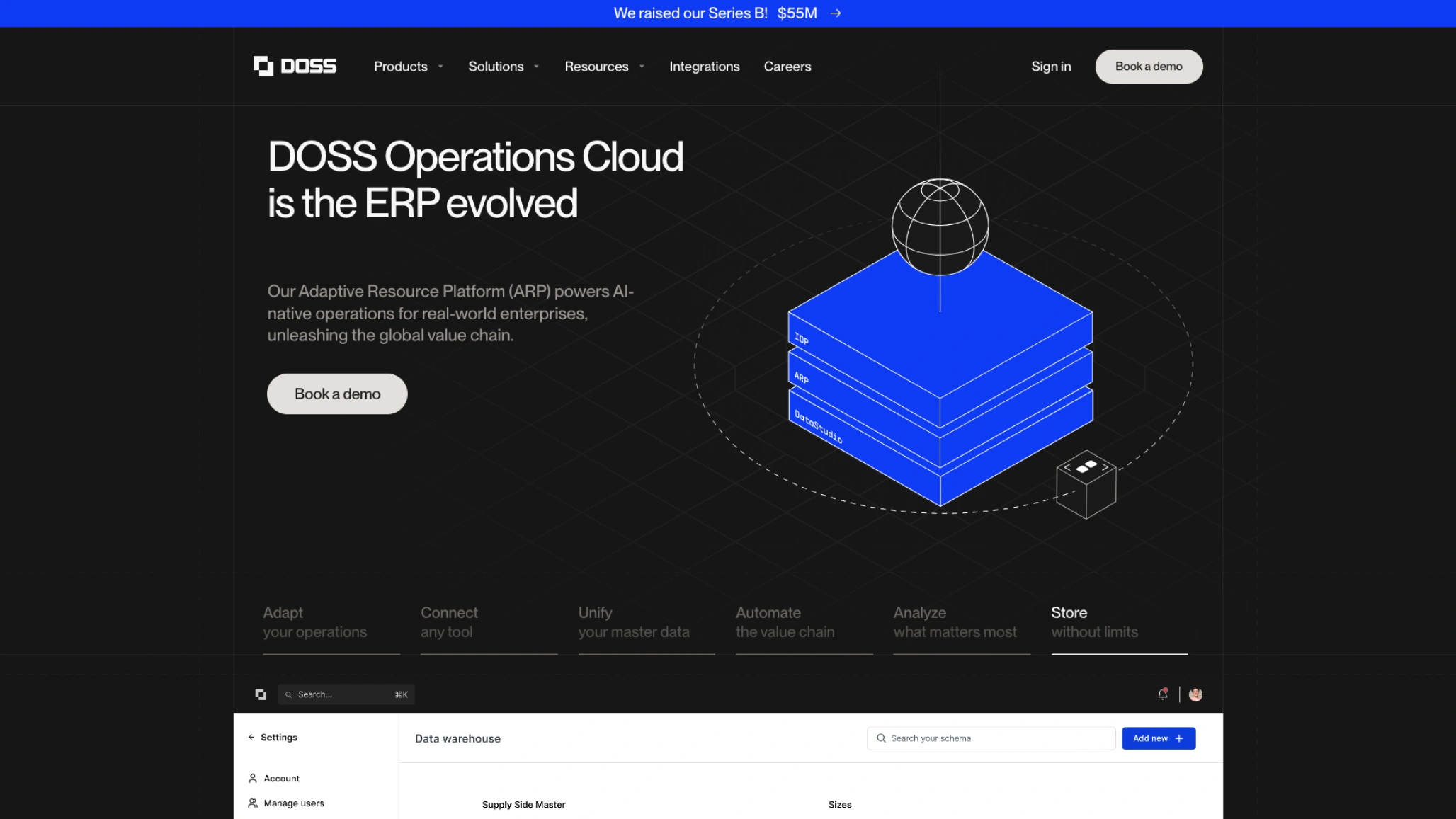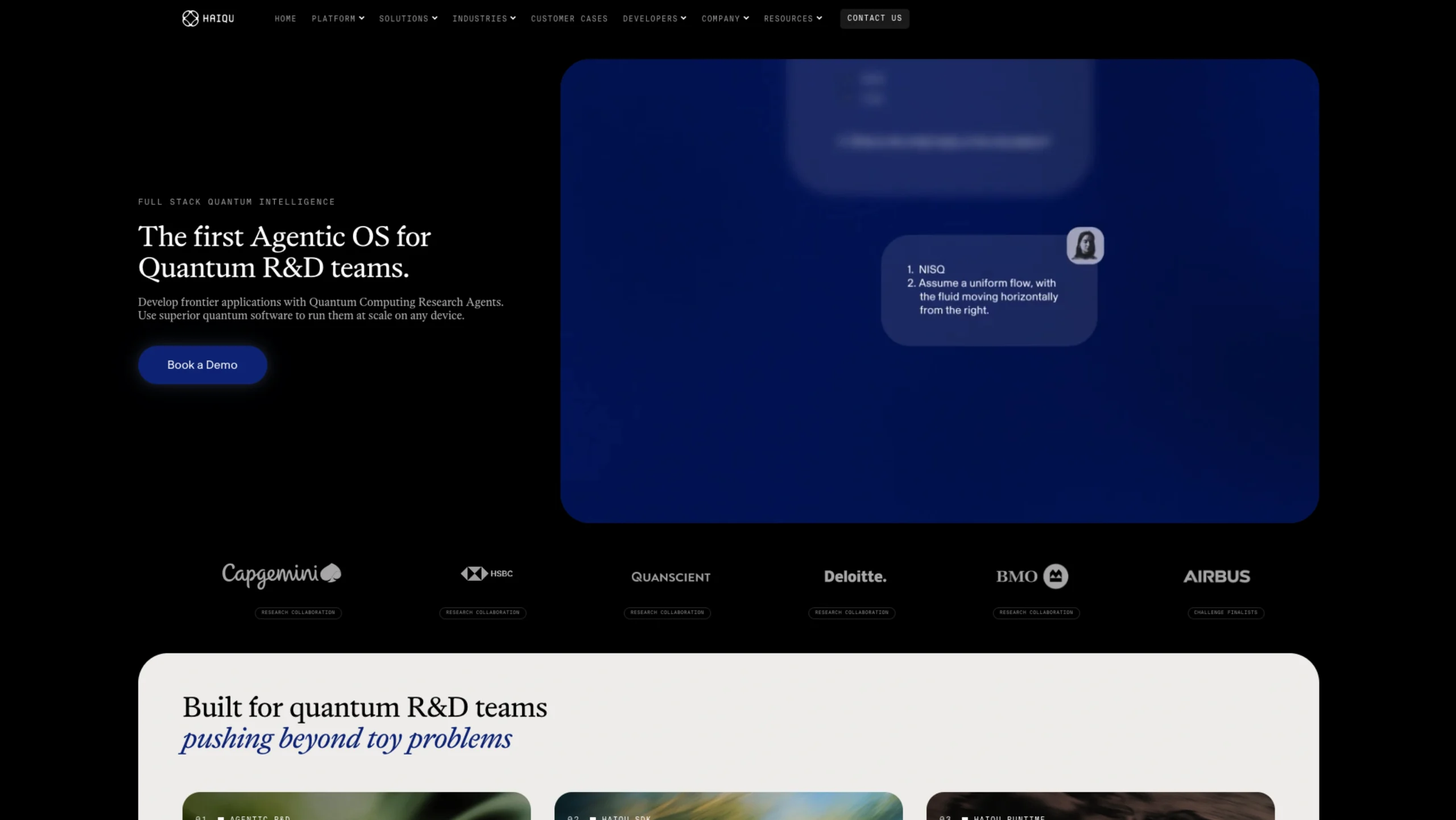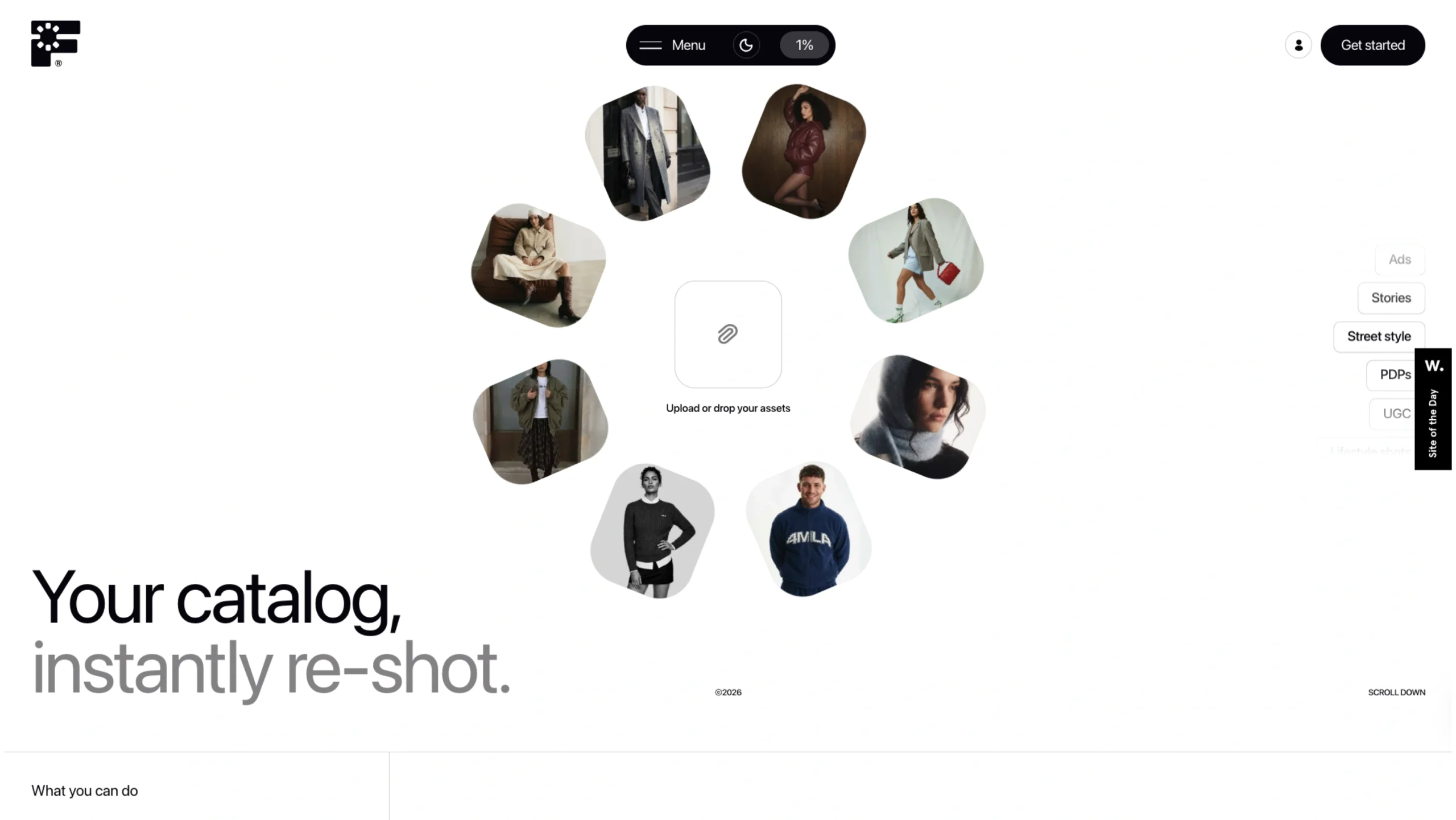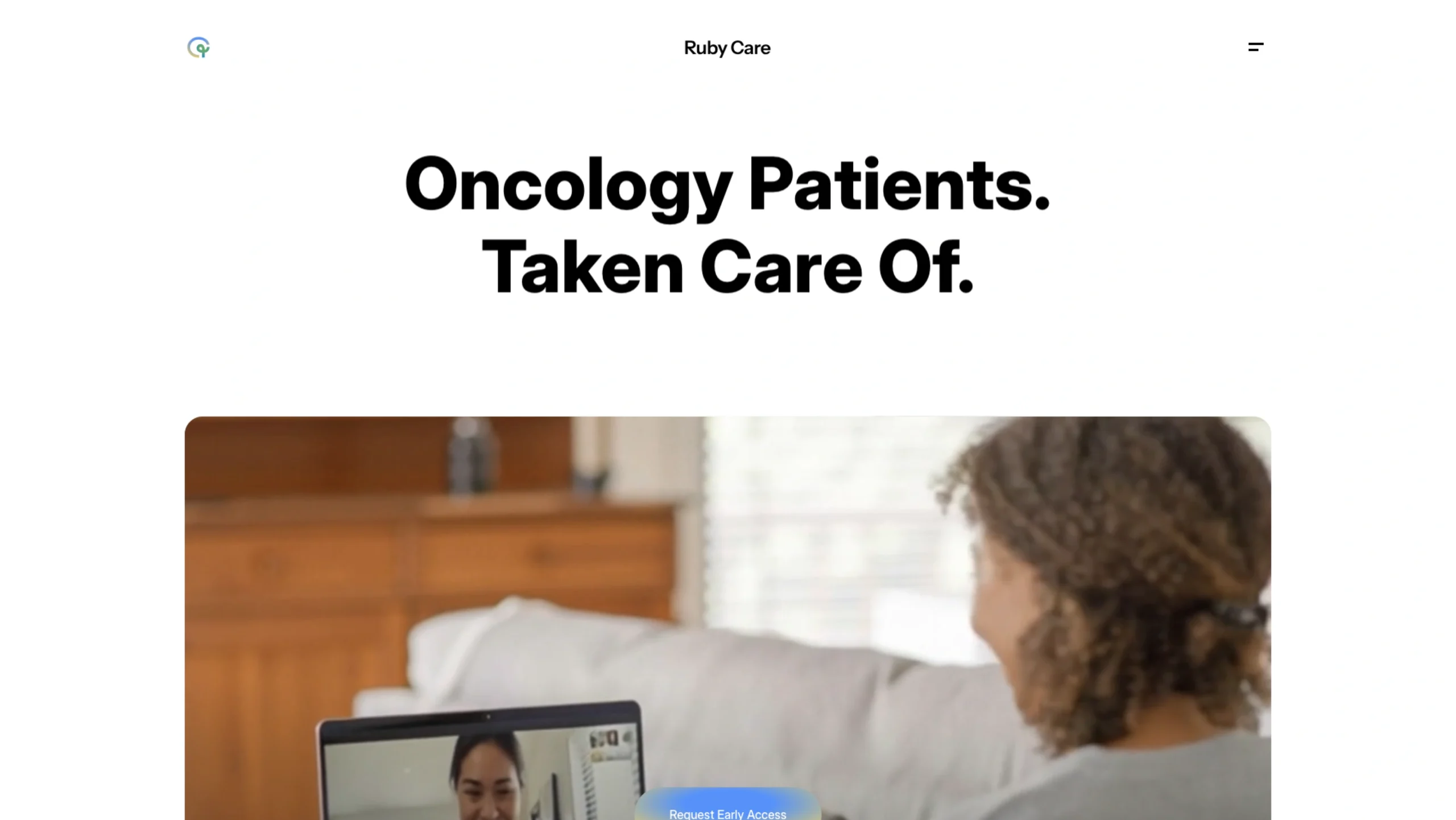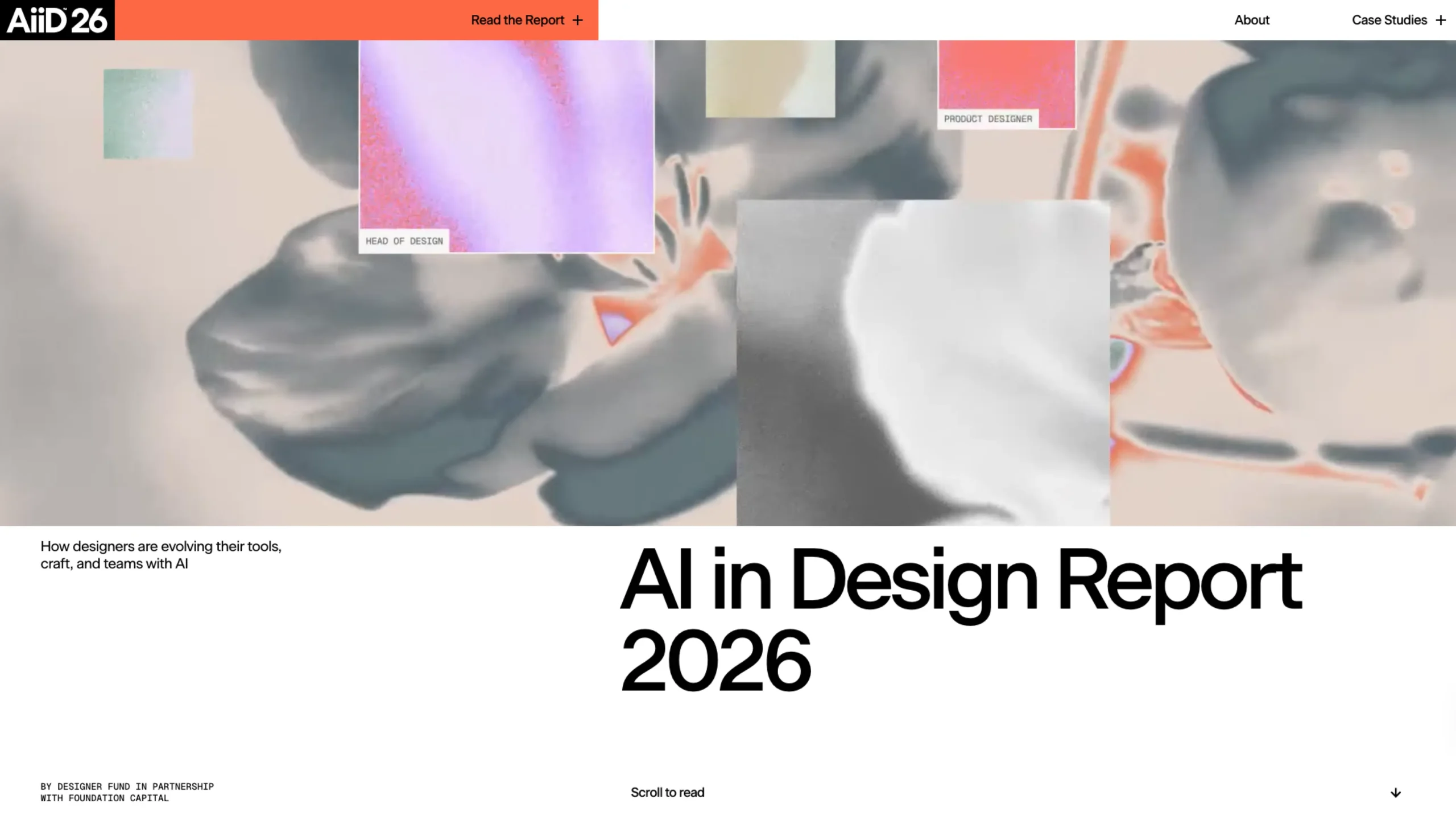
The website AI in Design Report, by StateOfaiDesign.com, is an interactive, data-driven industry report that analyzes how artificial intelligence is transforming digital product design.
AI in Design 2026: Designers Aren’t Waiting for the Future Anymore
A year ago, most designers treated AI like an interesting side experiment.
Useful? Absolutely.
Reliable? Not quite.
Ready to reshape daily work? That still felt far away.
Then 2026 happened.
Now AI sits inside almost every part of the design process — research synthesis, UI copy, prototyping, frontend tweaks, accessibility reviews, motion design, documentation, and even production code. The shift feels less like adding a new tool and more like watching the entire profession quietly rearrange itself overnight.
And honestly, the most surprising part isn’t the technology itself. It’s how quickly designers adapted.
The AI in Design 2026 report, created by Designer Fund in partnership with Foundation Capital, surveyed more than 900 designers across 60+ countries and interviewed leaders at companies such as Anthropic, Stripe, Linear, Shopify, and Notion.
The report paints a picture that feels exciting, messy, exhausting, creative, and occasionally a little chaotic — all at once.
Which, frankly, sounds exactly like modern product design.
AI Usage Didn’t Grow Slowly. It Exploded.
The headline stat says a lot.
In 2025, 54% of surveyed designers used AI weekly.
In 2026, that number jumped to 91%. Three out of four designers now use AI every single day.
That kind of growth usually takes years. This happened in twelve months.
What changed?
Part of it comes down to trust. AI tools became faster, more capable, and oddly practical.
Designers stopped using them only for moodboards or random brainstorming sessions. Now they use them while shipping real products.
Another reason is pressure. Product teams move faster now. Engineering velocity has changed dramatically, especially inside startups.
When developers can spin up interfaces in hours instead of weeks, design teams can’t stay frozen inside static mockups anymore.
So the workflow changed.
Actually, “changed” might be too soft a word.
It fractured, expanded, rebuilt itself, and then changed again.
The Design Tool Stack Is Starting to Look Wild
For years, most designers had a predictable setup:
Figma.
Maybe Photoshop.
A prototyping tool.
A few plugins.
Simple enough.
Now the average designer uses seven AI tools regularly — up from just three last year.
And people still aren’t settled.
That’s the strange part.
Nearly half the designers surveyed admitted they’re still searching for their “go-to” setup. Every week introduces another model, another interface generator, another coding assistant, another research agent.
There’s excitement in that. There’s fatigue, too.
One designer in the report described the current state of AI tooling as a “molting process.” That feels painfully accurate.
Teams barely adapt to one workflow before another arrives promising something faster or smarter.
You can feel this especially around coding tools.
Anthropic’s Claude became the most-used general AI assistant among surveyed designers, overtaking OpenAI’s ChatGPT.
Claude Code appeared almost out of nowhere and quickly became central to many design workflows.
Meanwhile, tools like:
- Cursor
- Lovable
- v0
- Replit
- GitHub Copilot
…started appearing in design conversations almost as often as visual design tools.
That would’ve sounded bizarre two years ago.
Now it feels normal.
Figma Isn’t Dead. But Its Role Is Definitely Changing.
Every few months, someone posts “Figma is dead” online.
Usually with dramatic typography.
Usually wrong.
The report doesn’t suggest designers are abandoning Figma entirely. What’s happening is subtler — and probably more important.
Figma is becoming less of a final destination and more of a thinking surface.
Some teams use it for exploration before moving into code. Others prototype directly inside development environments and return to Figma later for refinement — spacing adjustments, polish, interaction tuning, and visual consistency.
One quote from the report sticks:
“We use Figma as a scalpel now.”
That line captures the mood perfectly.
Designers aren’t spending less time thinking visually. They’re just moving fluidly between interfaces, prompts, components, and live codebases.
And honestly, younger designers entering the industry now may never separate “design” and “code” the way older workflows did.
That wall is getting thinner every month.
Designers Are Shipping Code Now. Real Code.
This might be the biggest shift in the entire report.
Half of the surveyed designers said they’ve shipped AI-generated code to production.
Not toy experiments. Production work.
Frontend polish. Component fixes. Accessibility improvements. Localization. Motion systems. UI adjustments. Interactive prototypes.
And these aren’t all design engineers.
That’s important.
Many respondents identified primarily as product designers or brand designers.
AI coding tools lowered the barrier enough that designers who previously avoided development work suddenly found themselves pushing pull requests.
You can almost feel the confidence boost throughout the interviews.
Some designers described fixing issues directly instead of waiting for engineering bandwidth.
Others talked about building internal tools, creating interfaces from scratch, or experimenting with motion and shaders simply because the barrier to entry had disappeared.
There’s a certain energy in that.
Designers who once felt limited by technical gaps now feel oddly expanded.
A little dangerous, maybe — in a good way.
Working Prototypes Became the New Design Deliverable
Static screens aren’t disappearing tomorrow.
But prototypes have become far more central than before.
According to the report:
- 43% of respondents said companies now expect working prototypes
- 36% said projects often begin with working prototypes
That changes how teams communicate.
A prototype carries emotional weight that static mockups often miss. You feel pacing. Interaction flow. Timing. Friction. Momentum.
And AI dramatically shortened the time needed to build those experiences.
One designer compared traditional prototyping to pottery — once it hardened, changing direction felt painful.
AI-assisted prototyping made concepts more malleable again. Easier to reshape. Easier to rethink.
That flexibility matters.
Still, there’s tension here.
Several designers worried that rapid prototyping pushes teams into premature decisions.
When interfaces look polished quickly, weak ideas can accidentally appear convincing.
That’s the hidden danger of speed.
Fast doesn’t automatically mean thoughtful.
Human Judgment Still Matters More Than People Expected
For all the hype around AI-generated design, the report repeatedly returns to one idea:
Designers still trust human judgment more than AI judgment.
Especially around:
- visual polish
- creative direction
- user understanding
- storytelling
- systems thinking
- ethical decisions
That’s reassuring. But it’s also revealing.
AI became excellent at generating possibilities. What it still struggles with is intent.
Taste is harder to automate than many expected.
A generated interface can look polished while quietly missing emotional nuance, cultural context, brand personality, or strategic clarity.
One designer compared mediocre AI output to a microwaved burrito — fast and satisfying in the moment, but clearly not great once you slow down and think about it. The analogy feels funny because it’s true.
The strongest teams in the report don’t blindly accept AI output.
They curate it.
They shape it.
They argue with it.
That distinction matters a lot.
Designers Are Becoming Toolmakers
This section might quietly predict the future of the profession.
Designers aren’t just consuming software anymore. They’re building internal systems tailored to their workflows.
Tiny utilities. Research agents. Brand guardrails. Prototype generators. Design QA bots. Internal plugins.
Some teams built shared prototype playgrounds. Others created searchable research databases powered by AI.
One company even developed systems that automatically review production copy for brand consistency.
You know what’s fascinating here?
Many of these tools didn’t come from dedicated engineering teams.
They came directly from designers.
That changes how design value gets measured.
A designer’s impact used to come mostly from outputs — screens, systems, flows, interfaces.
Now, workflow creation itself is becoming part of the craft.
The people building the best systems often shape entire organizations.
AI Is Making Work Faster… But Also Stranger
The report doesn’t pretend everything is wonderful.
That honesty makes it more believable.
Many respondents described exhaustion from constantly learning new tools. Others talked about loneliness — replacing collaborative whiteboard sessions with solo conversations inside terminals.
There’s anxiety, too.
Junior designers worry about skill development. Senior designers worry about craft erosion. Hiring expectations feel blurry. Teams sometimes prioritize speed so aggressively that reflection disappears.
And yet…
Most designers still reported higher job satisfaction because of AI.
That contradiction appears throughout the report.
People feel overwhelmed and energized.
Stressed and creatively expanded.
Faster and less certain.
Empowered and slightly disconnected.
Honestly, that sounds like technology transitions throughout history.
The difference now is the pace.
Everything feels compressed.
The Design Industry Is Quietly Rewriting Itself
Reading the AI in Design 2026 report feels less like reading predictions and more like observing a profession mid-mutation.
The old boundaries between designer, prototyper, frontend developer, researcher, and strategist are blurring fast. Teams are inventing workflows in real time. Nobody fully agrees on the “correct” process anymore.
And maybe there isn’t one.
Some designers work visually first. Others begin with prompts. Others prototype directly in code. Some still sketch on paper before touching AI tools at all.
That flexibility might become the defining characteristic of modern design work.
Not a single workflow.
Not a universal stack.
Not one dominant tool.
Just adaptable people building adaptable systems.
And despite all the automation talk, the report keeps circling back to something deeply human:
Taste. Judgment. Curiosity. Perspective.
Those still matter.
Maybe now more than ever.