


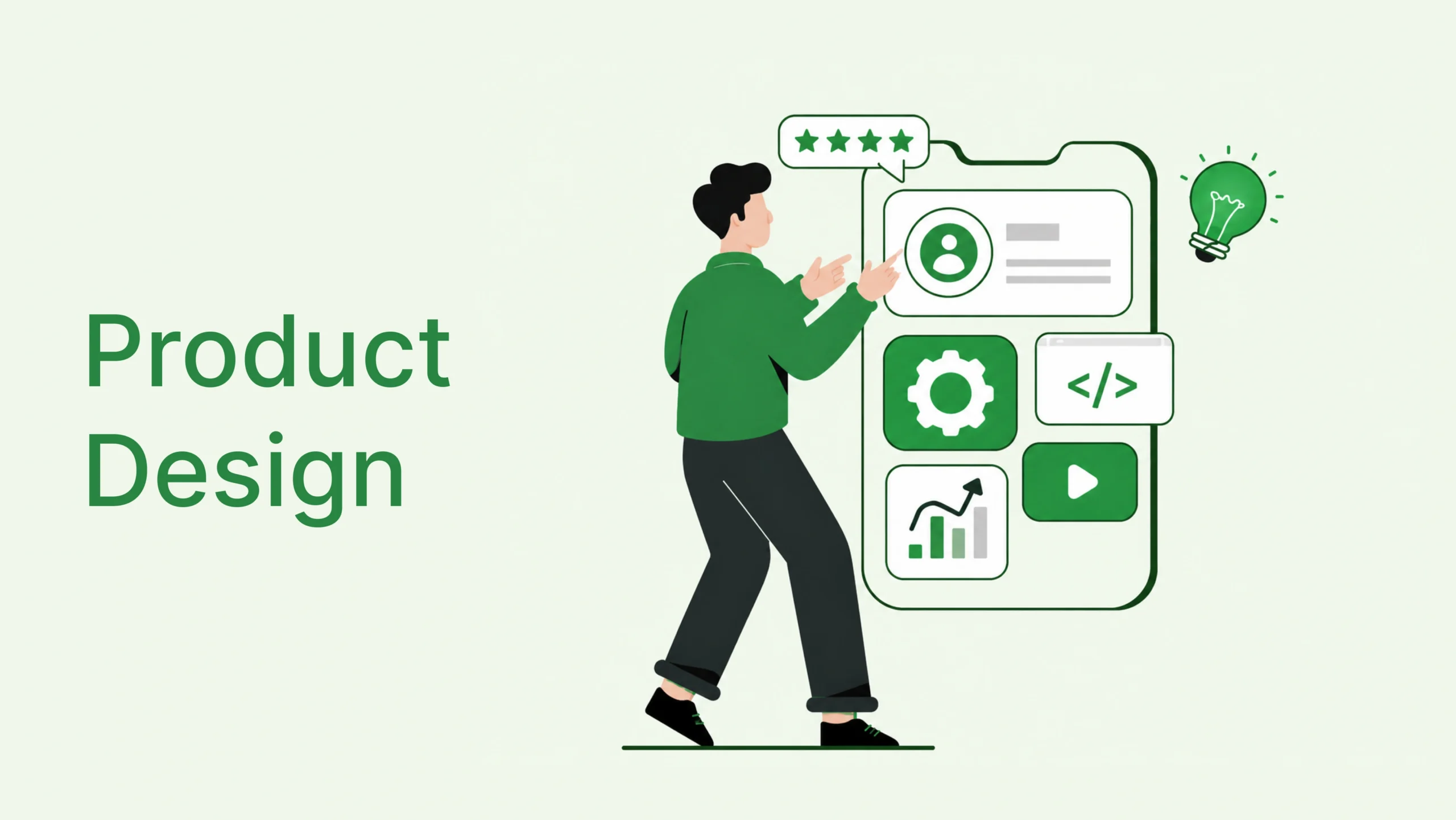
Product design is the process of identifying user needs, solving problems, and creating products that deliver meaningful experiences while supporting business goals.
For digital products, this often means designing websites, mobile applications, software platforms, SaaS products, and online services.
At first glance, product design may seem focused on screens and interfaces. Yet the role goes much deeper.
A product designer looks at the entire experience. They think about what users need, how they behave, what motivates them, and how a product can help them achieve their goals with less effort and frustration.
In simple terms, product design connects user needs, business objectives, and technology into a product people genuinely want to use.
Product Design Is Problem Solving in Disguise
People often think product designers spend most of their time moving pixels around in Figma.
Sometimes they do.
Yet much of the work happens long before visual design begins.
Imagine a restaurant receiving complaints about long wait times.
One solution might be hiring more staff.
Another might be redesigning the ordering process.
A third might involve a mobile ordering system.
The real challenge is identifying the right problem before creating a solution.
Product design follows a similar mindset.
Good designers ask questions before proposing answers.
Why Product Design Matters
Products compete for attention every day.
Users can switch applications, websites, and services within seconds.
That reality creates pressure.
A confusing product can lose customers quickly.
A thoughtful experience often earns trust and loyalty.
Product design helps organizations create experiences that feel intuitive, useful, and enjoyable.
Strong product design can lead to:
- Higher user satisfaction
- Better customer retention
- Increased engagement
- Stronger conversion rates
- Reduced support costs
- Greater business growth
Many successful companies became industry leaders because they focused intensely on product experience.
People rarely stay loyal to products that create unnecessary friction.
How Product Design Has Evolved
Years ago, product development often followed a simple formula.
Businesses decided what customers needed.
Products were built.
Customers adapted.
Today, the process works differently.
Modern product teams spend significant time researching users, testing assumptions, and gathering feedback.
The shift happened for a simple reason.
Organizations realized that building products without user input often leads to expensive mistakes.
That’s why user-centered design has become a major part of modern product design.
The Foundation: Core Product Design Principles
Every successful product is different.
Still, many share a common set of design principles.
User-Centered Thinking
Products should solve real user problems.
Design decisions become stronger when they are grounded in research and observation.
Simplicity
Simple doesn’t mean basic.
Simple means removing unnecessary obstacles.
Think about online shopping.
The fewer steps required to complete a purchase, the smoother the experience feels.
Consistency
Users develop expectations quickly.
Consistent patterns reduce confusion and help people feel confident while using a product.
Accessibility
Products should work for people with different abilities, backgrounds, and circumstances.
Accessible design creates better experiences for everyone.
Continuous Improvement
No product is ever truly finished.
User needs evolve.
Technology changes.
Customer expectations shift.
Strong products improve continuously through learning and iteration.
The Product Design Process
Different companies follow different workflows.
Even so, most product design projects move through similar stages.
Research and Discovery
Everything begins with learning.
Teams gather information about users, markets, competitors, and business goals.
Research methods often include:
- User interviews
- Surveys
- Competitive analysis
- Analytics reviews
- Usability studies
- Stakeholder interviews
Research creates clarity.
Without it, teams are often guessing.
Defining the Problem
After gathering insights, teams identify the core problem they want to solve.
This step sounds simple.
It rarely is.
A company might think users need more features.
Research may reveal users actually need a simpler experience.
Finding the right problem often determines project success.
Ideation: Generating Possibilities
Once the problem becomes clear, designers begin exploring solutions.
Brainstorming sessions, workshops, sketching exercises, and collaborative discussions help generate ideas.
The goal isn’t finding the perfect solution immediately.
The goal is exploring possibilities before committing to a direction.
Wireframing
Wireframes provide a structural blueprint for a product.
They focus on layout, content organization, and functionality without visual polish.
Think of a wireframe as an architect’s floor plan.
It shows where things belong before construction begins.
Prototyping
Prototypes simulate user interactions.
They allow teams to experience workflows before development starts.
A prototype might demonstrate:
- User onboarding
- Checkout processes
- Dashboard navigation
- Form completion
- Feature interactions
Testing prototypes early often saves significant time and development effort.
Testing and Validation
Ideas are valuable.
Validated ideas are far more valuable.
Testing reveals how real users interact with a product.
Common testing methods include:
- Usability testing
- A/B testing
- Task-based testing
- Prototype testing
- Accessibility reviews
The findings often surprise teams.
Users rarely behave exactly as expected.
Refinement and Delivery
Insights gathered during testing lead to improvements.
Designs evolve.
Features are adjusted.
Workflows become clearer.
Once designs are finalized, teams collaborate with developers to bring the product to life.
Product Design Is a Team Sport
One common misconception is that product designers work independently.
Reality looks very different.
Successful product design involves collaboration between:
- Product managers
- UX researchers
- UI designers
- Developers
- Data analysts
- Marketing teams
- Customer support teams
- Business stakeholders
Each group contributes valuable perspectives.
The strongest products emerge when these perspectives work together.
Product Design vs UX Design
These terms are often used interchangeably.
There is overlap, but they are not identical.
UX design focuses primarily on user experience and usability.
Product design generally covers a broader scope.
A product designer may consider:
- User needs
- Business goals
- Product strategy
- Market opportunities
- Technical constraints
- Experience design
You could say UX design is a major part of product design, though product design typically extends beyond experience design alone.
Skills Every Product Designer Needs
Product design combines creative thinking with analytical reasoning.
Strong product designers often develop skills in several areas.
Research
Understanding people remains one of the most valuable design skills.
Problem Solving
Designers solve challenges rather than decorate interfaces.
Communication
Ideas need to be explained clearly to stakeholders, developers, and team members.
Visual Design
Good visual design improves clarity and usability.
Systems Thinking
Products consist of connected experiences.
A change in one area often affects another.
Strong designers recognize those relationships.
Common Product Design Deliverables
Product designers create many different artifacts throughout a project.
These may include:
- User personas
- Journey maps
- User flows
- Wireframes
- Prototypes
- Design systems
- Usability reports
- Feature concepts
- Interaction specifications
Each deliverable supports better decision-making during product development.
Challenges Product Designers Face
Product design can be rewarding, but it comes with challenges.
Balancing User and Business Needs
Users and businesses don’t always want the same things.
Finding balance requires thoughtful decision-making.
Limited Time and Resources
Teams often work under deadlines.
Designers must prioritize carefully.
Changing Requirements
Projects evolve.
Stakeholder priorities shift.
Market conditions change.
Adaptability becomes a valuable skill.
Managing Complexity
As products grow, maintaining consistency becomes harder.
Design systems and structured workflows help manage this challenge.
The Future of Product Design
Product design continues to evolve alongside technology.
Artificial intelligence, automation, voice interfaces, augmented reality, and personalized experiences are reshaping how products are created.
Yet despite technological change, one thing remains remarkably stable.
People still want products that help them accomplish tasks easily.
Technology changes.
Human needs remain surprisingly consistent.
That simple truth continues to guide product design.
Final Thoughts
Product design is the practice of turning user needs and business goals into meaningful solutions.
It combines research, strategy, creativity, testing, and collaboration to create products people enjoy using.
Great product design rarely happens by accident.
It emerges from curiosity, observation, experimentation, and continuous improvement.
The products we remember most often share one thing in common.
They make difficult tasks feel surprisingly simple.
That is the true power of product design.
Frequently Asked Questions (FAQs)
1. What is product design?
Product design is the process of researching, planning, creating, testing, and improving products that solve user problems while supporting business goals.
2. What does a product designer do?
A product designer researches users, creates concepts, designs interfaces, develops prototypes, tests solutions, and collaborates with teams throughout product development.
3. How is product design different from UX design?
UX design focuses mainly on user experience, while product design often includes strategy, business considerations, market needs, and overall product direction.
4. Why is product design important?
Product design helps create useful, intuitive, and engaging experiences that improve customer satisfaction and support business success.
5. What tools do product designers use?
Common tools include Figma, Sketch, Adobe XD, Axure RP, Miro, FigJam, UserTesting, and analytics platforms.
6. What skills are needed for product design?
Key skills include research, problem-solving, communication, visual design, prototyping, collaboration, and critical thinking.